
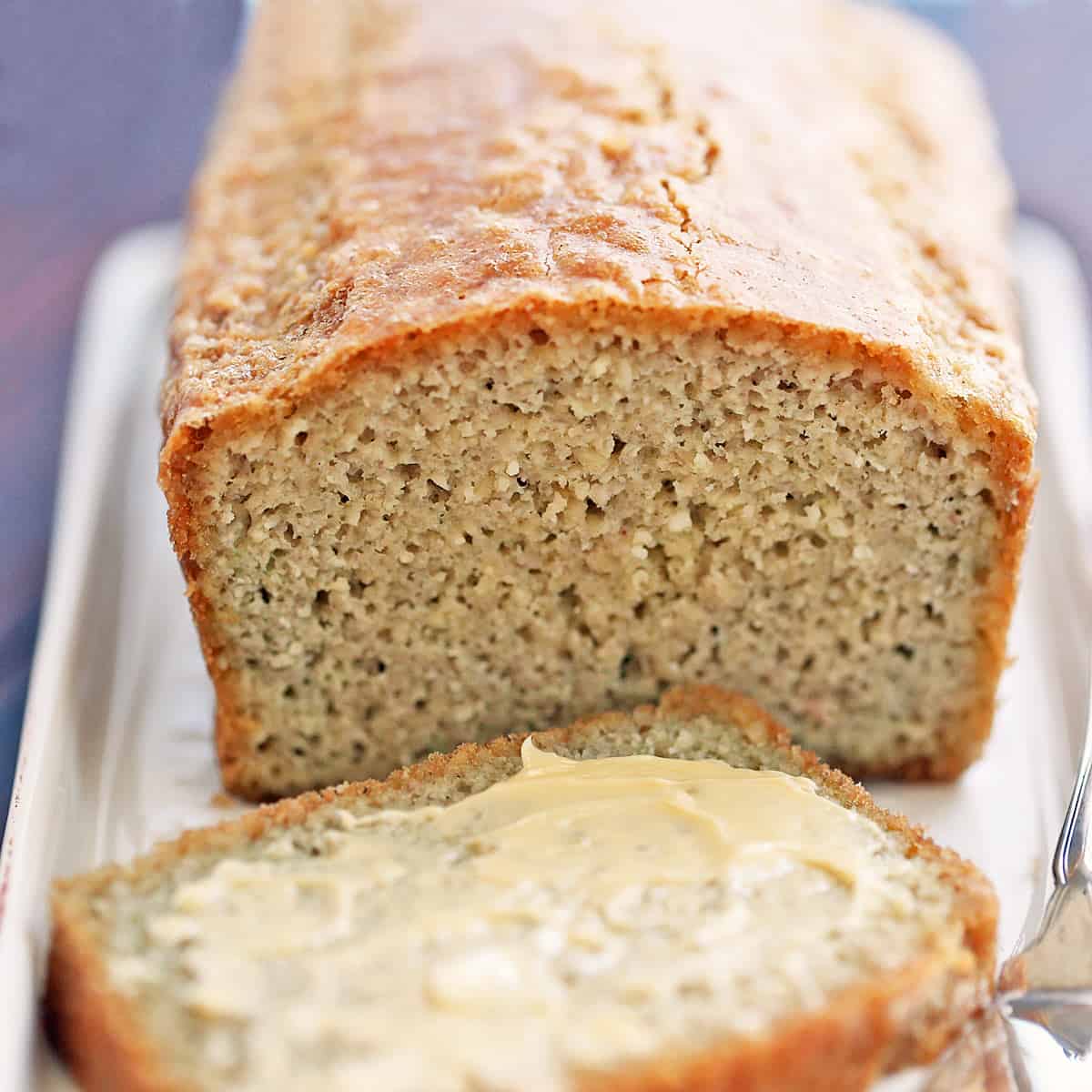
This easy, gluten-free almond flour bread is soft, versatile, and perfect for toast, sandwiches, soups, or breakfast. I eat it almost daily!
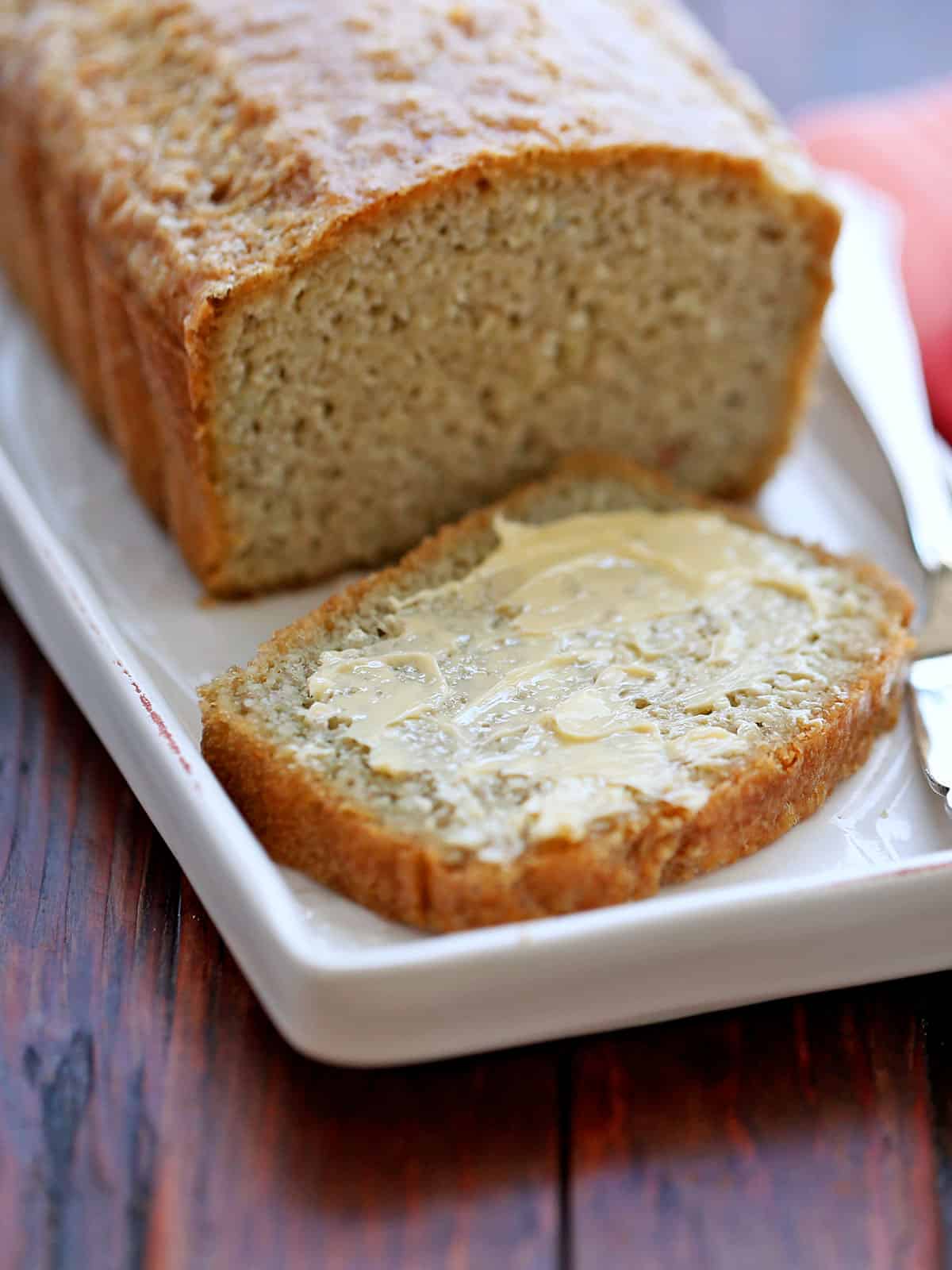
This delicious bread comes together quickly and smells so good when it bakes. Its pleasantly neutral taste makes it the perfect canvas for many toppings. It's also very filling! You can bake a loaf on the weekend, keep it in the fridge, and toast a slice or two for your meals throughout the week. The leftovers keep well in the fridge and can also be frozen for several months.
Ingredients
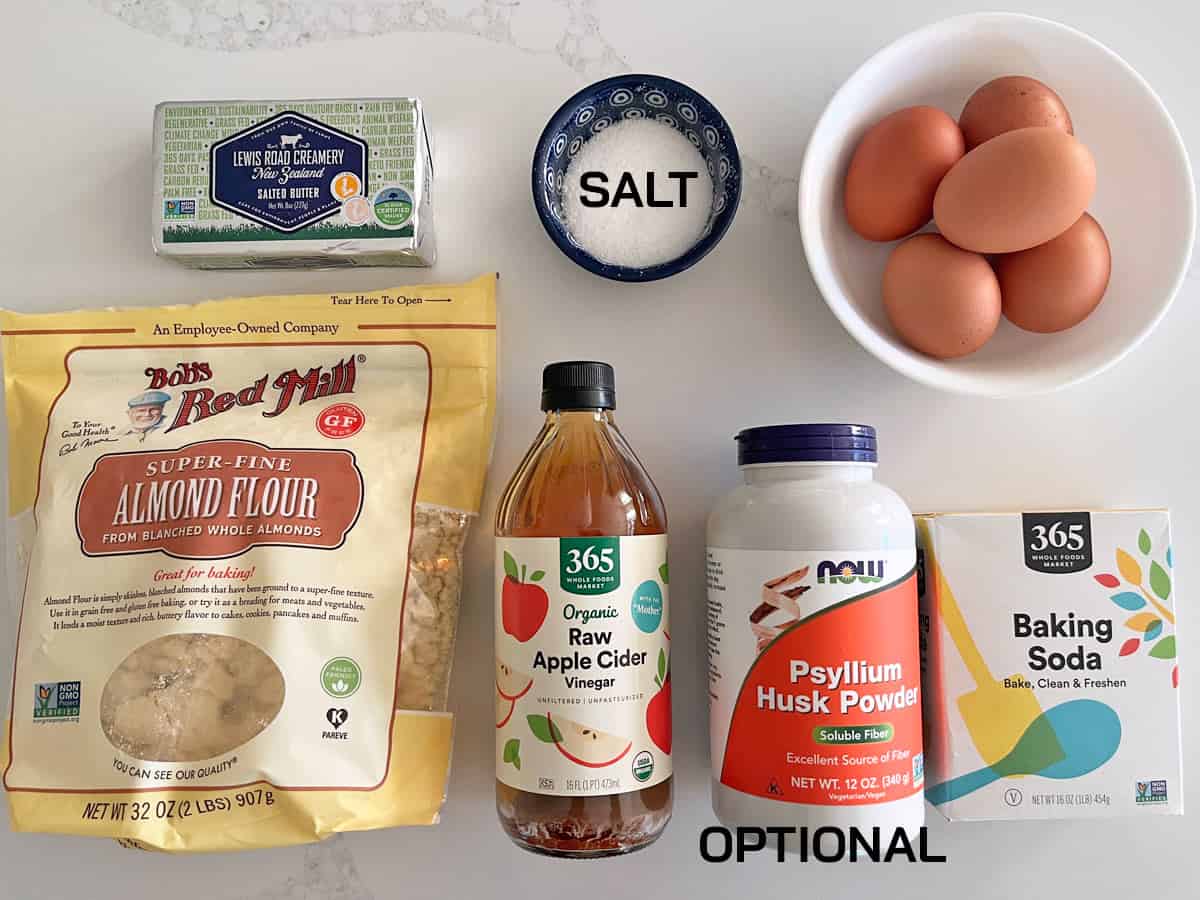
See the recipe card for exact measurements. Here are my comments on some of the ingredients.
- Oil or butter: Refined coconut oil keeps the bread's flavor neutral. You can use virgin coconut oil if you don't mind the flavor, especially if you plan to use this bread with sweet toppings. Extra-virgin olive oil gives this bread an interesting flavor and works well for savory applications. Lately, I've been using melted salted butter. It's more flavorful than refined coconut oil (which is essentially flavorless), so the bread comes out tastier, even without any toppings.
- Apple cider vinegar: The vinegar reacts with the baking soda, helping the bread rise. You won't taste it in the bread. If you use baking powder instead of baking soda, you can omit it.
- Almond flour: I use superfine almond flour.
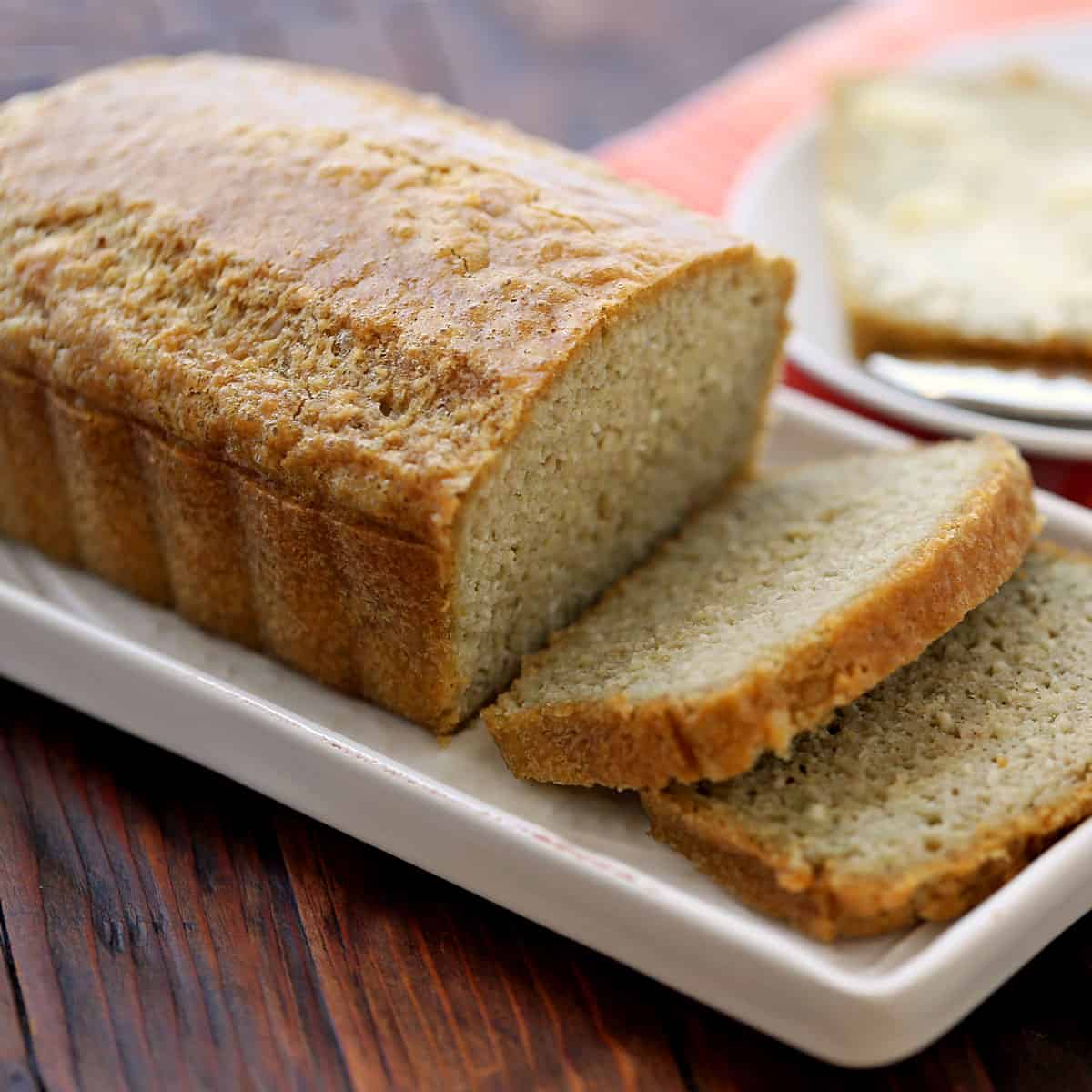
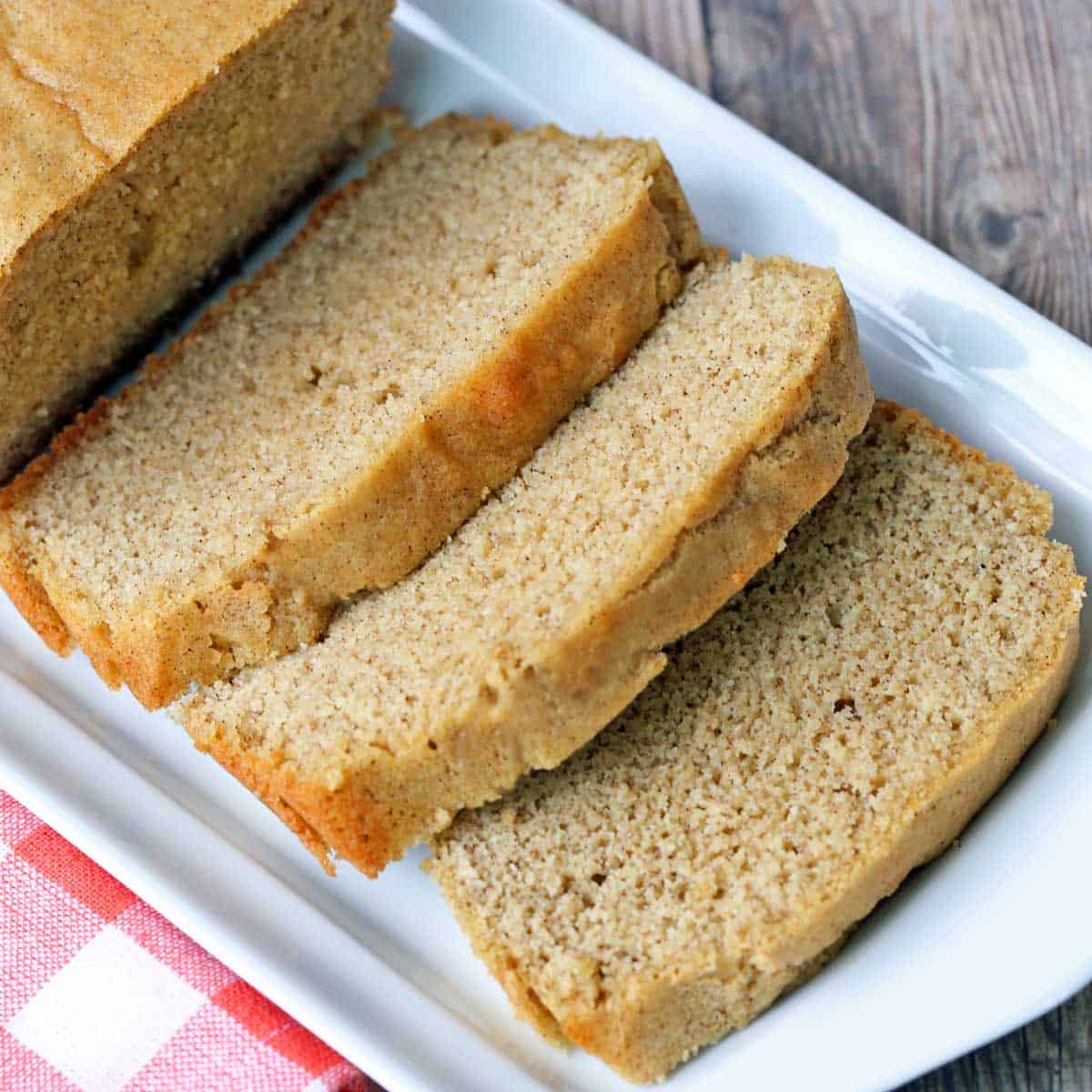
- Baking soda: You can use 2 teaspoons of baking powder as a substitute for ½ teaspoon of baking soda. The crust will not brown as much when using baking powder. You can see it in the photos below. The crust of the bread made with baking soda is beautifully browned. In the bread made with baking powder, the crust is paler.
Flavor Variations
- Make it sweet by adding 1 ½ teaspoons of stevia glycerite (equals ½ cup of sugar), 1 teaspoon of vanilla, and 1 teaspoon of cinnamon. If you go this route, you can use virgin coconut oil for a slightly sweet coconut flavor or unsalted butter.
- Turn the basic bread into an herb bread by using extra-virgin olive oil as your fat and adding ½ teaspoon each of garlic powder, oregano, and thyme. Or use ½ teaspoon of garlic powder and 1 teaspoon of Italian seasoning.
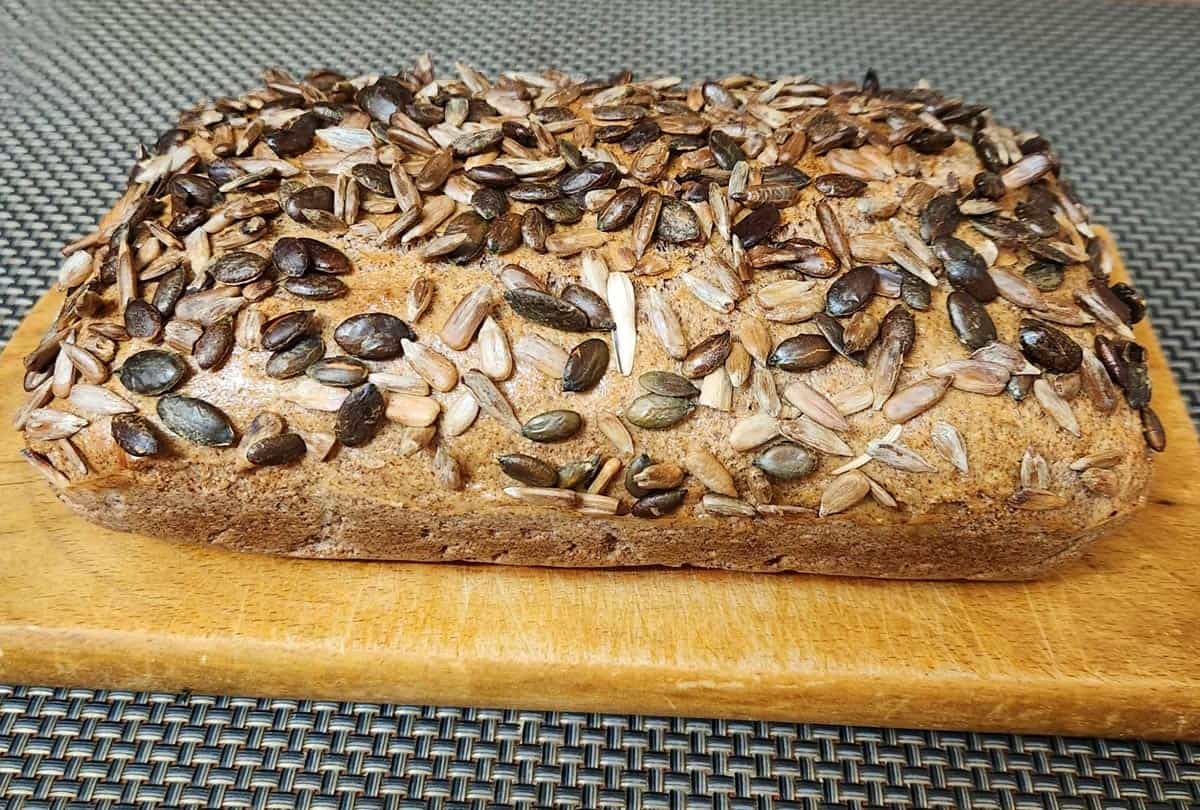
- You can sprinkle 2-4 tablespoons of hulled sunflower seeds on top of the bread before baking, as shown in the photo below. It's pretty and adds flavor and crunch, but some of the seeds will fall off as you slice the bread. By the way, the loaf shown below was baked in a 9-inch loaf pan, so it's relatively flat.
Instructions
The detailed instructions and step-by-step photos are included in the recipe card. Here's a quick overview.
Combine the ingredients in a medium bowl. Transfer the batter to a parchment-lined 8-inch loaf pan.
Bake the bread in a preheated 350°F oven until it is puffed and set, and a toothpick inserted in its center comes out clean, about 30 minutes.
Cool the bread to room temperature before slicing and serving.
I was craving bread and butter and wanted to make the biscuits recipe, but didn't have sour cream. About an hour before dinner, I decided to Google a bread recipe, and yours came up and seemed the simplest. I whipped it up quick and easy. My sifter was dirty, so I just threw in the almond flour (not fine) as-is. The bread came out amazing. Because of the almond flour I used, it had more of a whole wheat texture, which is perfectly fine for me... It's tender and moist on the inside, and now I'm toasting some to eat with my soup. Thanks for the recipe! I can't wait to try it again.
Savanna
Read more comments
 I was craving bread and butter and wanted to make the
 Recipe Tip
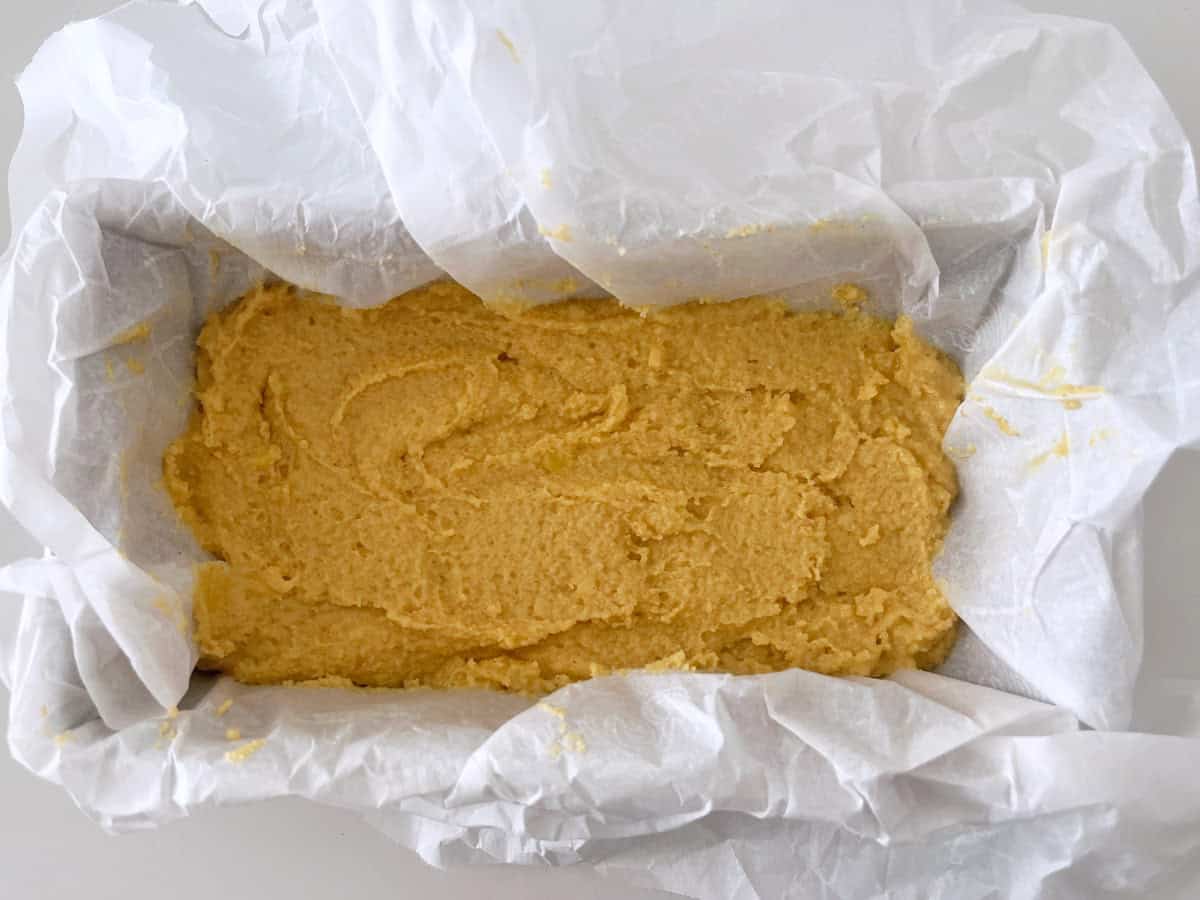
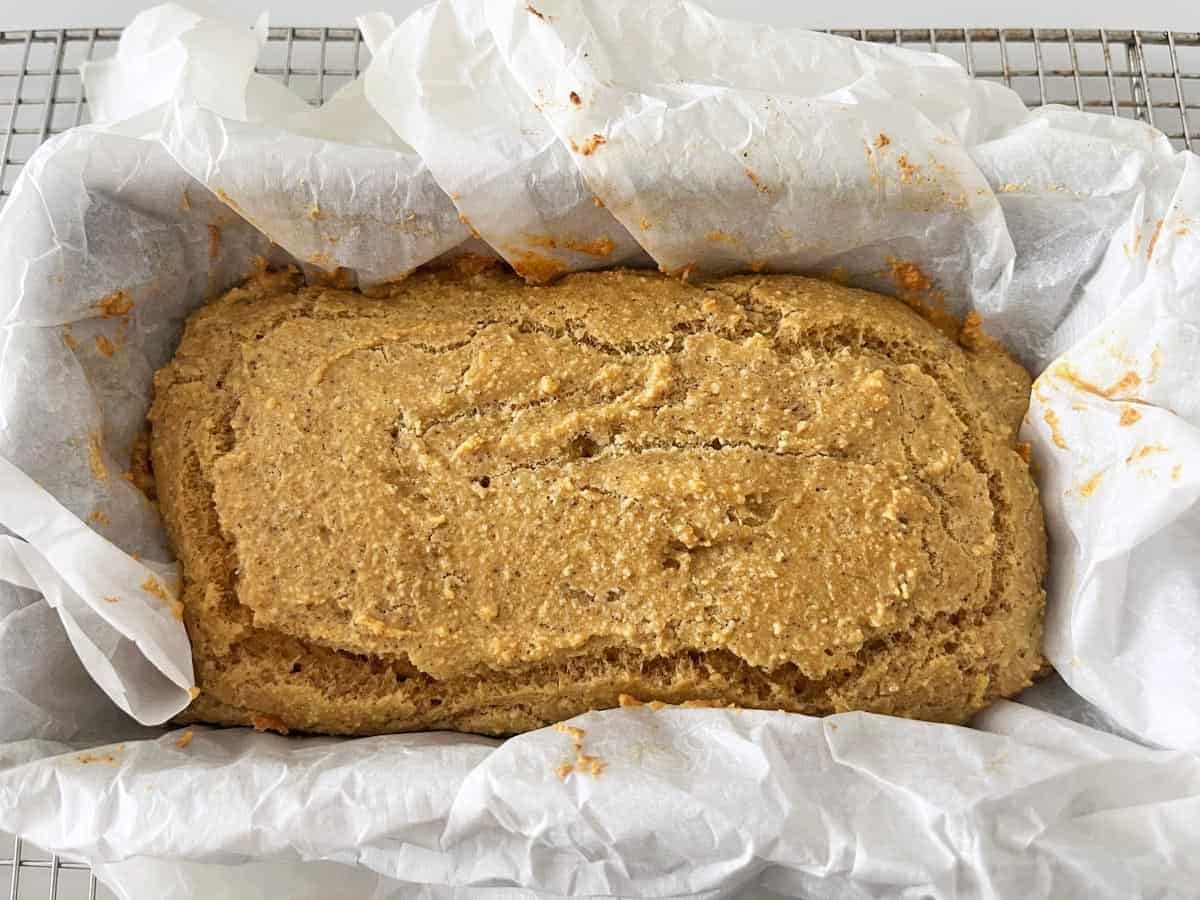
Almond flour tends to create a softer, cake-like texture since it's gluten-free and lacks the elasticity of wheat flour. Adding a tablespoon of psyllium husk powder helps create a more elastic, chewy crumb that's closer to wheat bread.
If you'd like to use it, add 2 tablespoons of water to balance the extra absorbency, and let the batter rest for 5 minutes before transferring it to the pan, allowing the psyllium to fully hydrate.
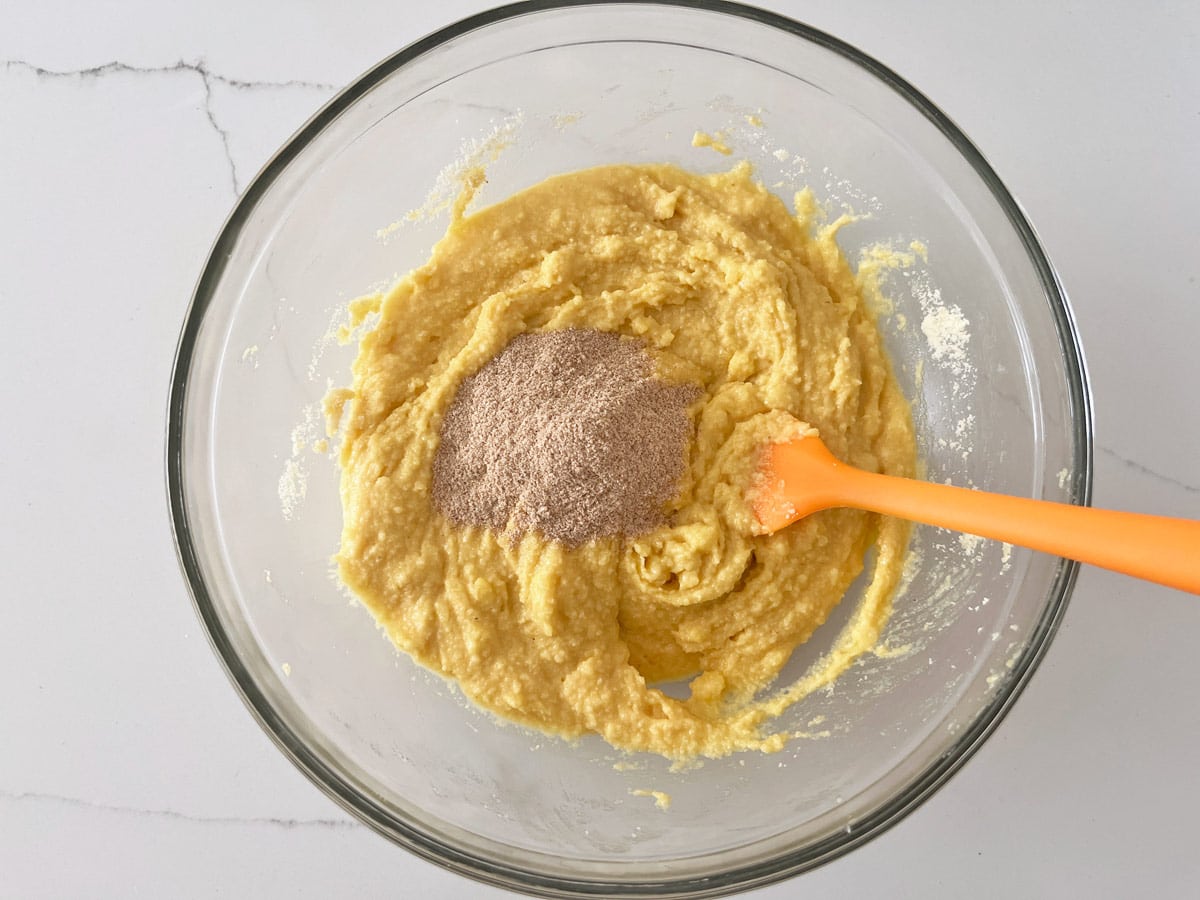
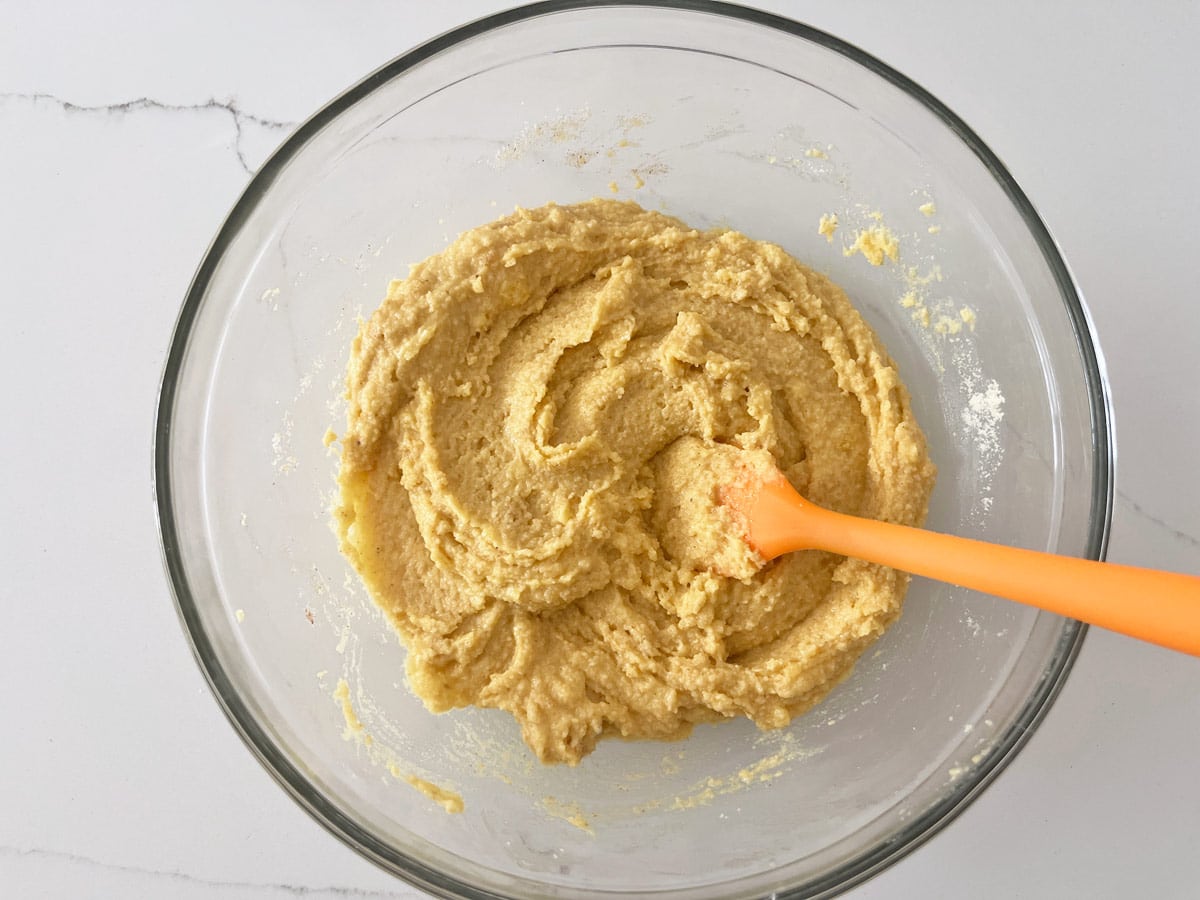
The photos below show the batter before and after the addition of psyllium. In addition to changing the texture and adding a small amount of fiber, it also darkens the bread's color, which I consider a plus. Please remember that even with psyllium, this is a quick bread and is quite different than yeast-leavened wheat bread.
Recipe FAQs
No. It's important to adjust our expectations when making this bread. The yeasty aroma and gluten-induced fluffiness we love about traditional bread cannot be achieved without yeast and gluten. This is more of a quick bread that fills the need for making a sandwich or having a slice of bread for breakfast. It's delicious, but it's different from traditional bread.
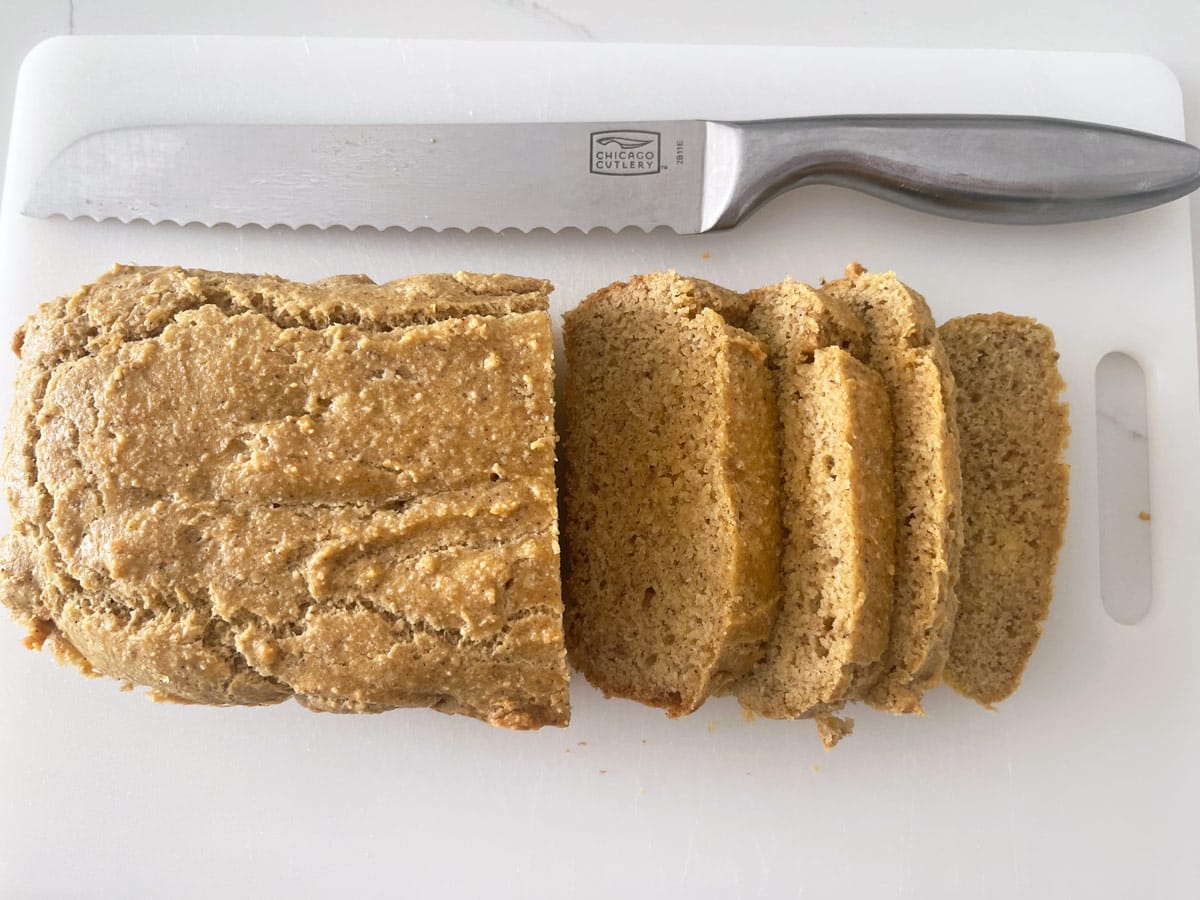
Luckily, my dear Father conducted this experiment! You can use a standard 9x5-inch loaf pan and adjust the recipe as follows:
7 large eggs
7 tablespoons melted butter
10 ounces almond flour
2 teaspoons baking powder
Start with 7 eggs. My Dad reports that the batter seemed a bit too dry, so he added an extra egg for a total of 8. Bake as usual for 30 minutes at 350°F, then check with a toothpick to see if it's done.
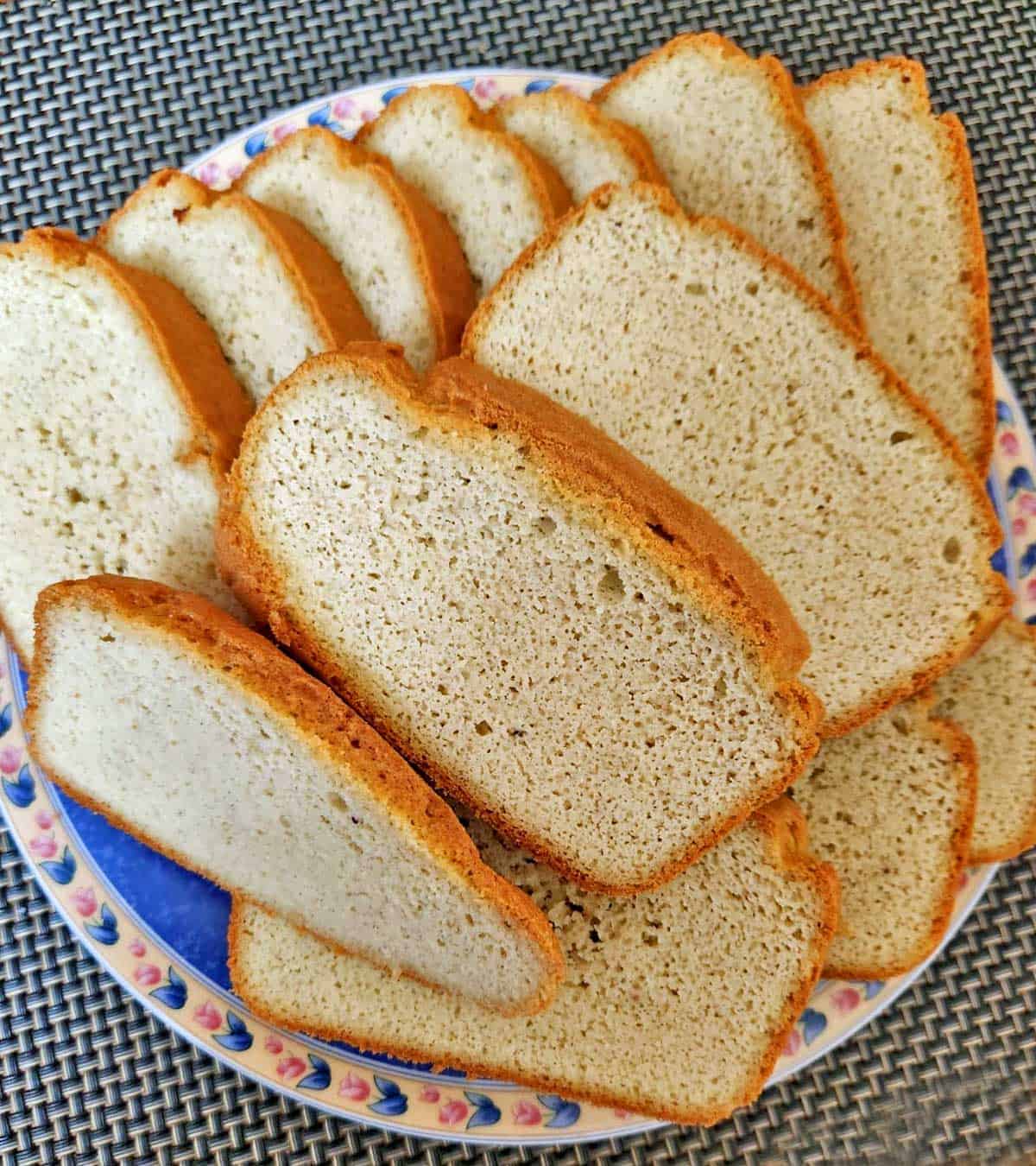
The images below show the bread in the standard loaf pan, and slices of it after it has cooled. 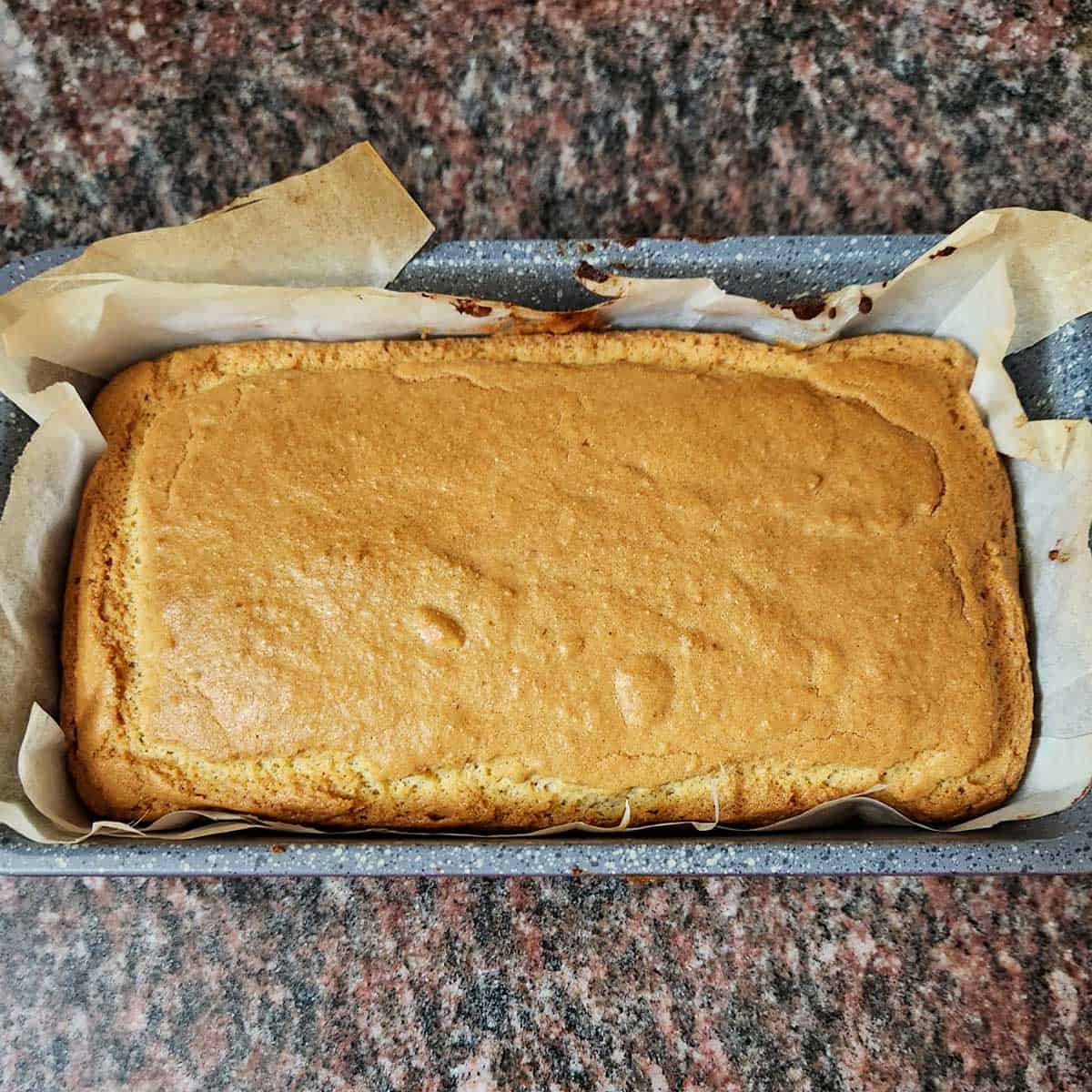
I tested this bread with this almond meal, and it worked, but I prefer superfine almond flour. The bread is coarser and less fluffy when made with almond meal, and you'll need to check the batter. If it seems very dry, add 1-2 tablespoons of milk or water.
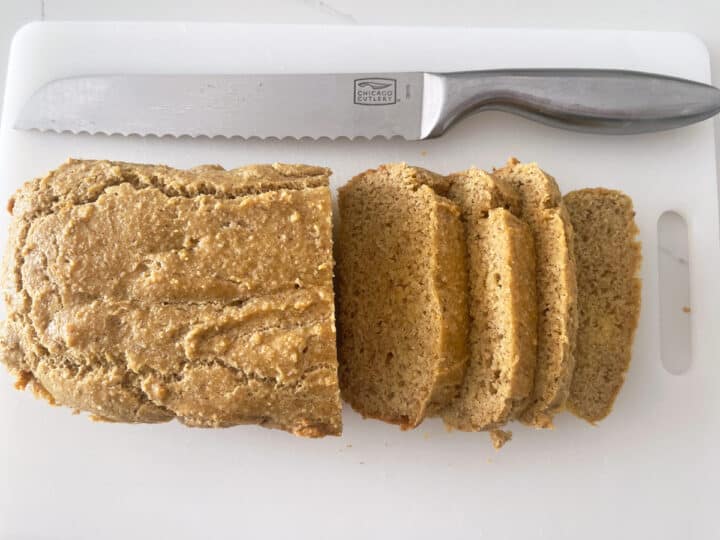
Once completely cooled, place the bread in an airtight container or a large resealable bag and store it in the fridge for up to five days. I slice it first, as shown in the photo below.
To freeze, slice the cooled bread, wrap each slice individually in plastic wrap, and then place all the slices in a freezer bag. When ready to eat, briefly reheat a slice in the microwave or toast it.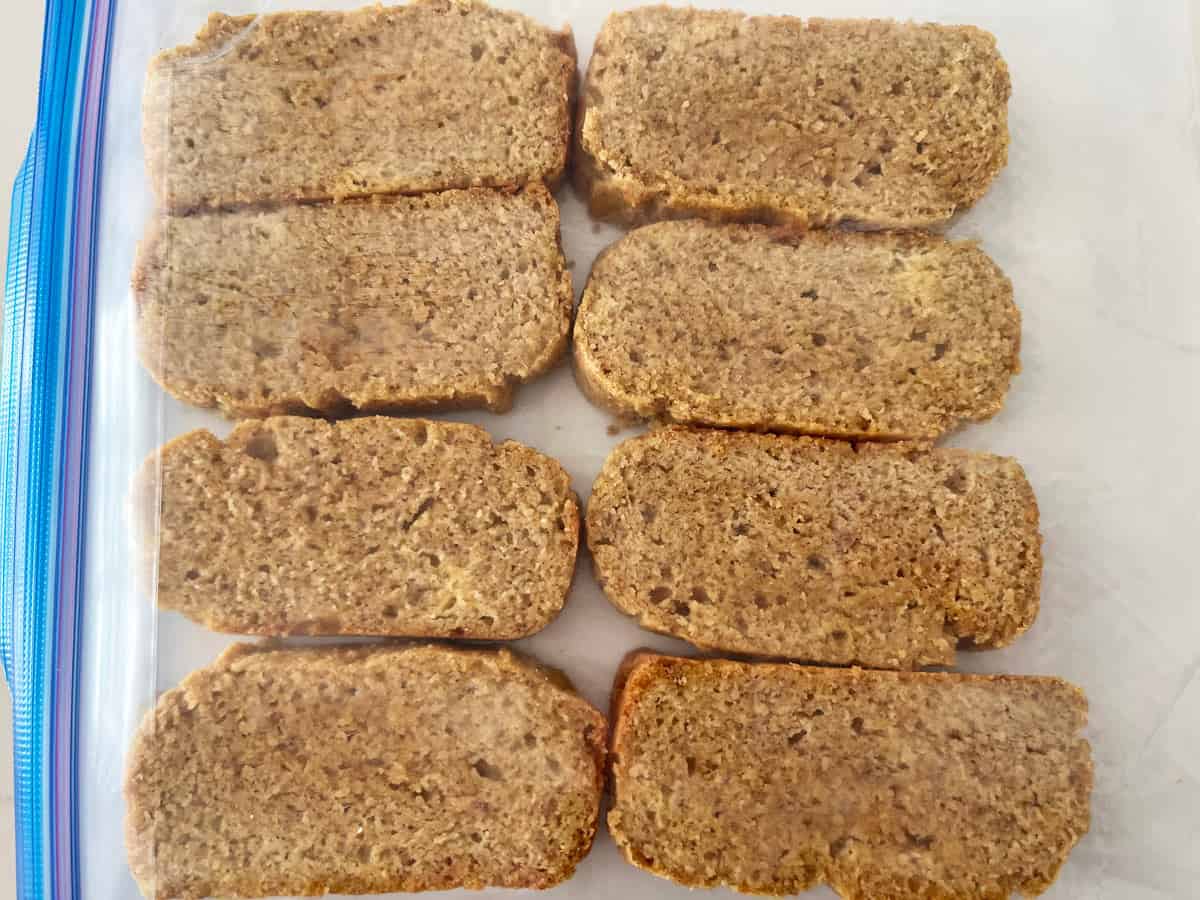
Serving Suggestions
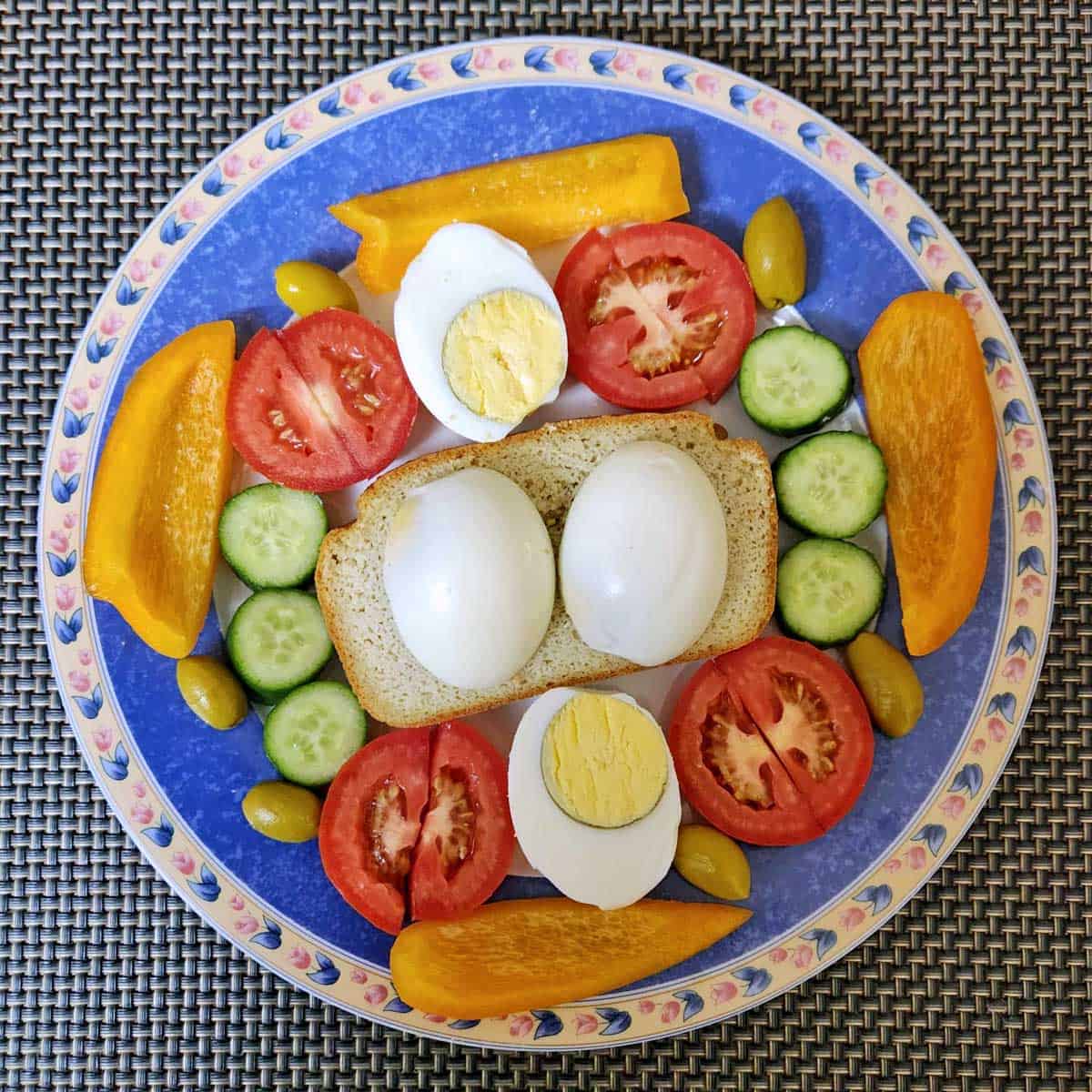
Almond flour bread is perfect for breakfast. I toast it and spread it with walnut butter, keto hazelnut spread, or butter. It's also excellent with soft-boiled eggs. My Dad enjoys it with hard-boiled eggs and veggies, as shown in the photo below. Look at his beautiful plate!
For lunch, I use it to make a Swiss and ham sandwich or a cream cheese and smoked salmon sandwich. Sometimes, I spread it with salmon salad, tuna salad, pimento cheese, baked brie, or cream cheese dip. It pairs beautifully with soup, as shown in the image below. It truly is a versatile keto bread!

Recipe Card
Simple Almond Flour Bread
Video
Ingredients
- 5 large eggs
- 5 tablespoons salted butter - melted and slightly cooled
- 1 teaspoon apple cider vinegar - helps the bread rise
- ⅛ teaspoon sea salt
- 7 ounces superfine almond flour - 1 ¾ cup; please measure by weight
- ½ teaspoon baking soda - see the notes section below
Instructions
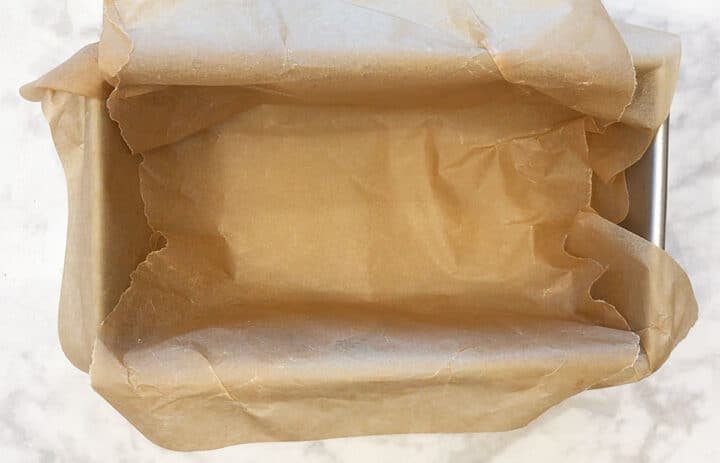
- Preheat the oven to 350°F. Grease an 8-inch loaf pan and line it with parchment paper, leaving an overhang for easy removal. The notes section below contains instructions for adjusting this recipe to a standard 9-inch loaf pan.

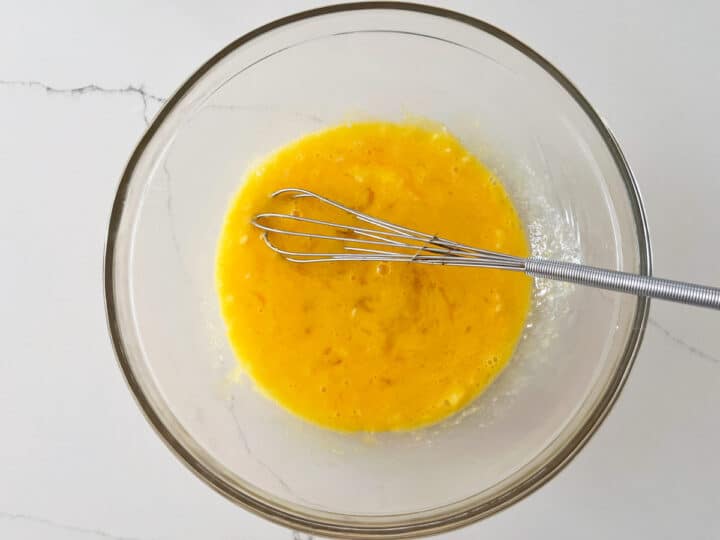
- In a medium bowl, whisk the eggs until well incorporated. Whisk in the melted butter, vinegar, and salt.5 large eggs, 5 tablespoons salted butter, 1 teaspoon apple cider vinegar, ⅛ teaspoon sea salt

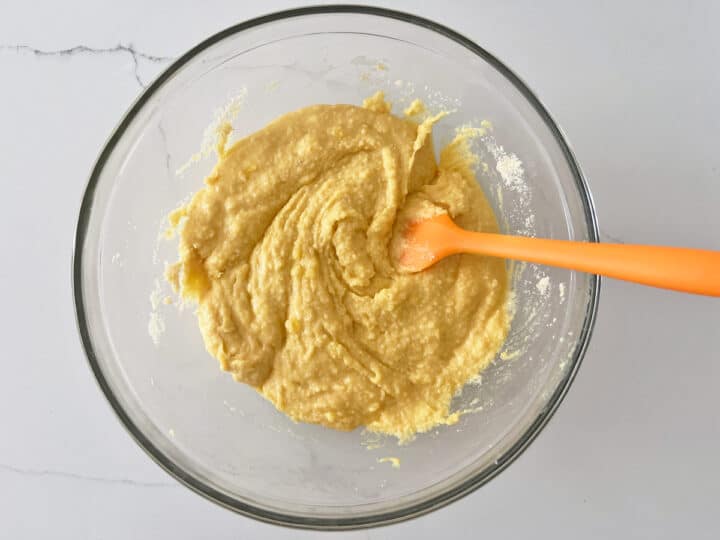
- Gradually add the almond flour, then mix in the baking soda. The batter should be thick but not dry. If it's too thick for the whisk, switch to a rubber spatula. If it's dry, add a tablespoon of water.7 ounces superfine almond flour, ½ teaspoon baking soda
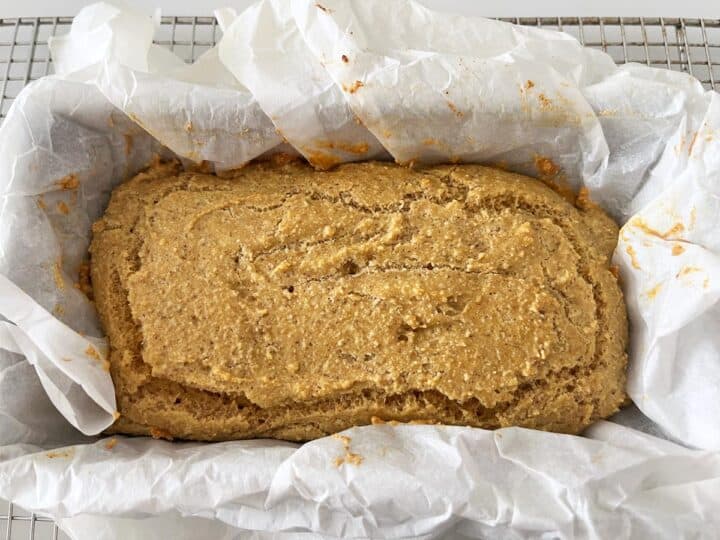
- Quickly transfer the batter to the prepared pan. Smooth the top with a spatula. You'll want to place the bread in the oven ASAP, since the baking soda has already started reacting with the vinegar.
- Bake until the bread is puffed and set and a toothpick inserted in its center comes out clean, about 30 minutes. The notes section below contains instructions for adjusting the baking time.
- Cool the bread for 10 minutes in the pan on a wire rack, then gently release it. Cool it for an additional 10 minutes before slicing and serving. Its texture improves as it cools and settles. It's delicious when served warm, but not hot straight out of the oven.

Notes
- Seasonings, especially salt, are guidelines. Adjust to taste.
- I use Bob's Red Mill Super-Fine Almond Flour. One cup of this flour weighs 4 ounces, so 1 ¾ cups weigh 7 ounces. It's best to measure almond flour by weight and not by volume.
- If you don't have a kitchen scale, use the spoon-and-level method to measure the flour. Gently stir it in its container to loosen it. Then, using a spoon, lightly scoop the flour into your measuring cup without pressing it down. Once the cup is slightly overflowing, use the flat edge of a knife to level it off. Avoid dipping the measuring cup directly into the bag, as this can pack the flour and lead to using more than the recipe calls for.
- Occasionally, baking soda can cause a reaction in baked goods, resulting in an ammonia smell. It can also give the bread a slight green tint. Both reactions are harmless and can be avoided by substituting 2 teaspoons of fresh, aluminum-free baking powder for the baking soda and omitting the vinegar. The crust will not brown as much if using baking powder.
- You can use a 9x5-inch loaf pan and adjust the recipe as follows: Use 7 large eggs, 7 tablespoons of melted butter, 10 ounces of almond flour, and 2 teaspoons of baking powder. If the batter is dry, add an extra egg for a total of 8. Bake the bread for 30 minutes at 350°F, then check with a toothpick to see if it's done. Remember that the nutrition information will change.
- Almond flour tends to create a softer, cake-like texture since it's gluten-free and lacks the elasticity of wheat flour. Adding a tablespoon of psyllium husk powder helps create a more elastic, chewy crumb. If you'd like to use it, add 2 tablespoons of water to balance the extra absorbency, and let the batter rest for 5 minutes before transferring it to the pan, allowing the psyllium to fully hydrate.
- The baking time for the bread depends on your oven. When I started making this recipe, I used an old oven and baked it for 45 minutes. I have since moved, and it only takes 30 minutes in my new oven. Oven temperatures vary, so start checking after 30 minutes.
- Storage: Once completely cooled, place the bread in an airtight container or a large resealable bag and store it in the fridge for up to five days. To freeze, slice the cooled bread, wrap each slice individually in plastic wrap, and then put all the slices in a freezer bag. When ready to eat, briefly reheat a slice in the microwave or toast it.
Nutrition per Serving
Save this Recipe!
We will also add you to our weekly newsletter. Unsubscribe anytime. See healthyrecipesblogs.com/privacy/ to learn how we use your email.
Disclaimers
Most recipes are low-carb and gluten-free, but some are not. Recommended products are not guaranteed to be gluten-free. Nutrition info is approximate - please verify it. The carb count excludes non-nutritive sweeteners. Please read these Terms of Use before using any of our recipes.



Sylvia Flynn says
Good afternoon
I’m struggling to receive a copy of the Almond flour bread.
I’ve hit the button several times, but so far nothing.
Also, been trying to make Keto bread from a recipe that doesn’t work, so I have coconut flour and lots of chia seeds left, could I incorporate in your recipe.
Thanking you
Sylvia
Vered DeLeeuw says
Hi Sylvia,
Sorry about that! I emailed you a copy of the recipe.
I wouldn't recommend adding coconut flour to this recipe, as it's very absorbent and would change the bread's texture and the balance of wet and dry ingredients.
You could try adding 1 tablespoon of chia seeds, but since I haven't tested the recipe with them, I can't say for sure how it would turn out. Chia seeds absorb quite a bit of moisture and could make the bread dense or dry.
I recommend making the recipe as written for the best results.
Violet says
Been trying different gluten free options. Best by far. So tasty.
Vered DeLeeuw says
Thank you so much, Trudy! I'm glad you enjoyed it.