
This chuck eye steak recipe proves you don't need an expensive cut to enjoy a great steak. With the right technique and a few simple ingredients, you can create a beautifully seared steak with a golden crust and juicy center.

Cut from the shoulder near the ribeye, chuck eye steak, often called the "poor man's ribeye," has similar marbling and flavor at a fraction of the cost. The key is cooking it quickly over high heat to lock in juices and develop that irresistible crust. This recipe keeps things simple: salt, pepper, butter, and a reliable skillet. This method delivers consistent, delicious results every time.
Ingredients
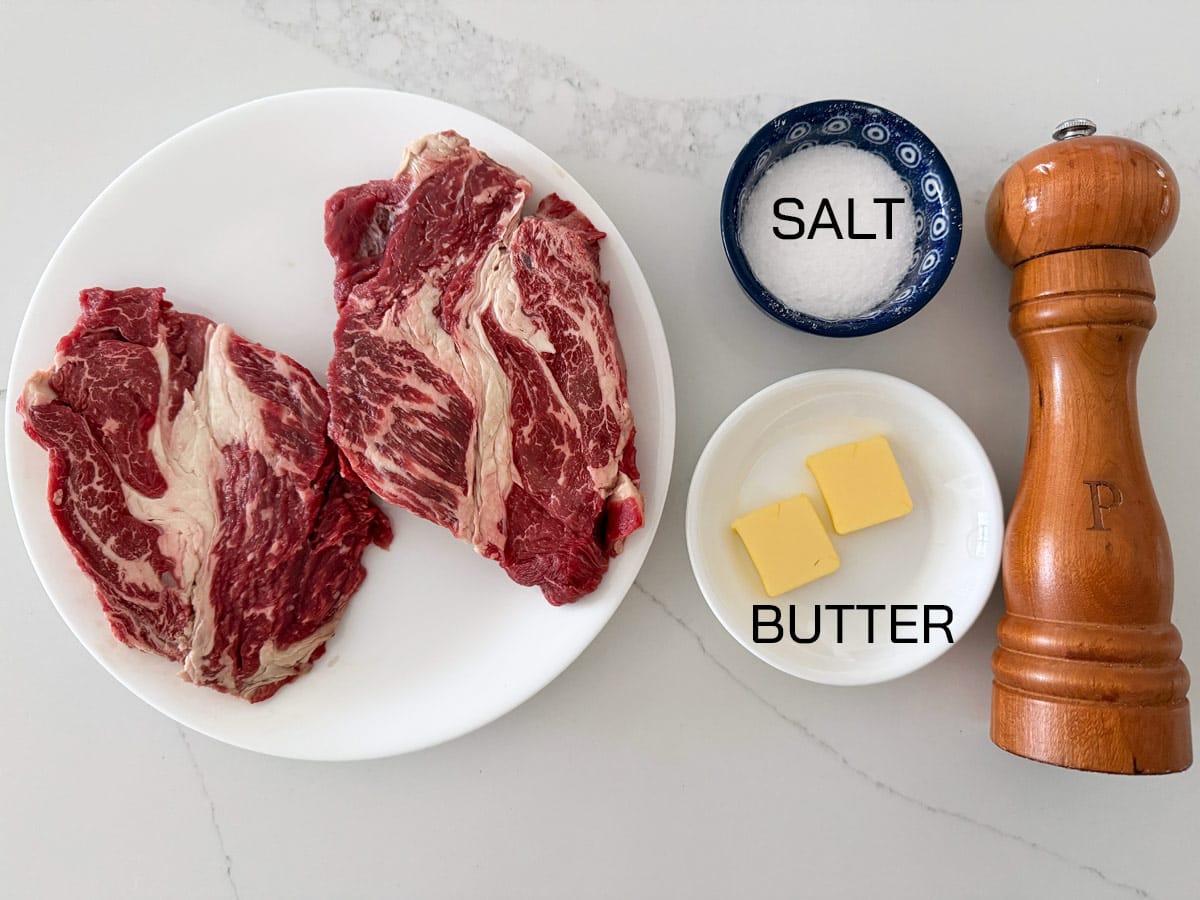
See the recipe card for exact measurements. Here are my comments on the ingredients.
- Chuck eye steaks: ½ pound each, about ¾-inch thick. I usually find them at Whole Foods Market.
- To season: Kosher salt and black pepper are the only seasonings a good steak needs.
- Butter: For topping the steaks.
Instructions
The detailed instructions and step-by-step photos are included in the recipe card. Here's a quick overview.
Prep the steaks: Blot the steaks dry with paper towels. Season both sides with kosher salt and freshly ground black pepper.

Cook the steaks: Cook them undisturbed in a preheated cast-iron skillet for about 3 minutes, until a deep brown crust forms. Flip and cook for about 2 minutes.
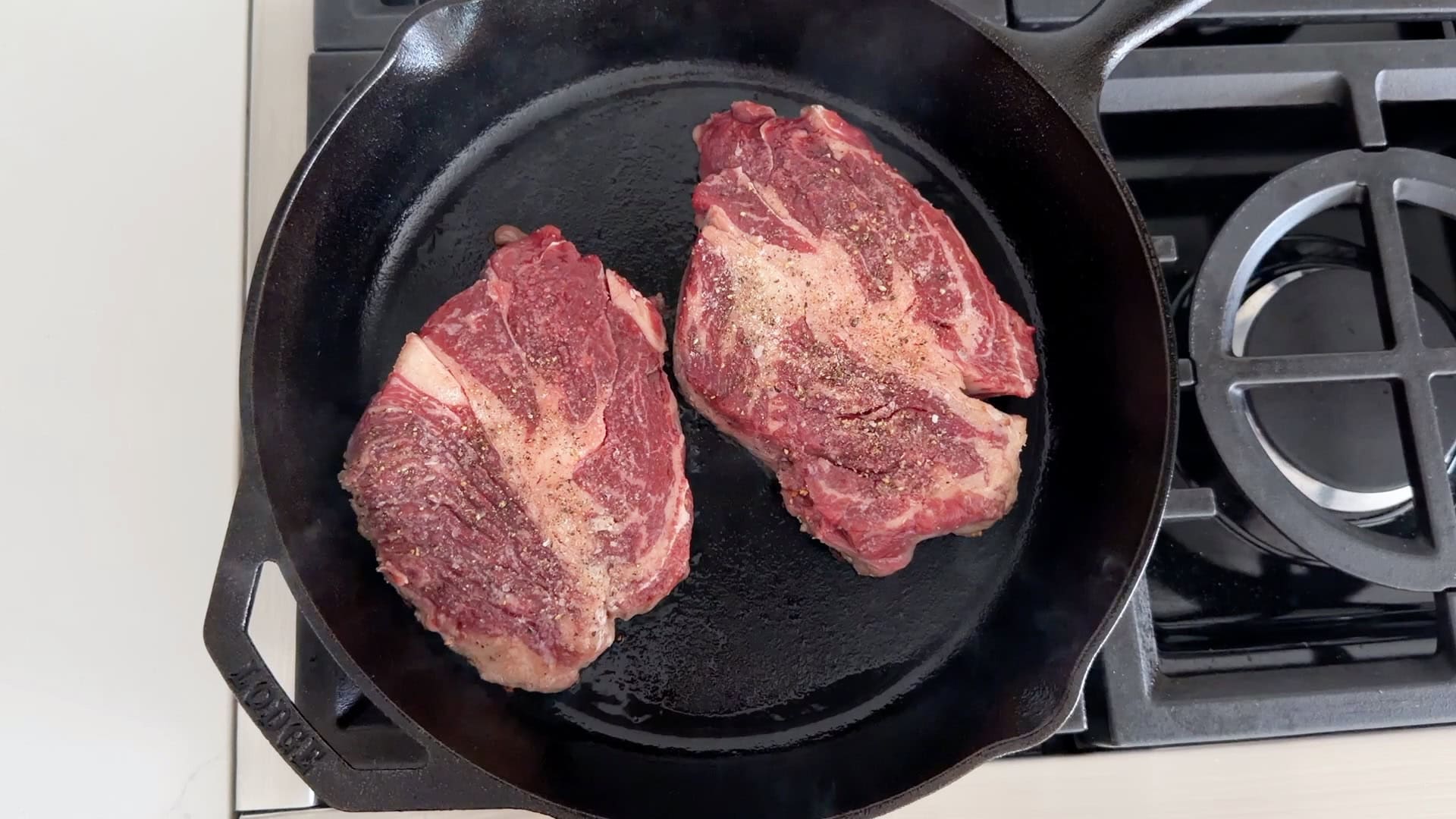
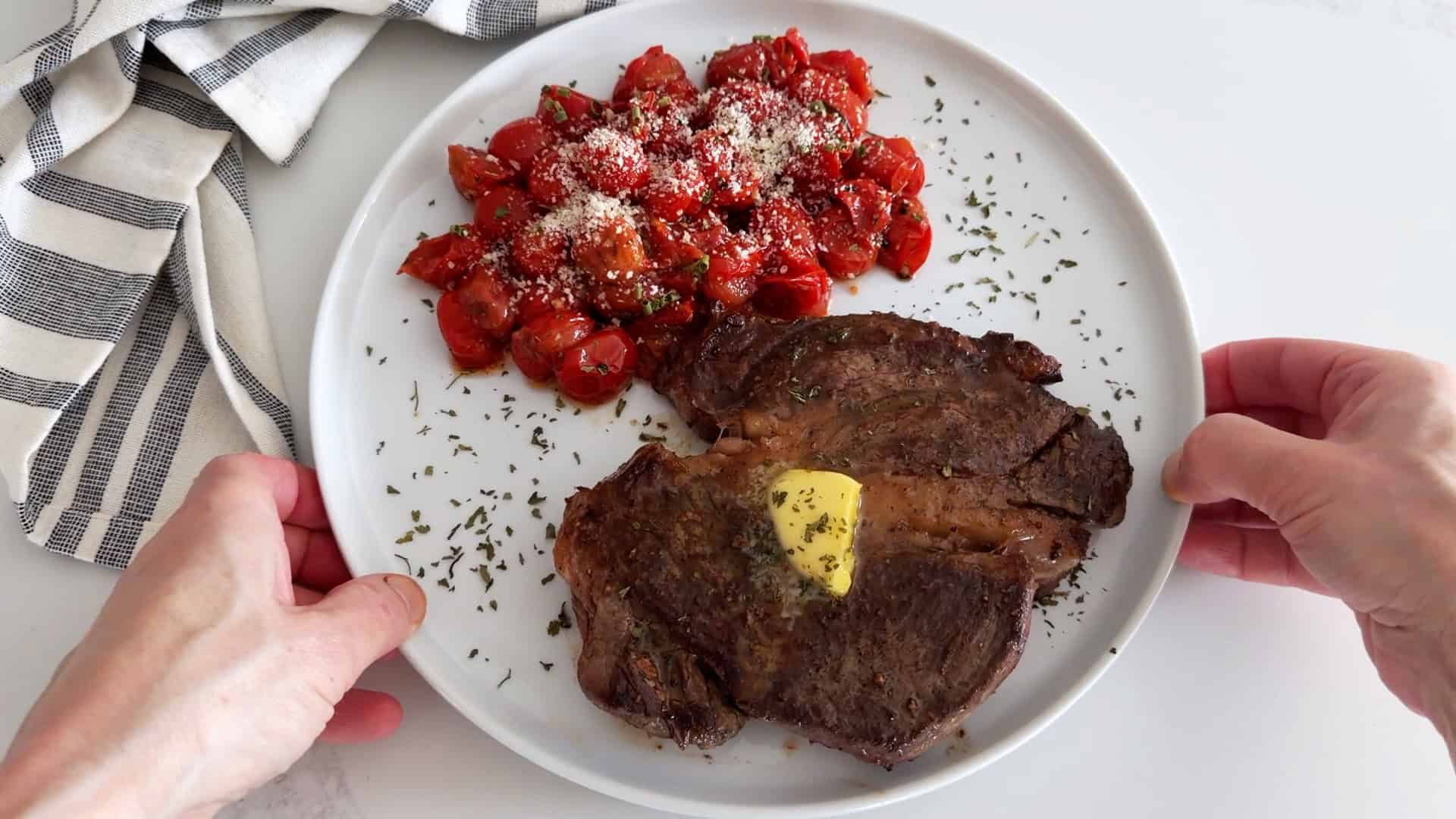
Finish cooking: Reduce the heat to medium. Flip again and continue cooking until the internal temperature reaches 135°F for medium-rare or 145°F for medium (as recommended by the USDA). Let the steaks rest for 5 minutes, top with butter, and serve.
Recipe Tips
- Patting the steaks dry is essential. Moisture prevents a proper crust, so don't skip this step.
- Use a very hot pan. The light smoke is your signal that the skillet is ready for a perfect sear.
- Don't move the steaks while searing. Letting them sit undisturbed is what creates that rich, caramelized crust.
- Adjust for thickness. If one steak is thicker, cook it slightly longer or start it first.
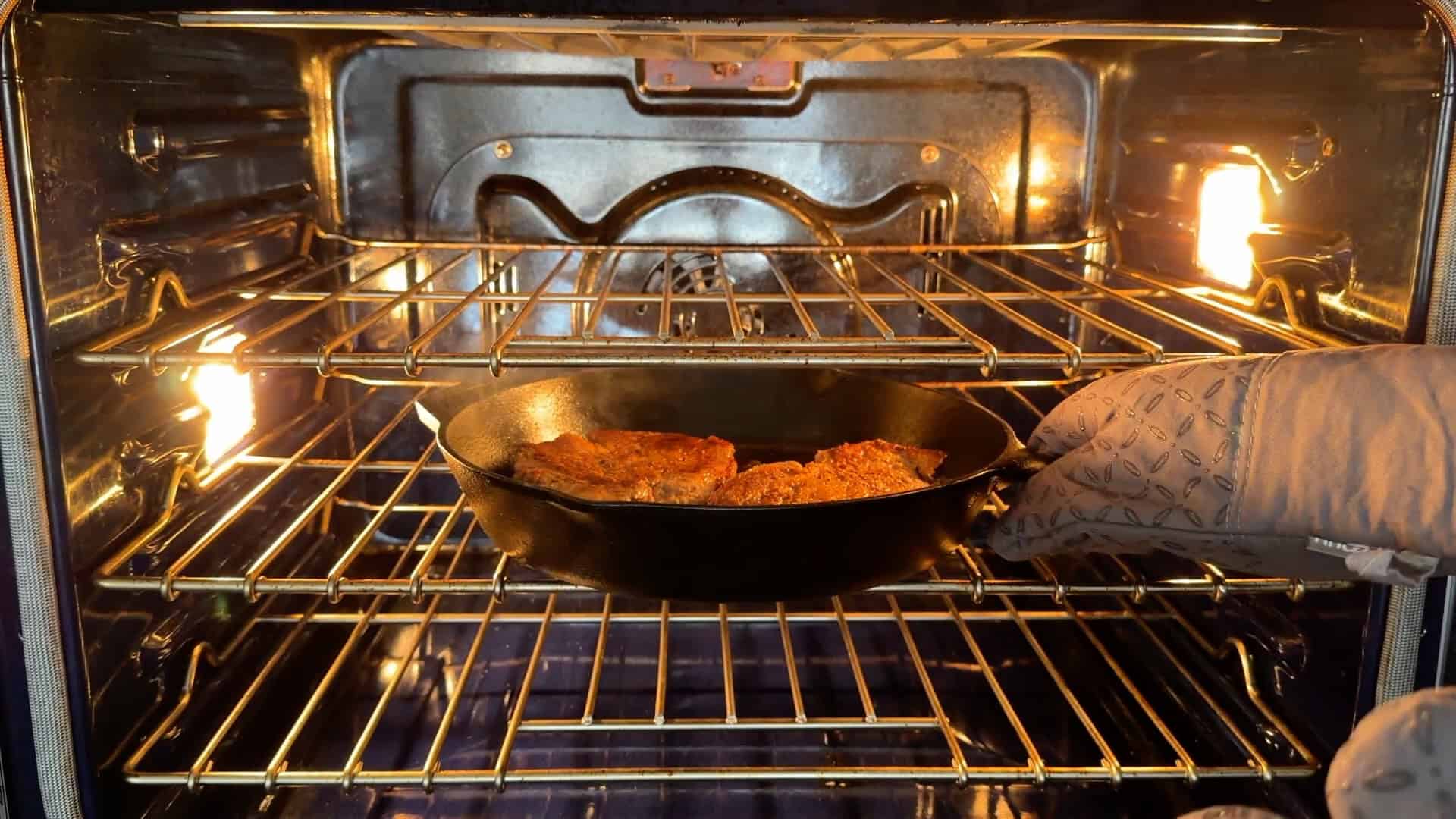
- Try the oven finish method. After searing both sides, transfer the skillet to a 450°F oven for 3-5 minutes for even cooking, as shown in the image below.
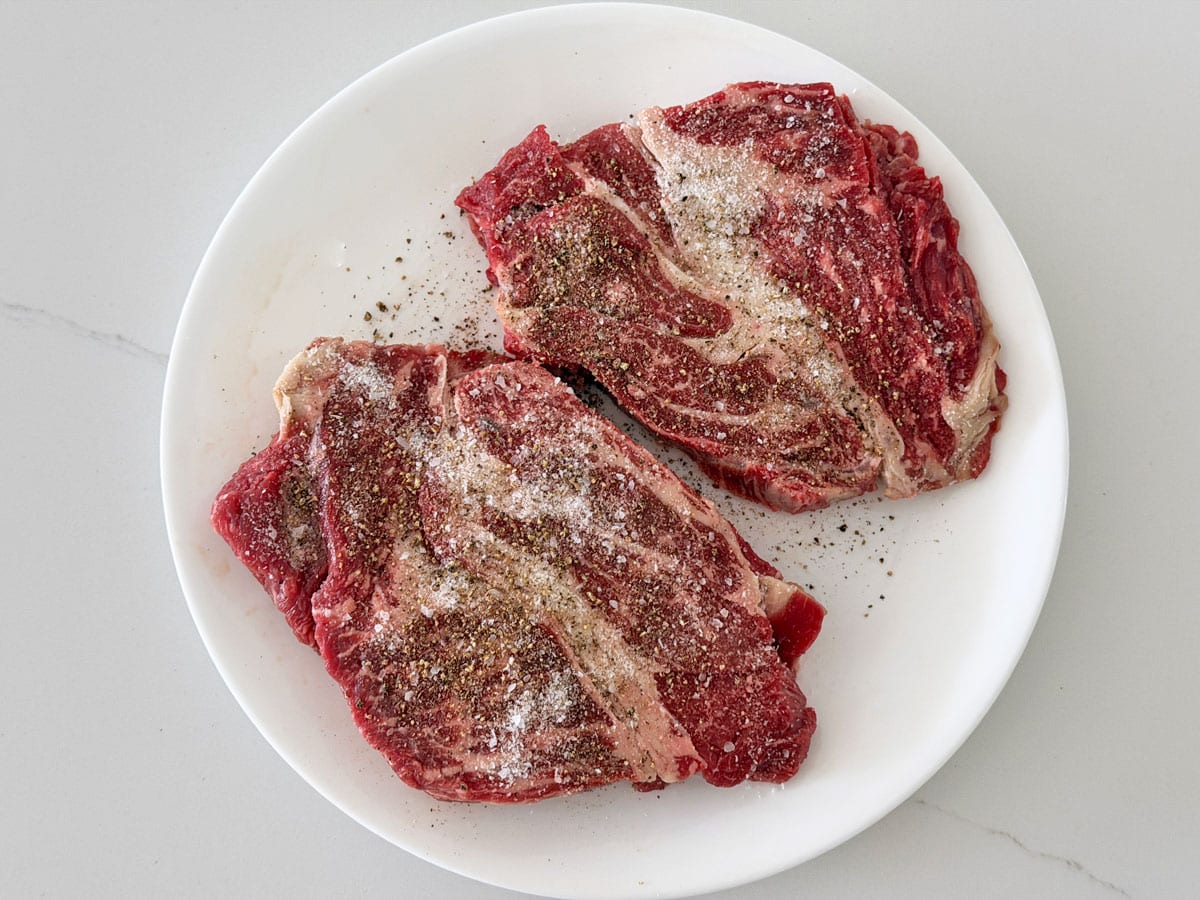
- Use high-quality seasoning. Coarse kosher salt (like Diamond Crystal) and freshly ground black pepper make a noticeable difference in flavor. The image below demonstrates why I'm so loyal to Diamond Crystal Kosher salt. Its crystals are hollow, lightweight, and can be easily crushed with your fingers and evenly sprinkled on food. This makes it easier to salt food correctly without overdoing it.
Recipe FAQs
Chuck eye steak comes from a more tender section near the ribeye, with better marbling. Chuck roast, on the other hand, contains more connective tissue and requires low-and-slow cooking to break it down. I use it in slow-cooked recipes such as pulled beef, goulash, and pot roast.
Yes, but cast iron is ideal because it retains heat well and creates the best crust. Carbon steel and stainless steel skillets are acceptable options. Don't use a nonstick pan - you can't get those hot enough to sear a steak.
If you're not using a pre-seasoned cast-iron skillet, add a tablespoon of avocado oil or clarified butter. Heat the oil over medium-high heat until shimmering before adding the steaks.
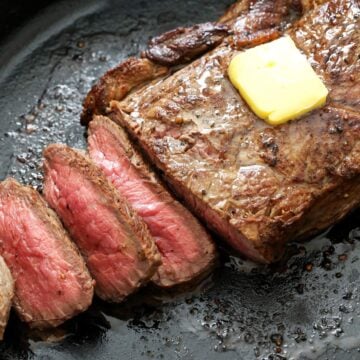
There's no need to bring the steak to room temperature. A cold center lets you sear the steak well, creating a beautiful crust while keeping it medium-rare, as shown in the photo below.

No. If your steak is frozen, thaw it completely before cooking. Cooking a steak from frozen can lead to uneven cooking, causing the outside to burn while the inside remains rare.
This steak comes from a section of the cow located right next to the ribeye, giving it similar flavor and marbling (you can see the beautiful marbling in the photo below).
While it's slightly less tender and may contain a bit more connective tissue, it still delivers a rich, juicy steak experience when cooked properly. Because it's less expensive than ribeye steak, it offers a more budget-friendly way to enjoy a comparable taste and texture.
Serving Suggestions
Chuck eye steak pairs beautifully with simple sides that let the beef shine. Here are a few ideas:
- Spinach is a great side dish to steak. Try creamed spinach, sautéed spinach, or steamed spinach.
- A fresh green salad with a simple vinaigrette, like this Caesar salad.
- Steamed or sautéed vegetables, such as sautéed green beans or steamed asparagus.
- Mushrooms are another great option. Try garlic butter sauteed mushrooms, roasted mushrooms, or shiitake mushrooms.
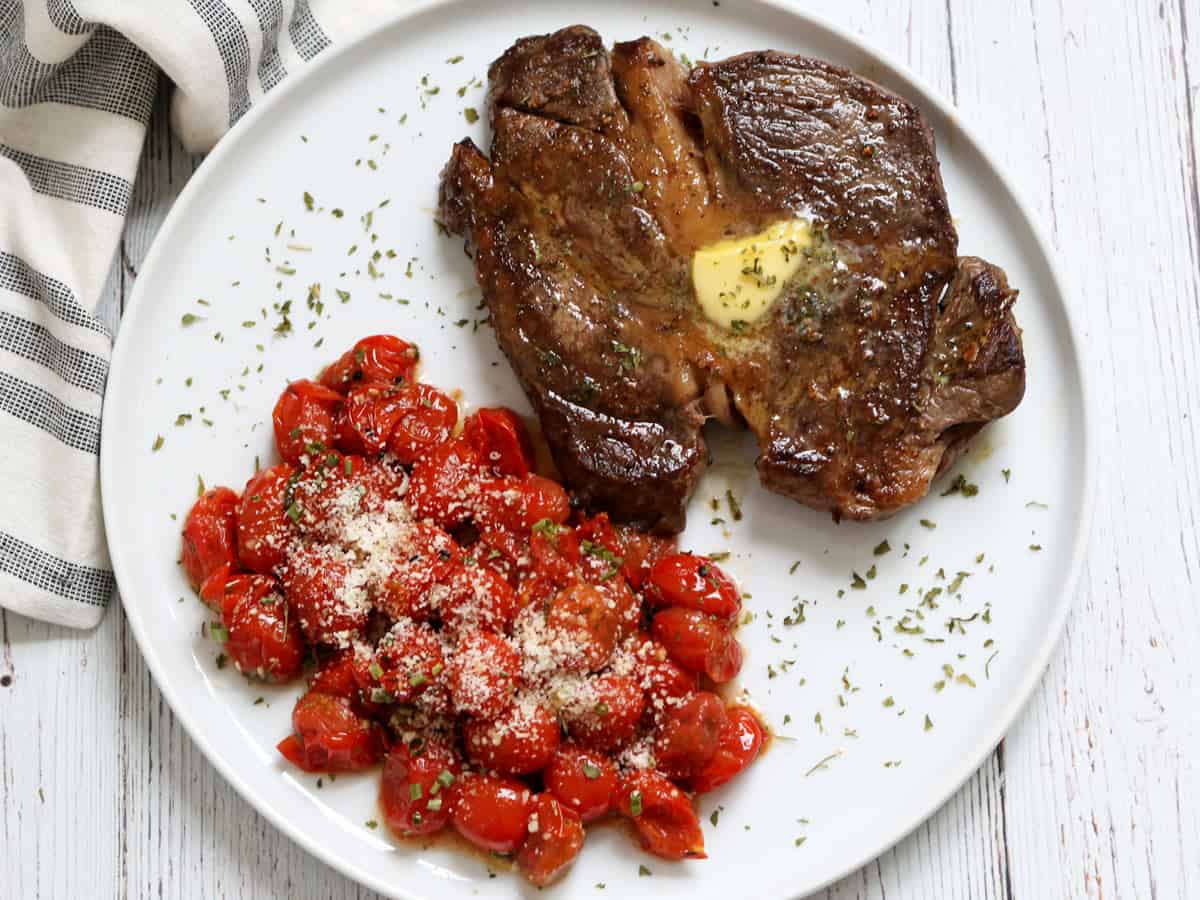
- Roasted veggies, such as roasted cabbage or the roasted cherry tomatoes shown in the image below.
Storing and Using the Leftovers
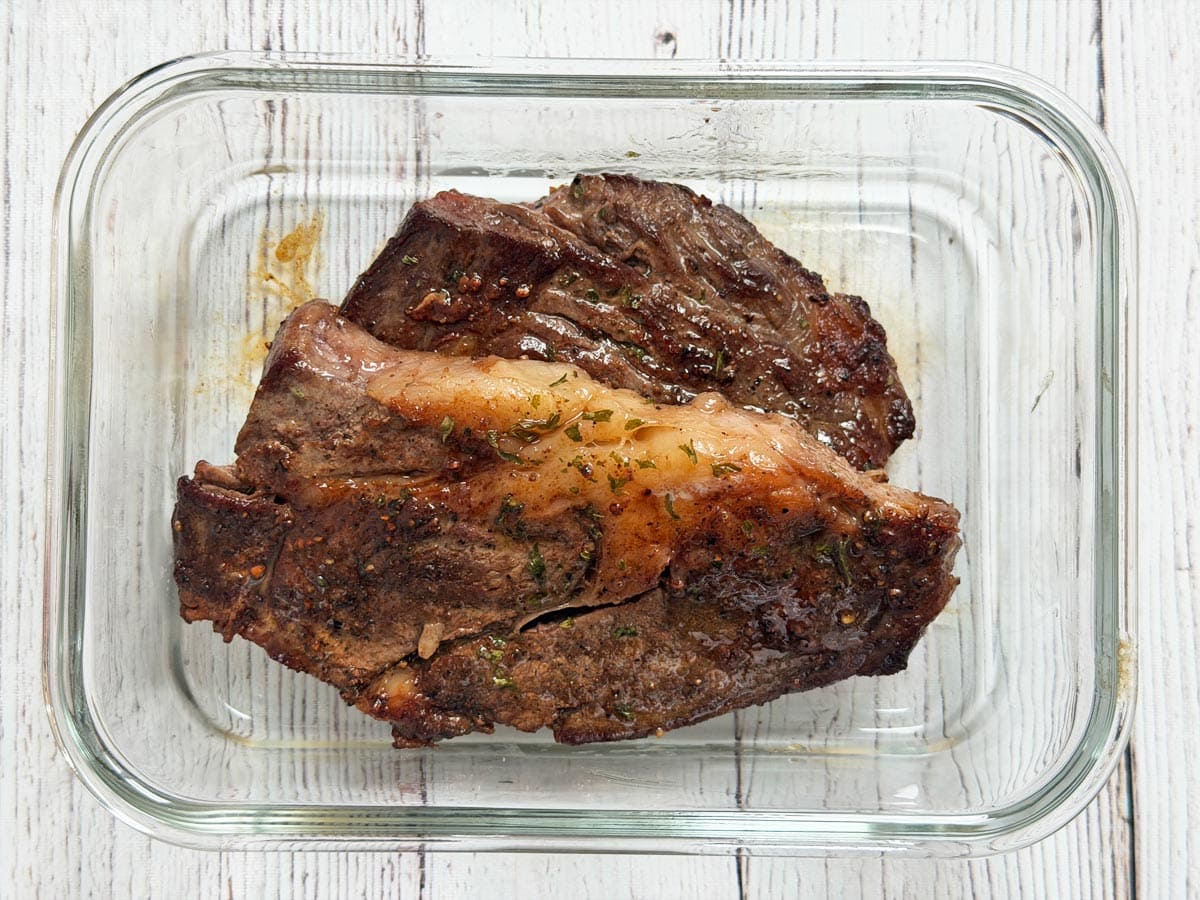
Store the leftovers in an airtight container in the fridge, as shown in the photo below, for up to 3 days. Reheat them gently in a skillet over low heat or in a 350°F oven to avoid overcooking. You can freeze the cooled leftovers for up to 2 months, though the texture is best when fresh.
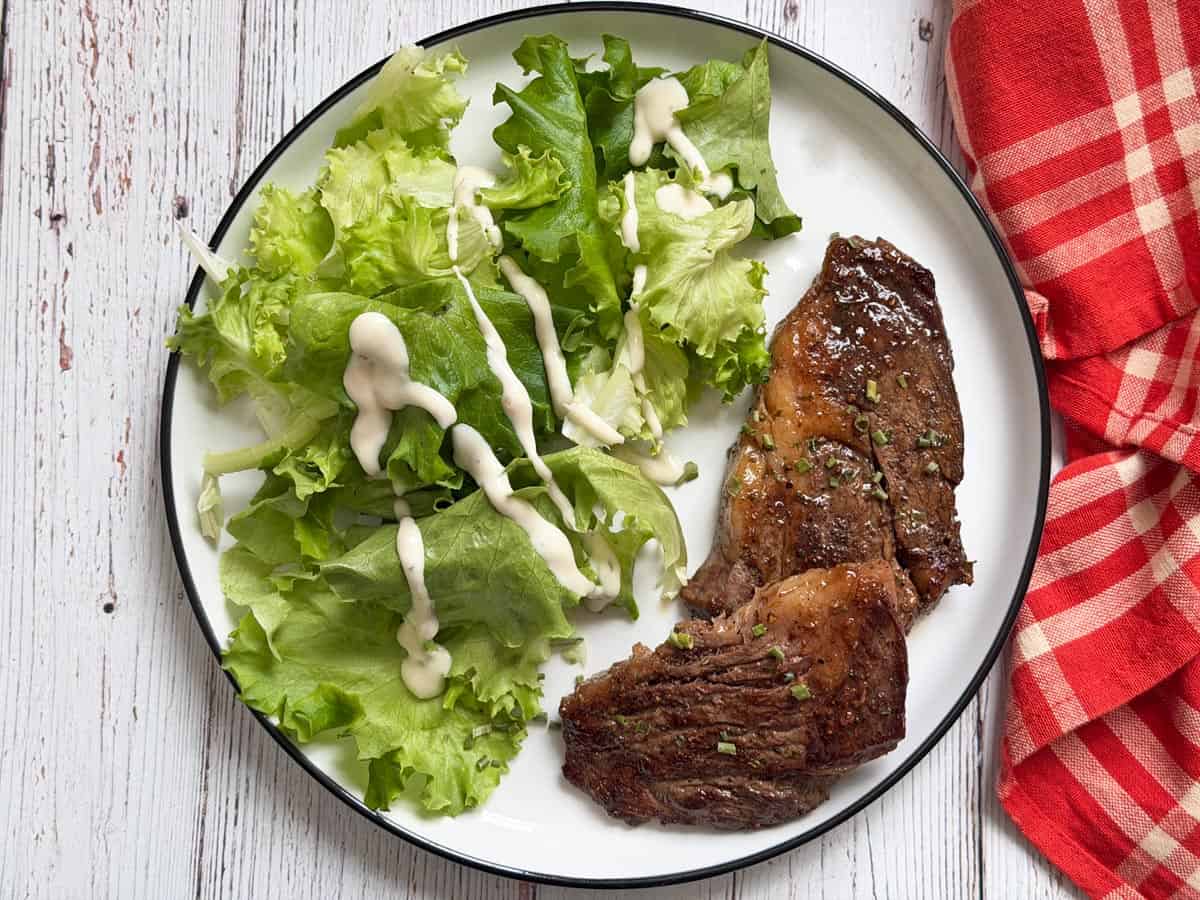
I actually prefer serving leftover steak cold, straight out of the fridge. It's delicious! In the image below, you can see it served with the simplest side salad of torn lettuce leaves dressed with blue cheese dressing. I drizzled the leftover steak with melted butter for extra flavor.
Recipe Card

Juicy Chuck Eye Steak
Video
Ingredients
- 2 chucks eye steaks - ½ pound each, ¾-inch thick
- ½ teaspoon Diamond Crystal kosher salt - or ¼ teaspoon of any other salt
- Freshly ground black pepper
- 2 tablespoons unsalted butter
Instructions
- Blot the steaks dry with paper towels and season them with salt and pepper.

- Heat a well-seasoned 12-inch cast-iron skillet over medium-high heat until it starts to lightly smoke. Add the steaks.
- Cook the steaks undisturbed for about 3 minutes, until a brown crust develops on the bottom. Flip the steaks and cook for about 2 more minutes, until a crust develops on the second side.
- Lower the heat to medium, flip again, and continue cooking until the steaks reach an internal temperature of 135°F (medium-rare). On my stovetop, this usually takes 2 additional minutes per side. For medium doneness (145°F), as recommended by the USDA, cook for about 3 additional minutes per side. *See the notes section below for additional tips.
- Remove the steaks to heated plates, cover them loosely, and let them rest for 5 minutes. Top with butter and serve.


Notes
- Seasonings, especially salt, are just guidelines. Adjust to taste.
- If you have a smoke alarm near your kitchen, open your kitchen windows and run your range hood fan on high.
- If one steak is thicker, cook it slightly longer or start it first.
- Instead of step 4, after searing both sides, you can transfer the skillet to a preheated 450°F oven for 3-5 minutes for even cooking.
- There's no need to bring the steak to room temperature. A cold center lets you sear the steak well, creating a beautiful crust while keeping it medium-rare.
- The cook times suggested here are a guideline. Many variables can affect how long you'll need to cook the steak, including your stove, the skillet you use, your steak's initial temperature, and its thickness. There's no escaping the need to be flexible and adjust recipes to what happens in your own kitchen.
- Cast iron is ideal because it retains heat well and creates the best crust. Carbon steel and stainless steel skillets are acceptable alternatives. Don't use a nonstick pan - you can't get those hot enough to sear a steak.
If you're not using a pre-seasoned cast-iron skillet, add a tablespoon of avocado oil or clarified butter. Heat the oil over medium-high heat until shimmering before adding the steaks. - If your steak is frozen, thaw it completely before cooking. Cooking a steak from frozen can lead to uneven cooking, causing the outside to burn while the inside remains rare.
- Store the leftovers in an airtight container in the fridge for up to 3 days. Reheat them gently in a skillet over low heat or in a 350°F oven to avoid overcooking. You can freeze the cooled leftovers for up to 2 months, though the texture is best when fresh.
Nutrition per Serving
Save this Recipe!
We will also add you to our weekly newsletter. Unsubscribe anytime. See healthyrecipesblogs.com/privacy/ to learn how we use your email.
Disclaimers
Most recipes are low-carb and gluten-free, but some are not. Recommended products are not guaranteed to be gluten-free. Nutrition info is approximate - please verify it. The carb count excludes non-nutritive sweeteners. Please read these Terms of Use before using any of my recipes.



Mindy says
I made it last night and it turned out so juicy and full of flavor with almost no effort. Definitely keeping this one in my regular dinner rotation!
Vered DeLeeuw says
I'm so glad to hear, Mindy! Thank you very much for the review.