
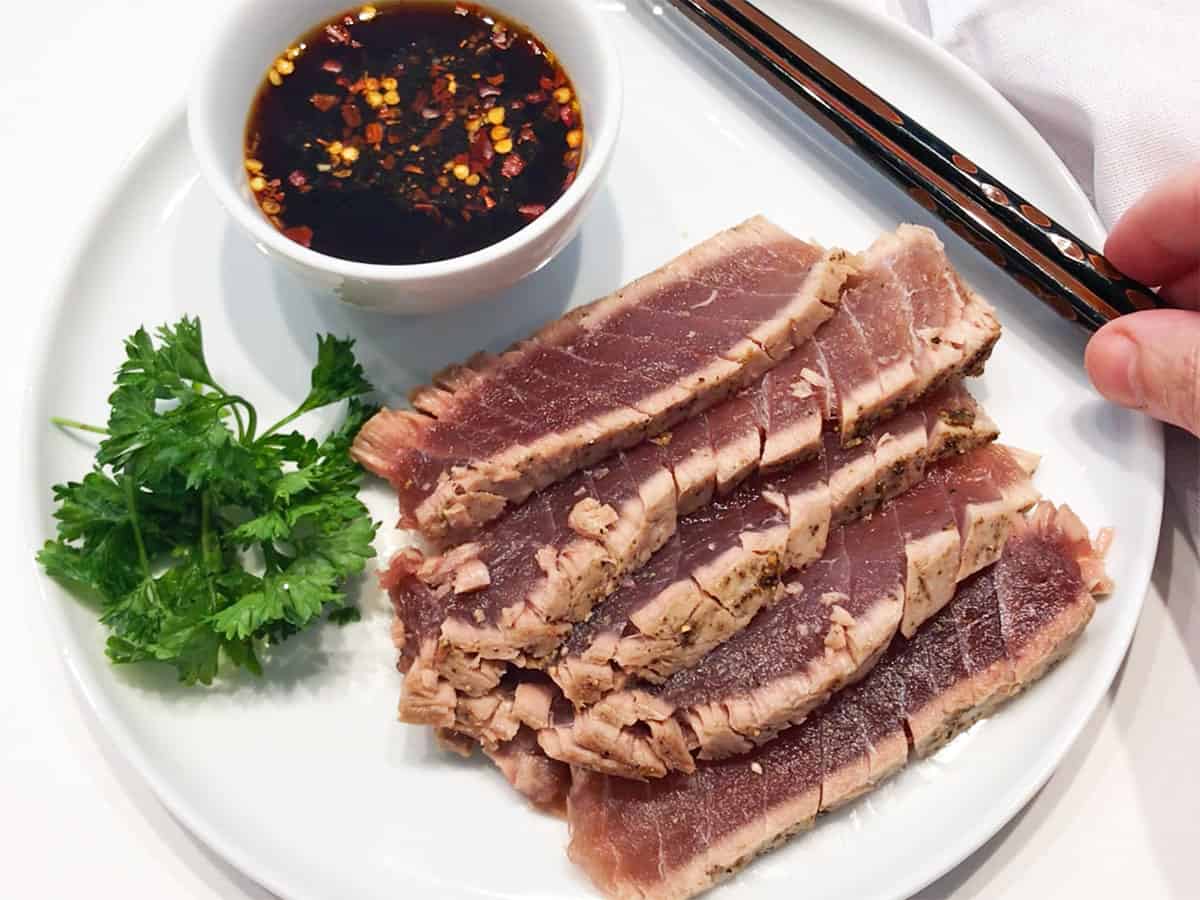
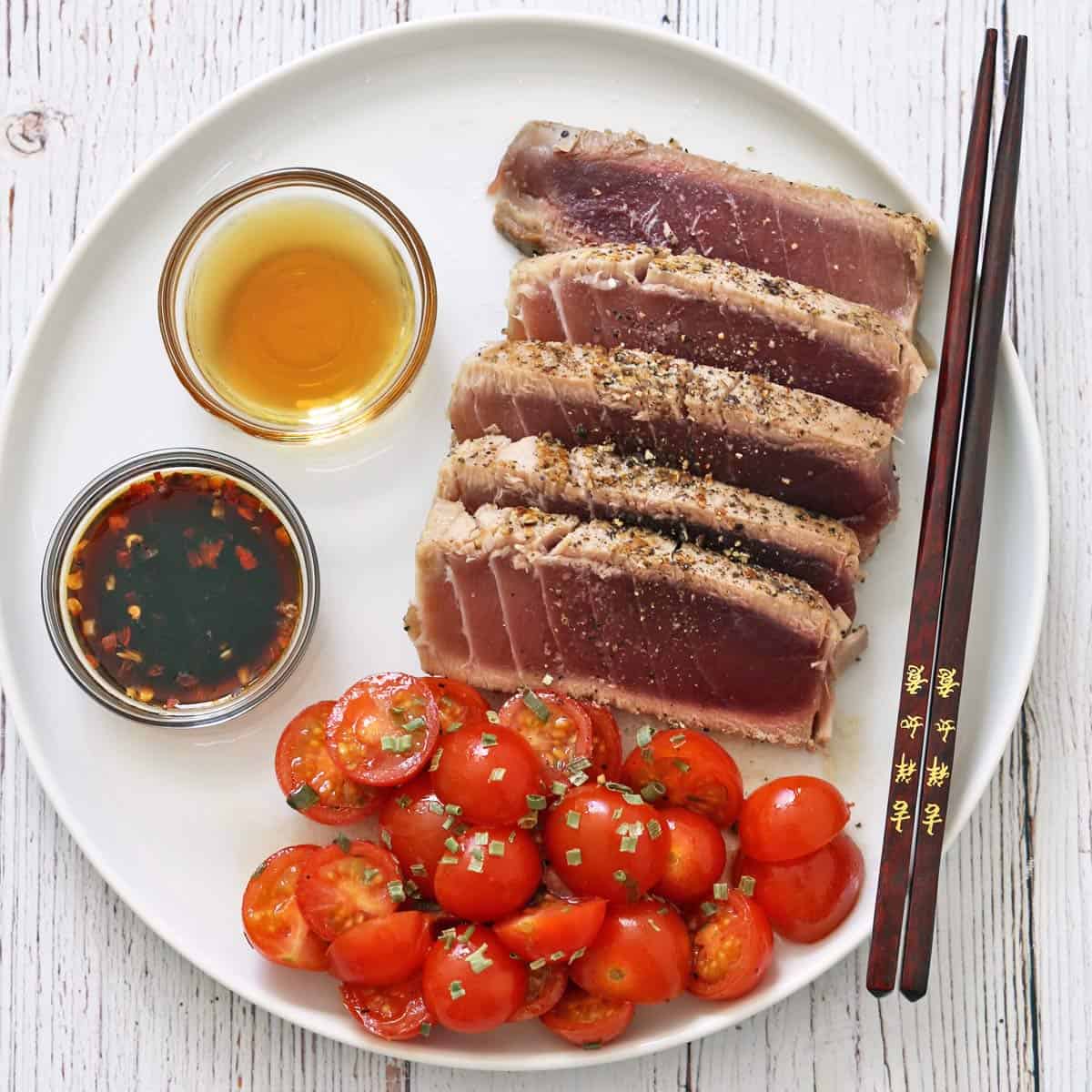
In this 20-minute recipe for seared tuna steak, the fish is cooked in a hot skillet and then sliced and served with a spicy dipping sauce.
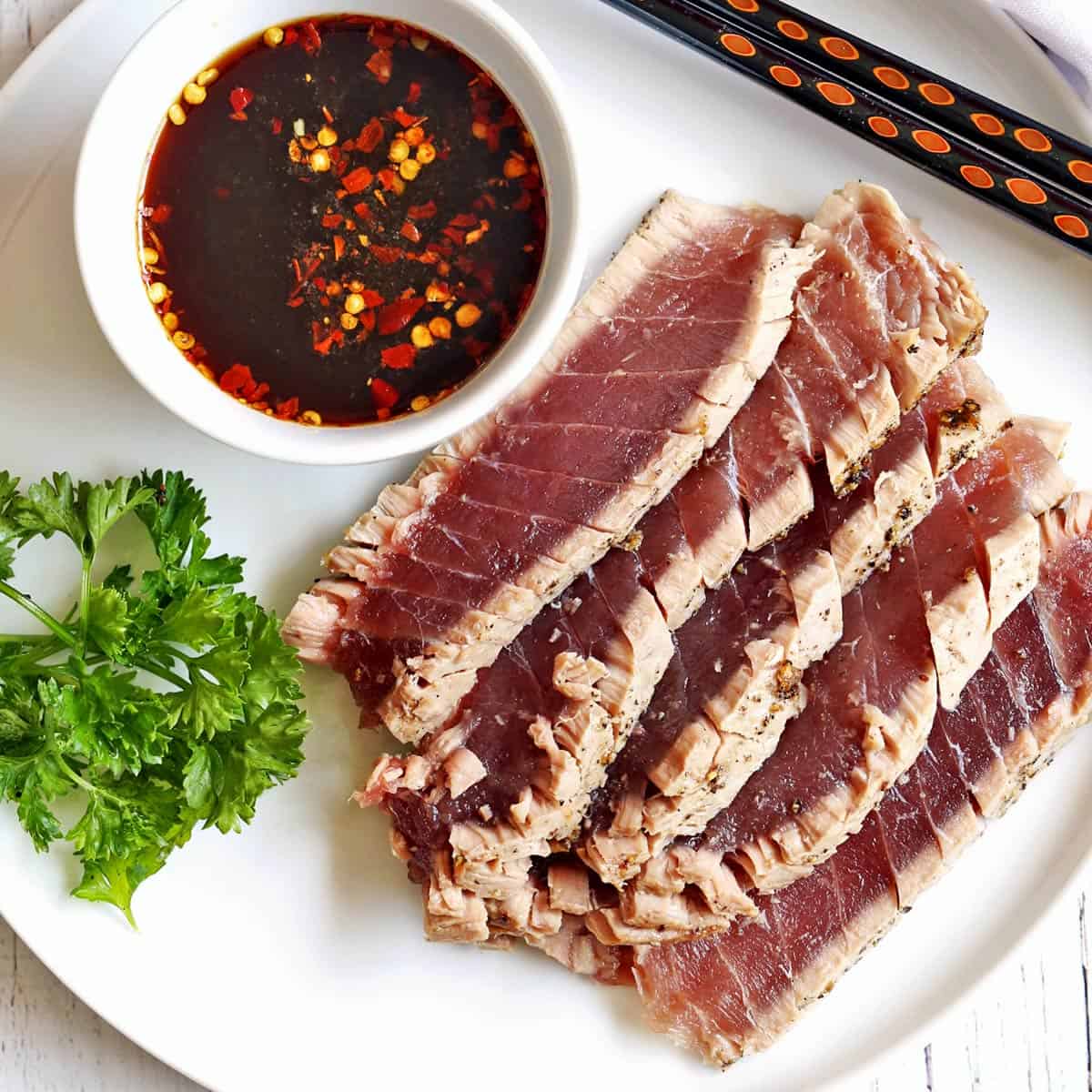
Served with a simple homemade dipping sauce, seared tuna steak is a restaurant-quality meal that you can easily prepare at home using sashimi-grade tuna. If you enjoy the bold flavor and meaty texture of fresh tuna, you will love this easy recipe! It's ready fast, making it ideal for a delicious weeknight dinner.
Ingredients and Substitutions
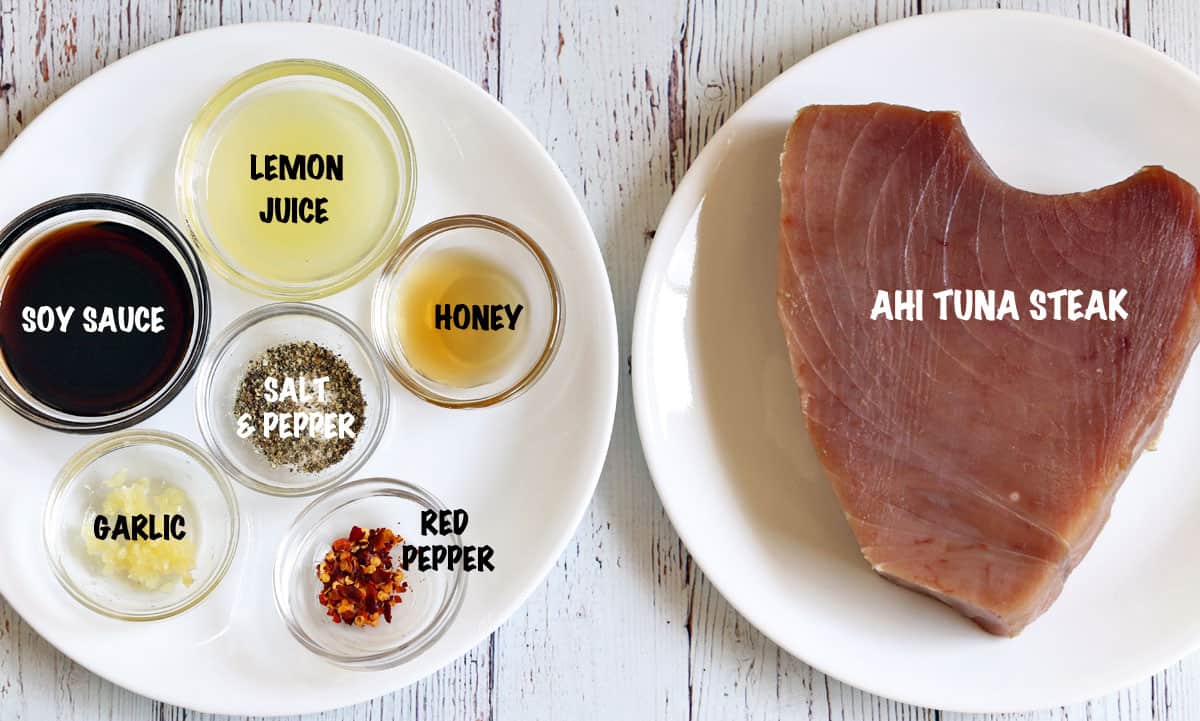
Here's a look at the ingredients required for this recipe. The exact measurements are listed in the recipe card.
For the sauce:
- Reduced-sodium soy sauce: Or a gluten-free alternative.
- Fresh lemon juice: It's best to use freshly squeezed juice. Rice vinegar is an acceptable substitution, but lemon juice is better.
- Minced garlic: I often use jarred minced garlic, but I highly recommend mincing fresh garlic cloves. Sometimes I add a teaspoon of freshly grated ginger.
- Honey: Just 1 teaspoon to balance out the other flavors. You can omit the honey or use a sugar-free substitute.
- Crushed red peppers: Add subtle heat and an extra layer of flavor to the sauce.
For the tuna:
- Ahi tuna steaks: They should be sashimi-grade, since we will keep the middle rare.
- To season: Kosher salt and black pepper.
- Avocado oil: Or ghee (clarified butter). If using a well-seasoned cast-iron skillet, you can skip the oil.
Instructions
This dish may seem fancy when served at restaurants, but it's actually easy to make at home. The only challenge is to avoid overcooking the fish, as overcooked tuna becomes dry and tasteless. The detailed instructions for making this recipe are included in the recipe card. Here's an overview of the steps.
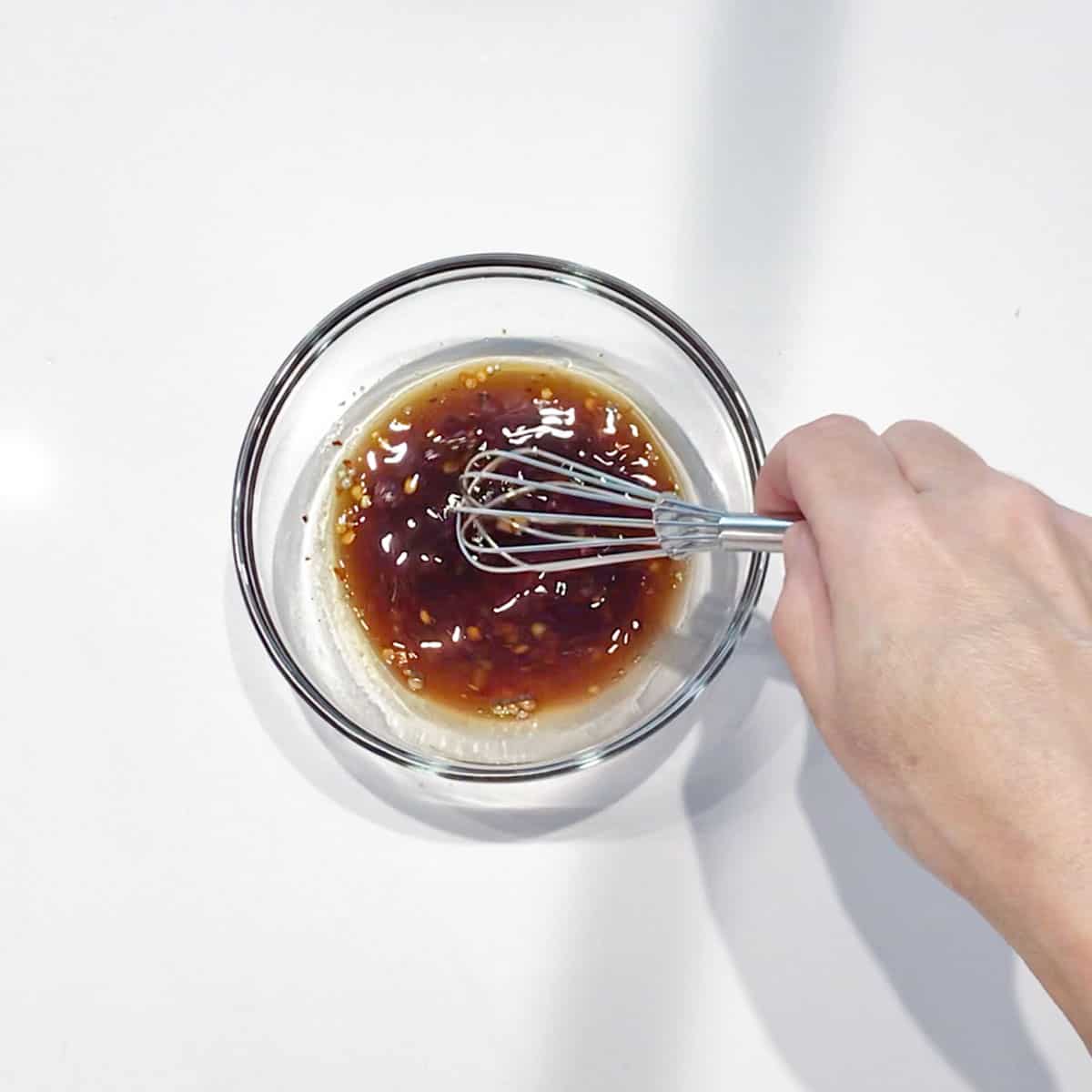
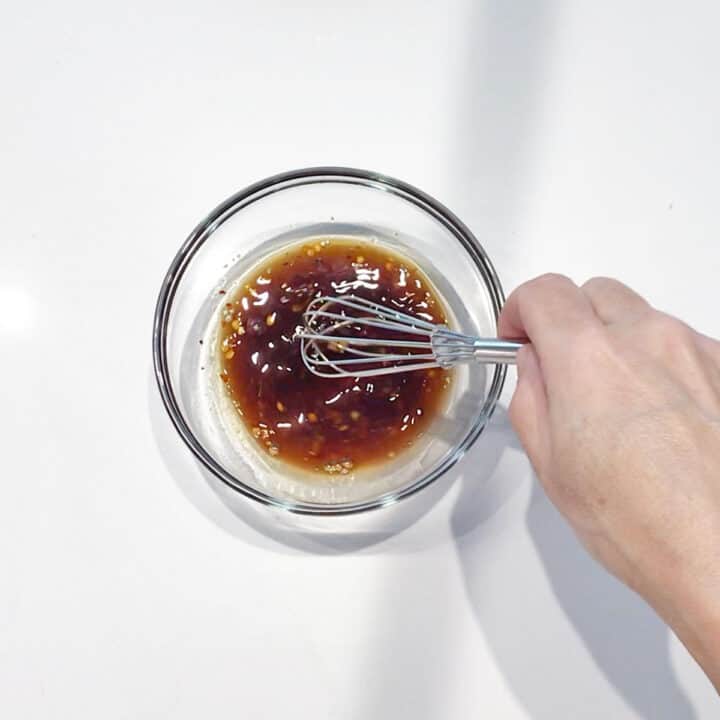
Whisk together the sauce ingredients in a small bowl and set aside.
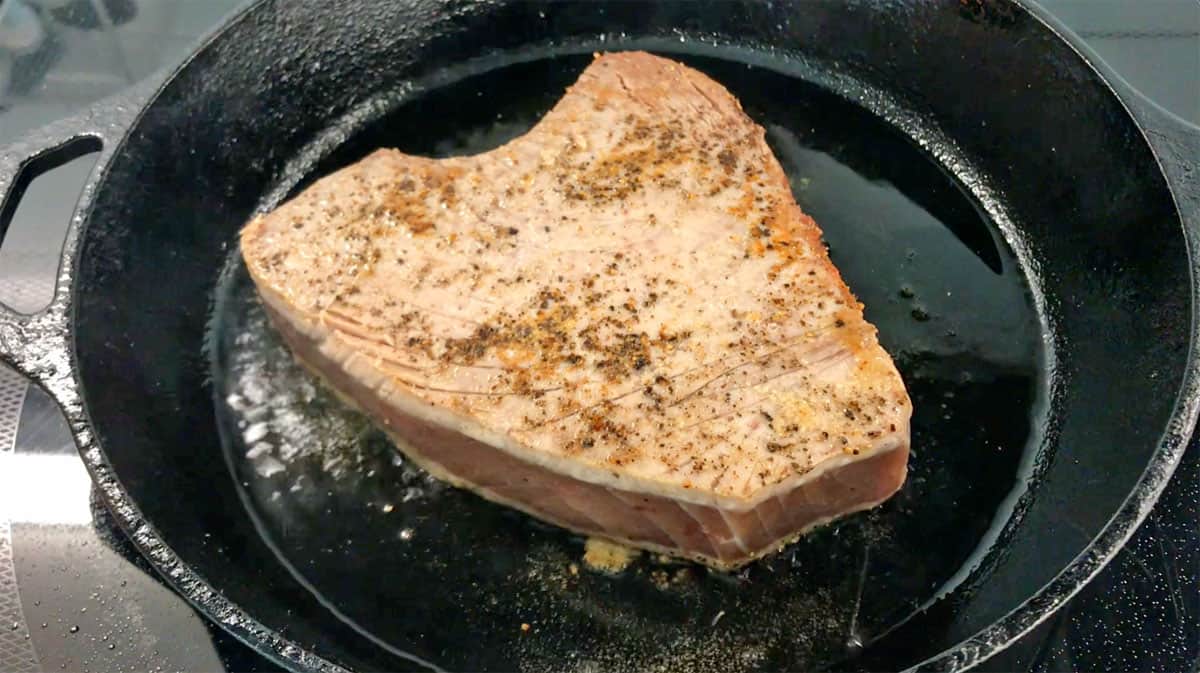
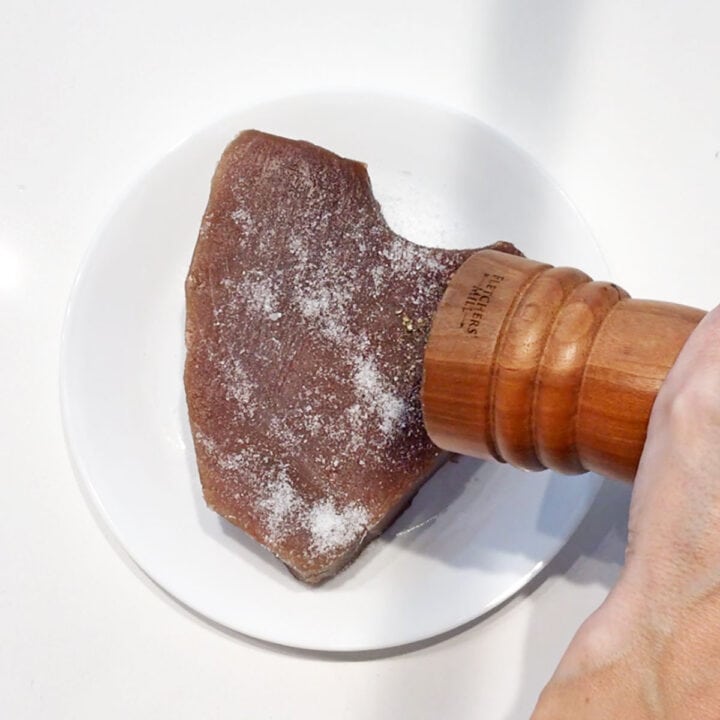
Season the tuna with salt and pepper, then cook it for 1-2 minutes per side. The idea is to sear the outside while leaving the inside rare.
Cut the tuna into 1⁄4-inch-thick slices and serve it with the dipping sauce.
Variation: Sesame-Crusted Tuna Steak
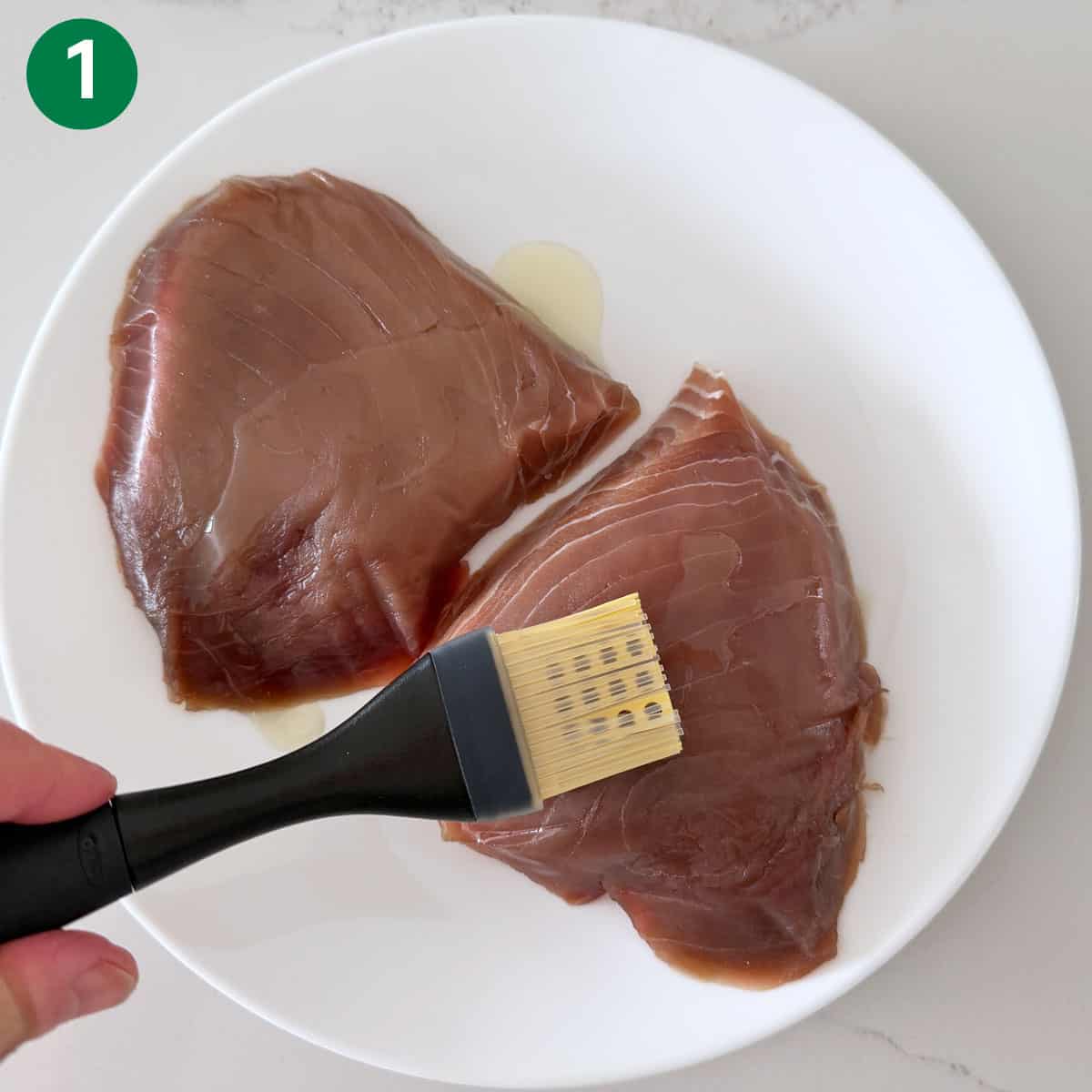
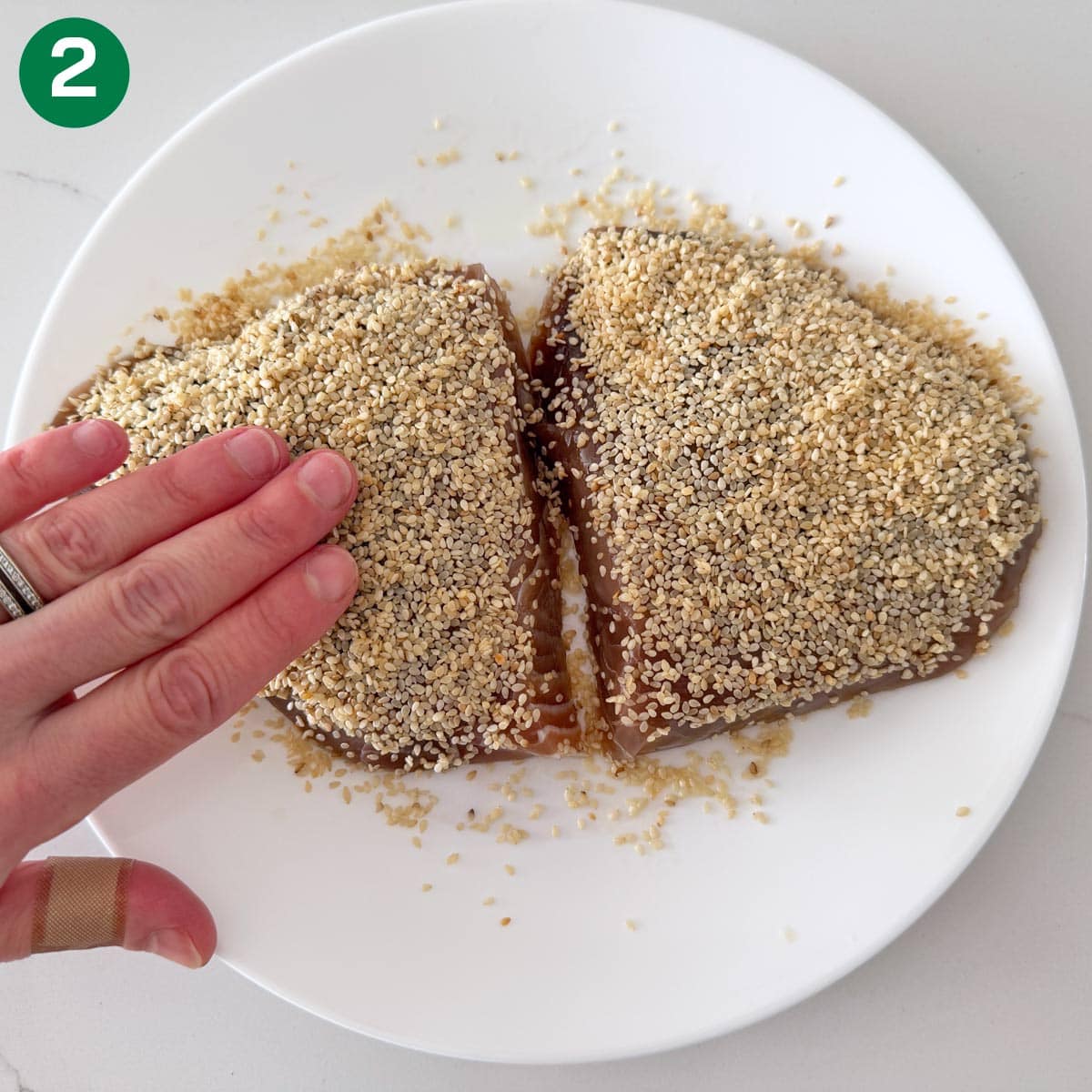
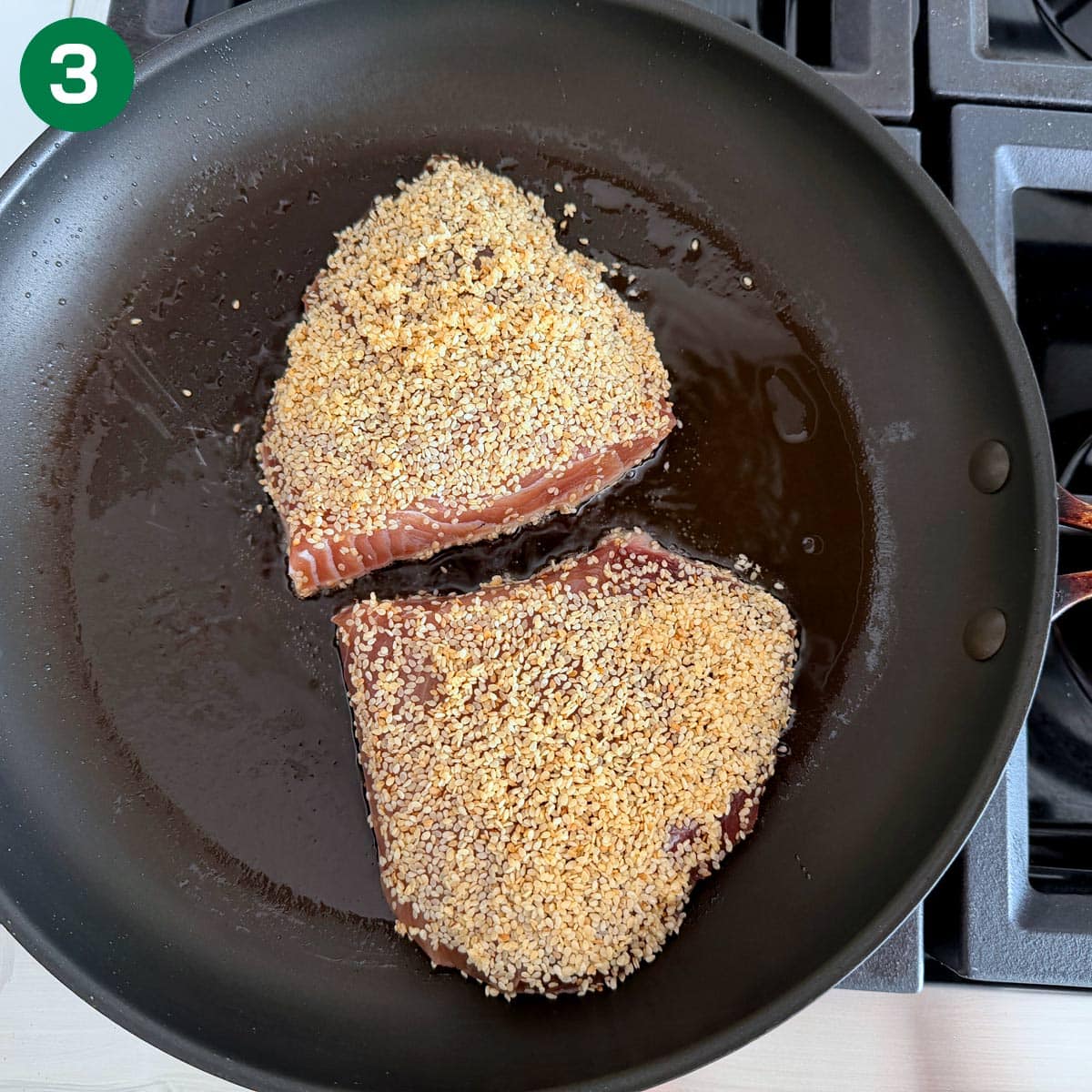
To make a sesame-crusted version, coat the tuna with avocado oil, dredge it in sesame seeds, and sear as usual. The photos below show the process. Although I must say that after trying this version a couple of times, I'm not sure it's worth the trouble!
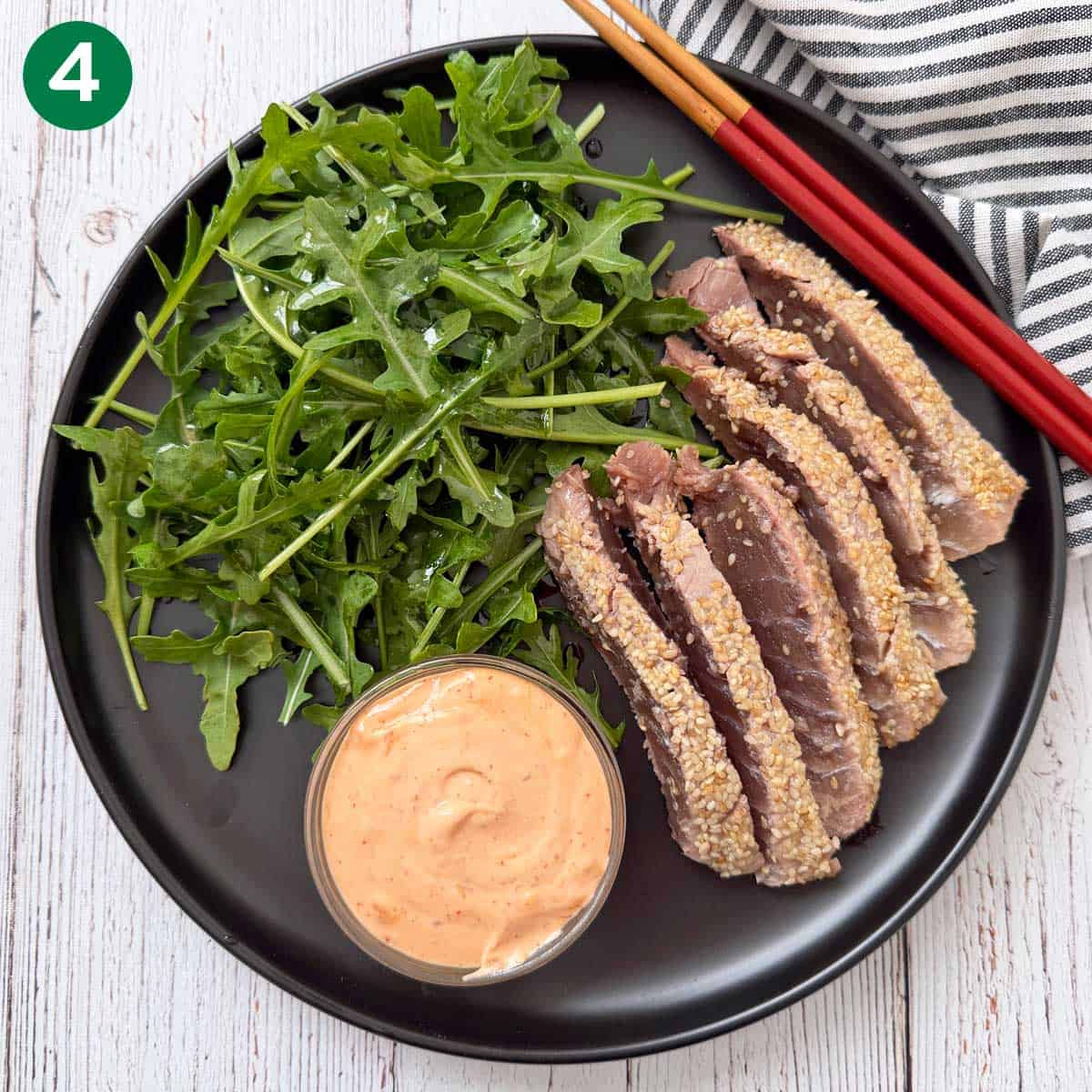
I AM a big fan of using spicy mayo as the dipping sauce, as shown in the image above. I also enjoyed the simple side dish of arugula drizzled with sesame oil and soy sauce.
I'm not a big fan of tuna usually, but the dipping sauce is so good that even I enjoyed it. I think I'm in trouble, because the wife, who likes tuna, wants me to make it weekly from now on!
Kevin
Read more comments
 I'm not a big fan of tuna usually, but the dipping sauce is so good that even I enjoyed it. I think I'm in trouble, because the wife, who likes tuna, wants me to make it weekly from now on!
Recipe Tip
How long you cook the fish depends on its thickness and how hot your stove/pan gets. Generally speaking, a 1.5-inch-thick steak should be cooked for about 2 minutes per side over medium-high heat. A thinner steak (¾-inch) will need about 1 minute per side.
The images below show a large 1-pound steak from Wild Fork Foods and two smaller, 8-ounce steaks from Fulton Fish Market. They obviously need to be cooked differently.
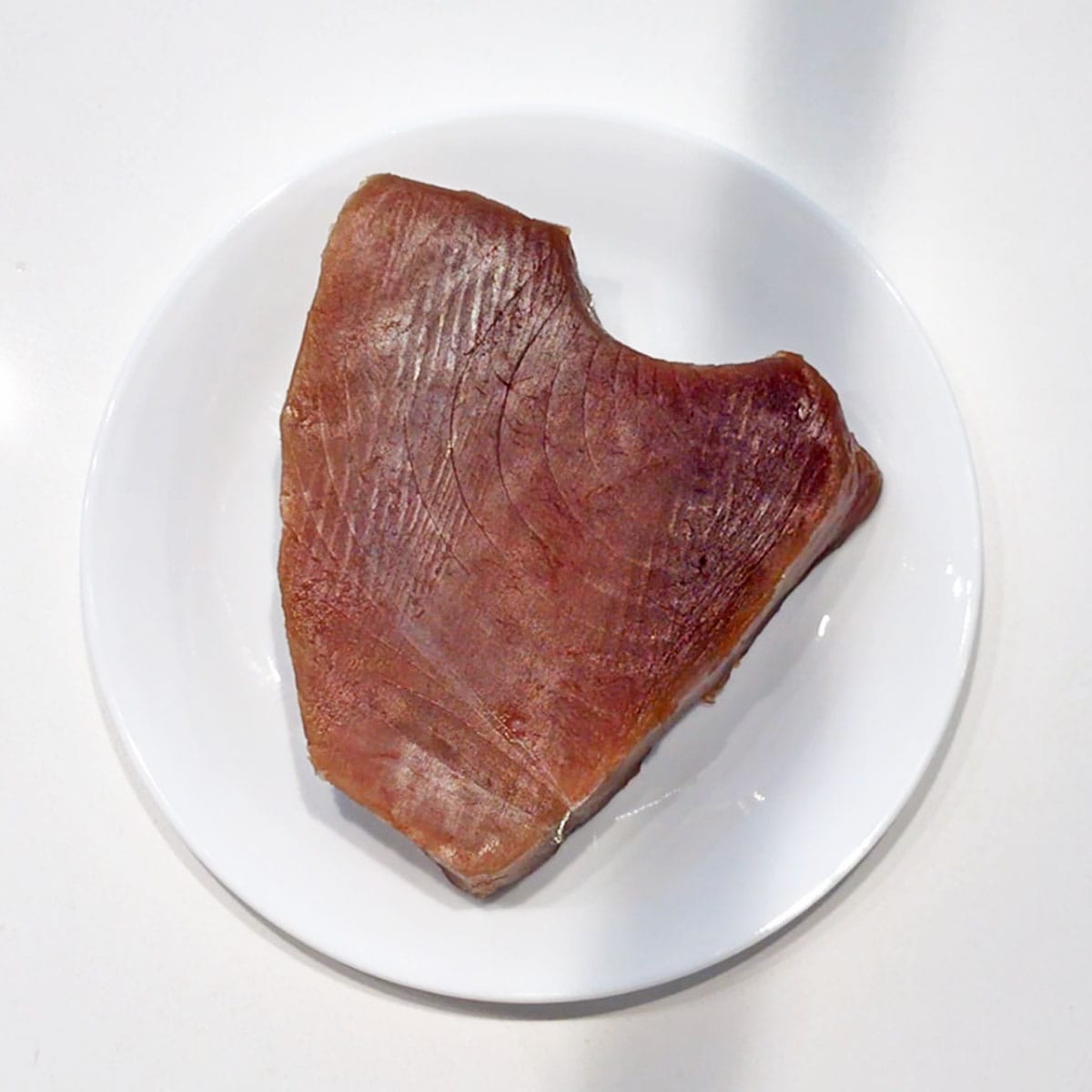
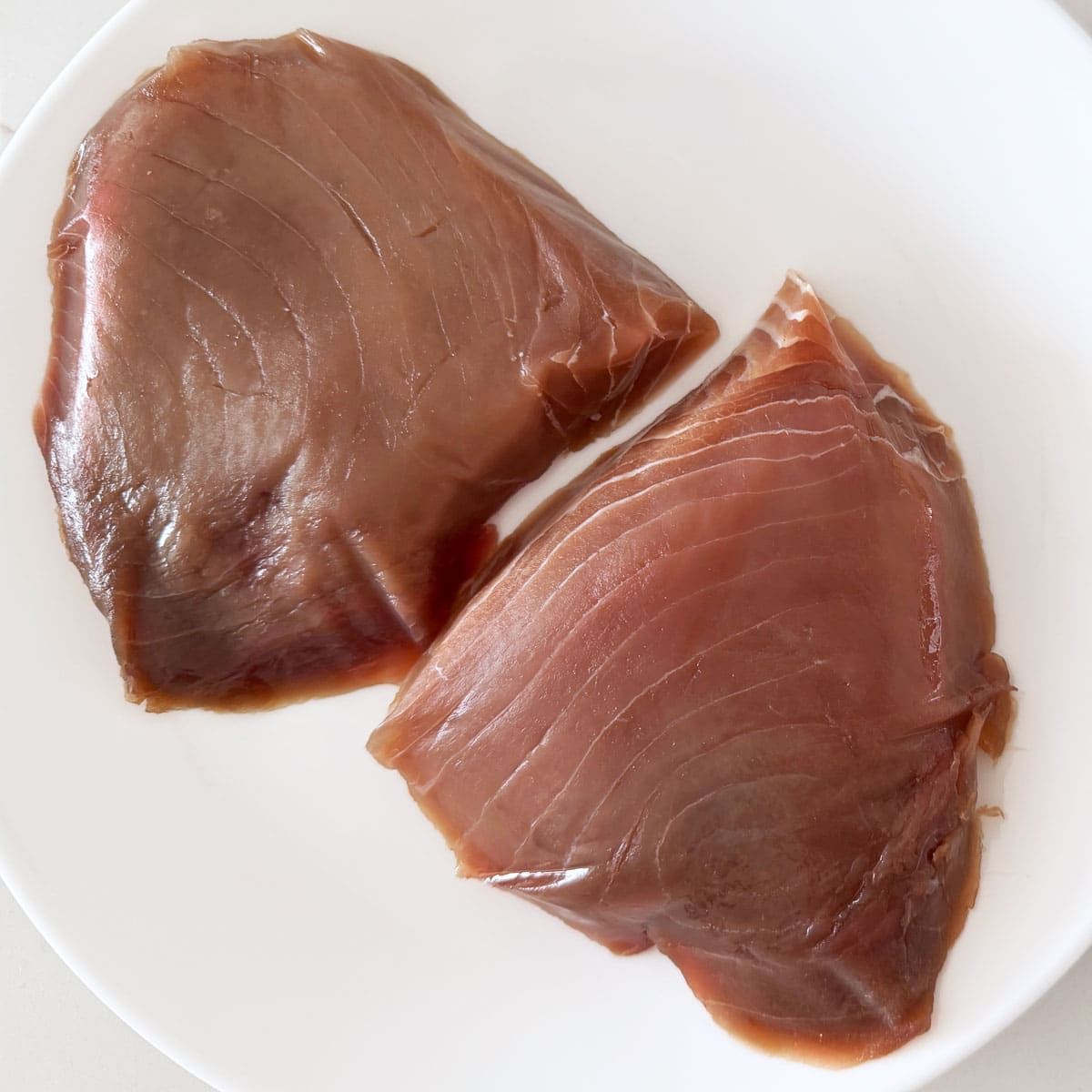
This is the type of recipe where there's no escaping the need to be flexible. Loosely follow the recipe, but stay aware of what's happening in your kitchen with your ingredients and equipment.
Ideally, the tuna should be cooked to rare or medium rare, but I should note that the CDC advises cooking fish to an internal temperature of 145°F. If you opt to leave it rare in the middle, make sure it is sashimi-grade and has been properly frozen.
Recipe FAQs
You can use the dipping sauce as a marinade, marinating the fish in it (in a resealable bag) in the fridge for 2 hours before cooking. If you plan on serving it with a dipping sauce, make a separate batch for that.
I prefer the tuna's flavor to be the star of the show, so I sear it without a marinade and serve it with a dipping sauce.
Unlike other fish recipes (such as grilled mahi mahi), where the fish is cooked through, it is barely cooked in this recipe. It's seared on the outside, leaving the inside rare or medium-rare (but not completely raw). So, the center should be red and slightly warm to the touch.
I will note that the USDA advises cooking fish to an internal temperature of 145°F.
You should be able to buy it at Whole Foods (tell the fishmonger you need fish suitable for raw applications), but I usually get it at Wild Fork Foods or Fulton Fish Market. The Wild Fork ones are typically huge - around 1 pound each, so I use one for two people. Both brands come frozen, so you'll need to thaw them overnight in the fridge.
Since the tuna's inside is not fully cooked, I don't recommend keeping the leftovers. Try to make only as much as you'll eat immediately.
Serving Suggestions
I usually serve seared tuna steak with a simple dipping sauce made from soy sauce and lemon juice.
Although this dish is usually served as an appetizer in restaurants, I like to make enough to serve it as a main course alongside Asian cabbage salad, Asian cucumber salad, Asian Brussels sprouts (as shown in the photo below), or cabbage stir-fry.
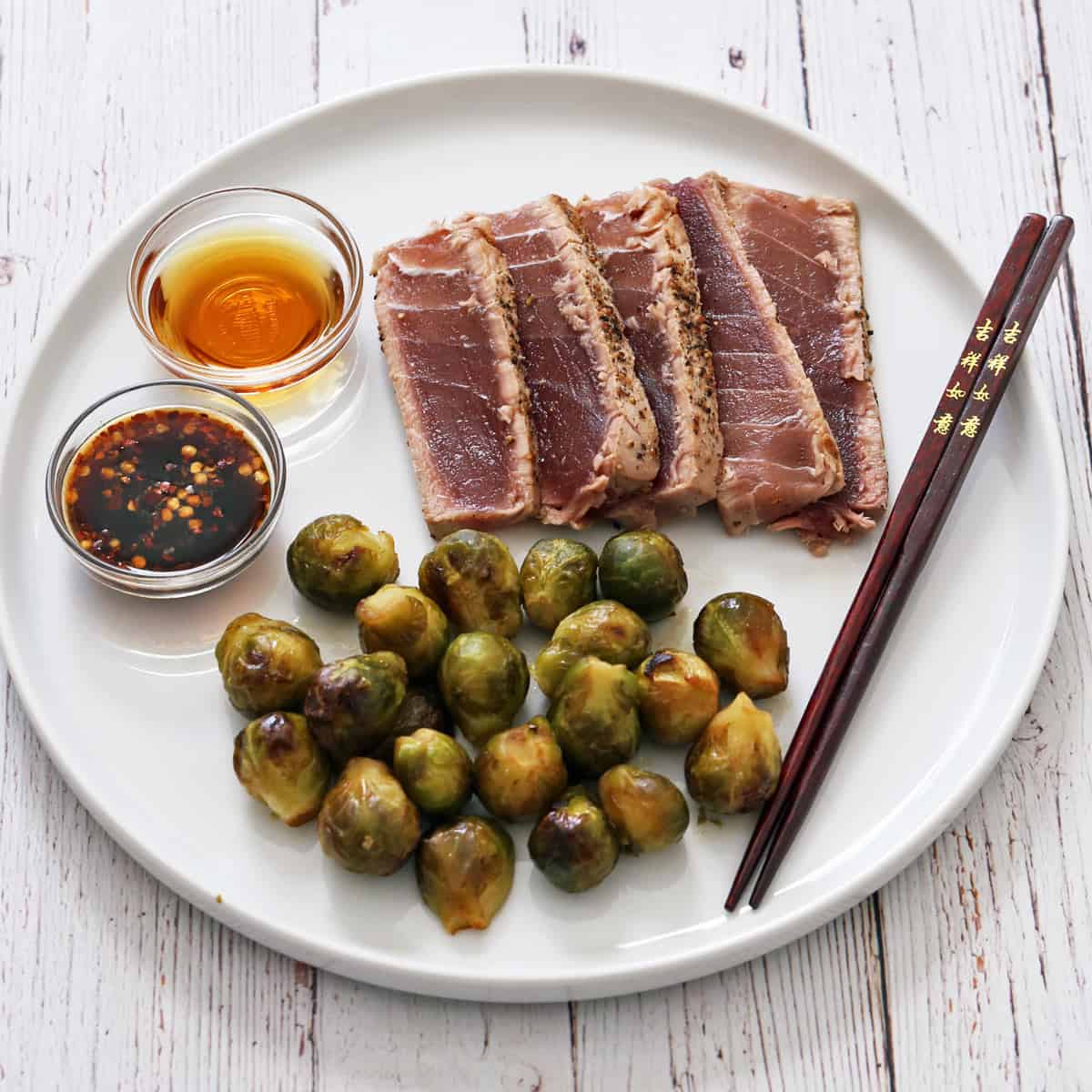
Sometimes, I serve it on top of mixed greens, drizzled with the sauce mentioned above, or sesame oil. It's also good with a simple tomato salad dressed with sesame oil and soy sauce, as shown in the image below.
Recipe Card
Seared Tuna Steak with Dipping Sauce
Video
Ingredients
Sauce:
- 2 tablespoons reduced-sodium soy sauce - or a gluten-free alternative
- 1 tablespoon lemon juice - freshly squeezed
- 1 garlic clove - minced
- 1 teaspoon honey
- ¼ teaspoon red pepper flakes
Tuna:
- 4 8-ounce Ahi tuna steaks - 1.5-inch thick, sashimi-grade
- 1 teaspoon Diamond Crystal kosher salt - or ½ teaspoon of any other salt, including Morton kosher salt
- ½ teaspoon black pepper
- 2 tablespoons avocado oil - for frying; can skip if using a well-seasoned cast-iron skillet
Instructions
- To make the dipping sauce, whisk together the sauce ingredients (soy sauce, lemon juice, garlic, honey, and red pepper flakes) in a small bowl. Let the sauce sit at room temperature while you cook the fish.2 tablespoons reduced-sodium soy sauce, 1 tablespoon lemon juice, 1 garlic clove, 1 teaspoon honey, ¼ teaspoon red pepper flakes

- Season the tuna with salt and pepper on both sides.4 8-ounce Ahi tuna steaks, 1 teaspoon Diamond Crystal kosher salt, ½ teaspoon black pepper
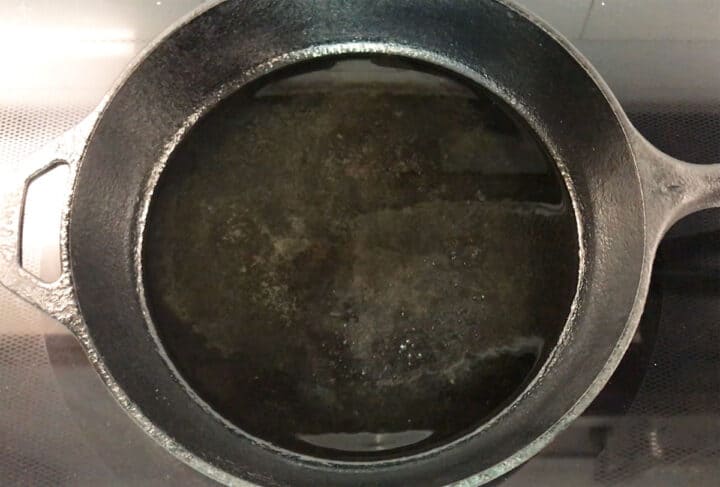
- Heat a heavy-bottomed skillet (such as a cast-iron skillet) over medium-high heat. Add the oil and swirl to coat. If your cast-iron skillet is well-seasoned, you can skip the oil.2 tablespoons avocado oil

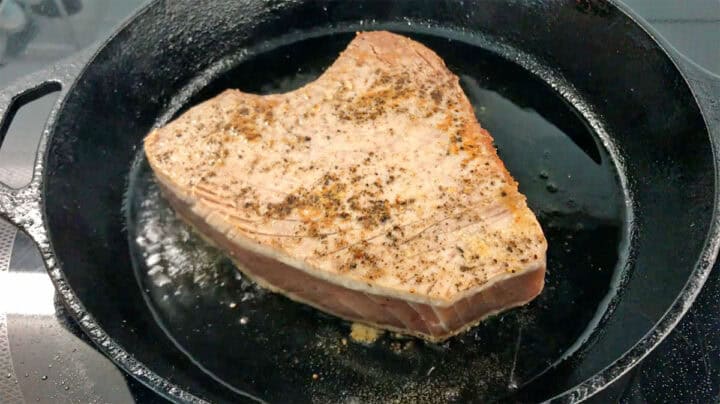
- Place the tuna in the hot pan. Cook until a golden crust has formed and the fish is medium-rare (red warm center), about 2 minutes per side.

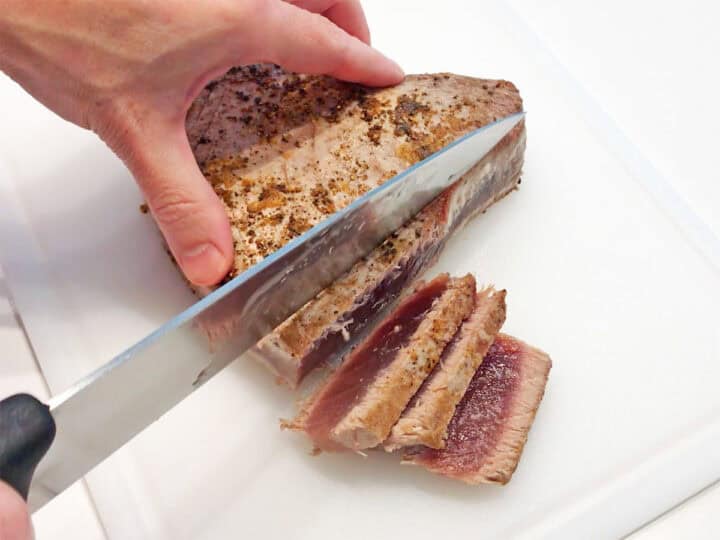
- Transfer the tuna steaks to a cutting board and cut them into 1⁄4-inch-thick slices.

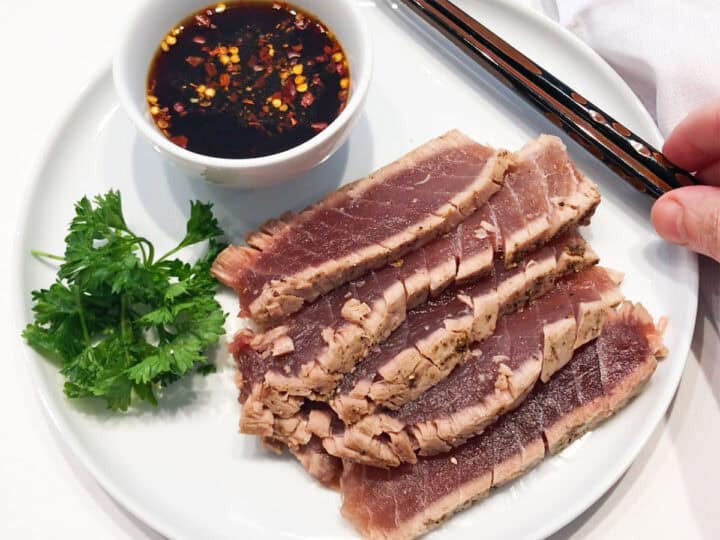
- Serve the tuna with the dipping sauce.
Notes
- Seasonings, especially saltiness and sweetness, are guidelines. Adjust to taste.
- This dish can only be as good as the raw tuna you use. It's imperative to use sushi-grade tuna that has zero fishy smell. If your fish smells fishy in its raw state, even just slightly so, the end result will be fishy.
- How long you cook the fish depends on how thick it is and on how hot your stove/pan gets. As a general rule, a 1.5-inch-thick tuna steak should be cooked for about 2 minutes per side over medium-high heat. A thinner steak (¾ to 1 inch) will need just 1-1.5 minutes per side. This is the type of recipe where there's no escaping the need to be flexible, loosely follow the recipe, but stay very aware of what's happening in your own kitchen with your own ingredients and equipment.
- Ideally, the tuna should be cooked to rare or medium rare, but I should note that the CDC advises cooking fish to an internal temperature of 145°F. If you opt to leave it rare in the middle, make sure it is sashimi-grade and has been properly frozen.
- Since the inside of the tuna steak is not fully cooked, I don't recommend keeping the leftovers. Try to make only as much as you'll eat immediately.
Nutrition per Serving
Save this Recipe!
We will also add you to our weekly newsletter. Unsubscribe anytime. See healthyrecipesblogs.com/privacy/ to learn how we use your email.
Disclaimers
Most recipes are low-carb and gluten-free, but some are not. Recommended products are not guaranteed to be gluten-free. Nutrition info is approximate - please verify it. The carb count excludes non-nutritive sweeteners. Please read these Terms of Use before using any of my recipes.

Carrie says
Easy, delicious, and healthy! Loved it.
Vered DeLeeuw says
I'm so glad to hear, Carrie, and really appreciate the review!
Heather says
Could I use lime instead of lemon?
Vered DeLeeuw says
Hi Heather,
You can definitely use lime instead of lemon. It will change the flavor a bit, as lime is brighter and more tangy, but it should still work well.
Regina Lima Mercado says
love it!!!!
I think the sauce could be a little lighter, but anyway...delicious. I add sesame seed before fry them!
Vered DeLeeuw says
Sesame seeds sound like a great addition, Regina! Thank you so much for the review.
Kevin says
I'm not a big fan of tuna usually, but the dipping sauce is so good that even I enjoyed it. I think I'm in trouble, because the wife, who likes tuna, wants me to make it weekly from now on!
Vered DeLeeuw says
I'm glad you and your wife enjoyed this recipe, Kevin! Thanks for the review. It does sound like you're in trouble. 🙂