
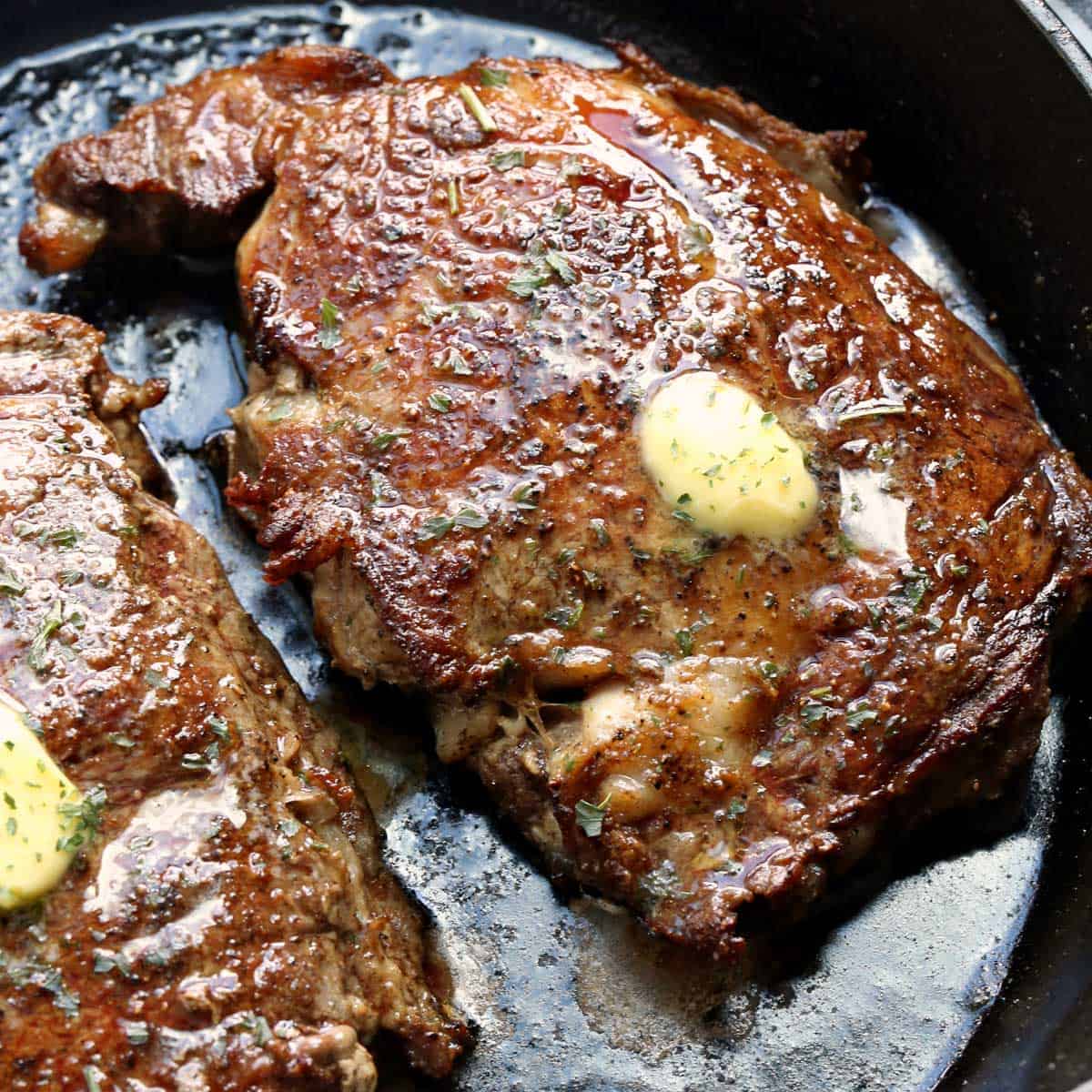
For a perfectly cooked ribeye steak, sear it in a cast-iron skillet, then place it in the oven. This method browns the fat and creates a good crust on the exterior while keeping the inside tender and juicy.
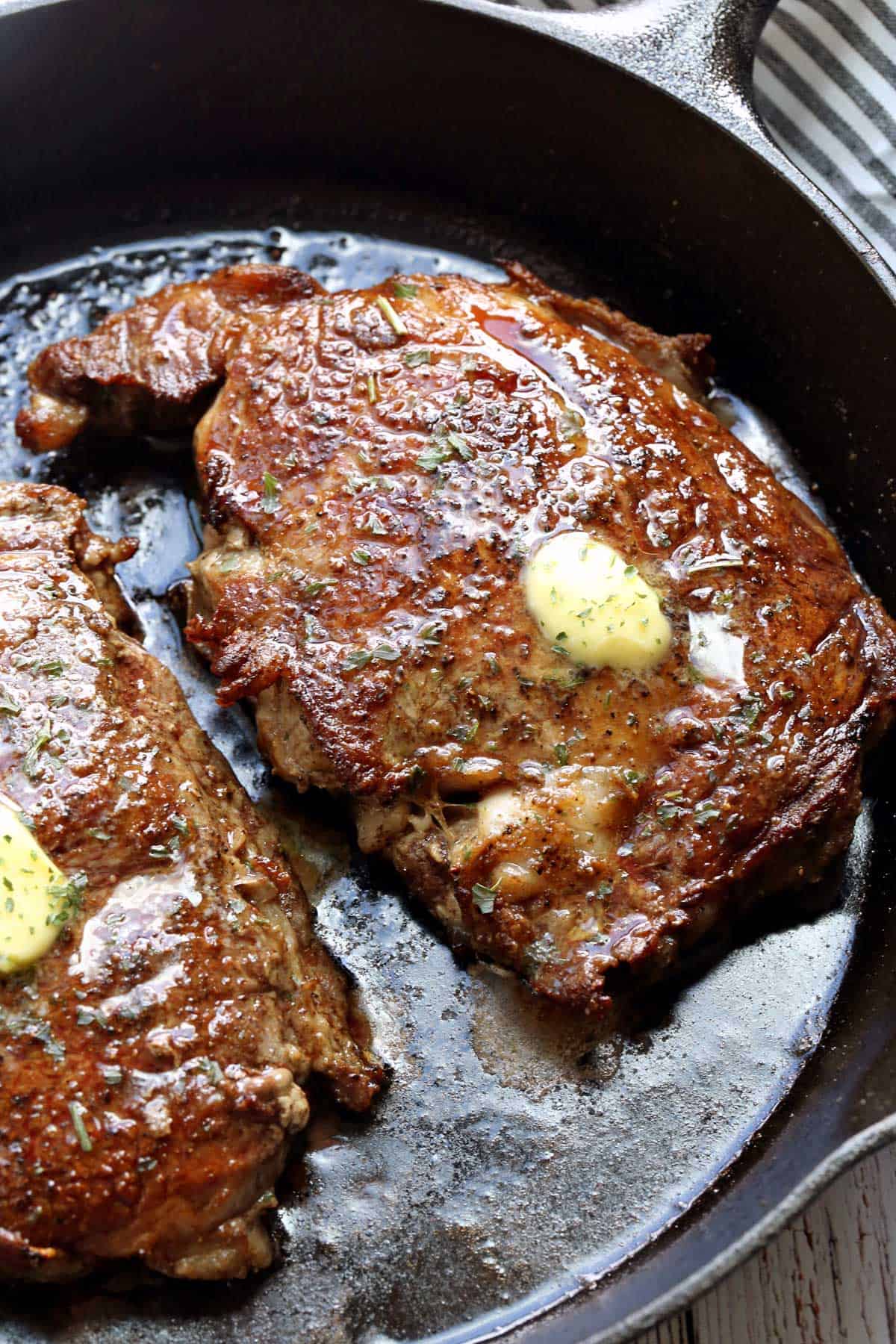
Ribeye steak is tender, flavorful, and well-marbled. Cooking it at home is easy, but you need the right equipment. A well-seasoned cast-iron skillet is the only reliable way to create a good sear on a steak. When I use the two-step method of searing and then finishing the steak in the oven, I get steakhouse-level results every time.
Ingredients
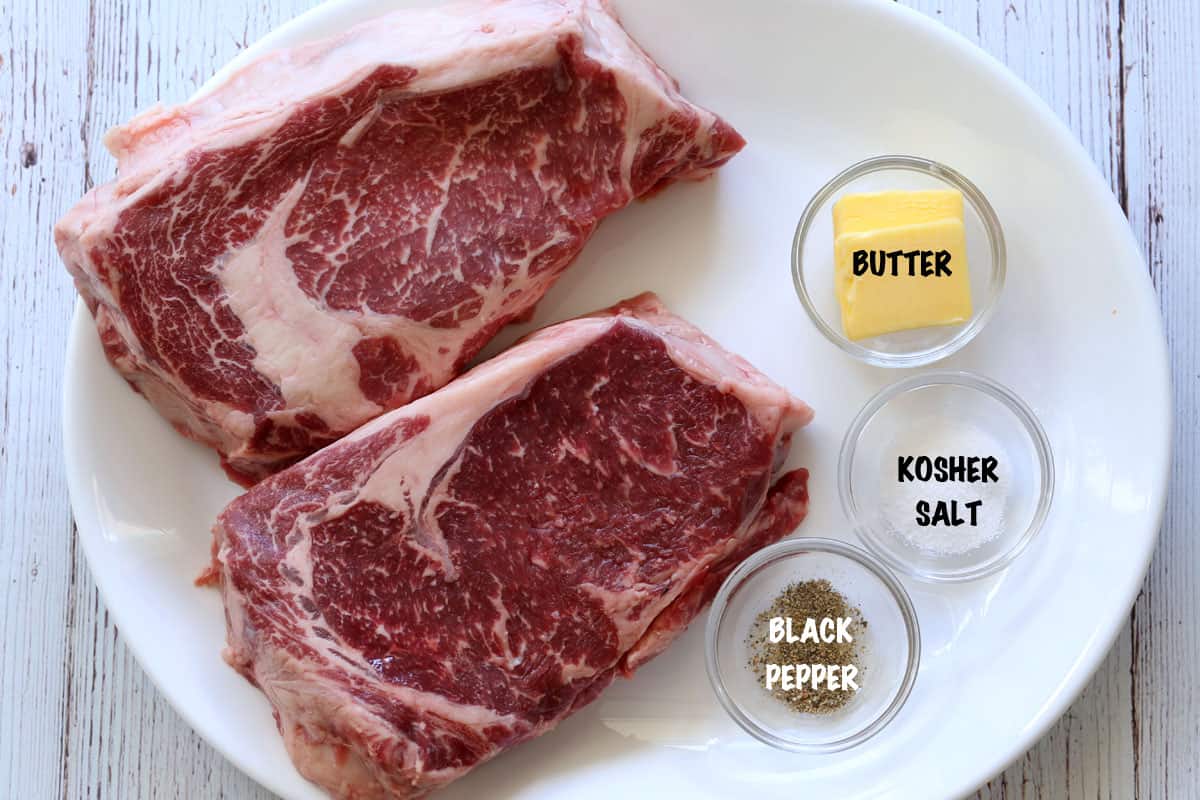
See the recipe card for exact measurements. Here are my comments on the ingredients.
- Ribeyes: I buy big, 1-pound, 1.5-inch thick steaks. Try to find steaks that are not overly trimmed. The fatty edge is delicious!
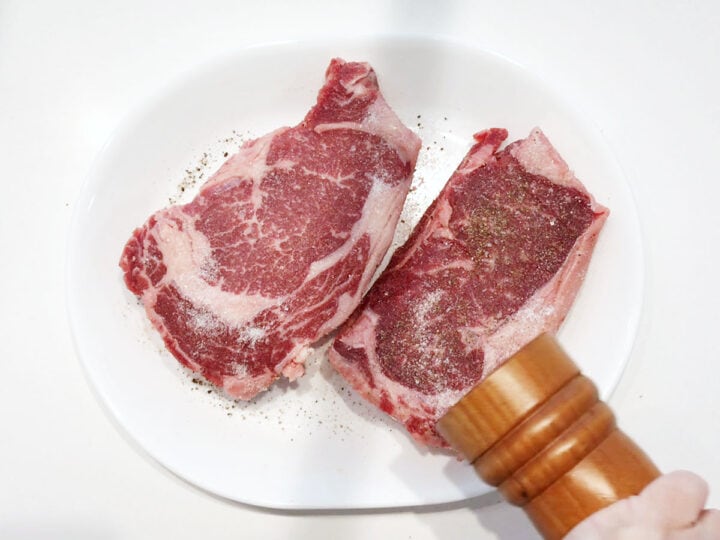
- Kosher salt and black pepper: I highly recommend using Diamond Crystal Kosher Salt. It's delicious, and its coarse grind (clearly seen in the photo below) helps create a good crust. I also recommend using freshly ground black pepper. It has a brighter, more complex flavor than pre-ground pepper, and you can grind it fairly coarse (as shown in the image), which further enhances the steak's flavor and texture.
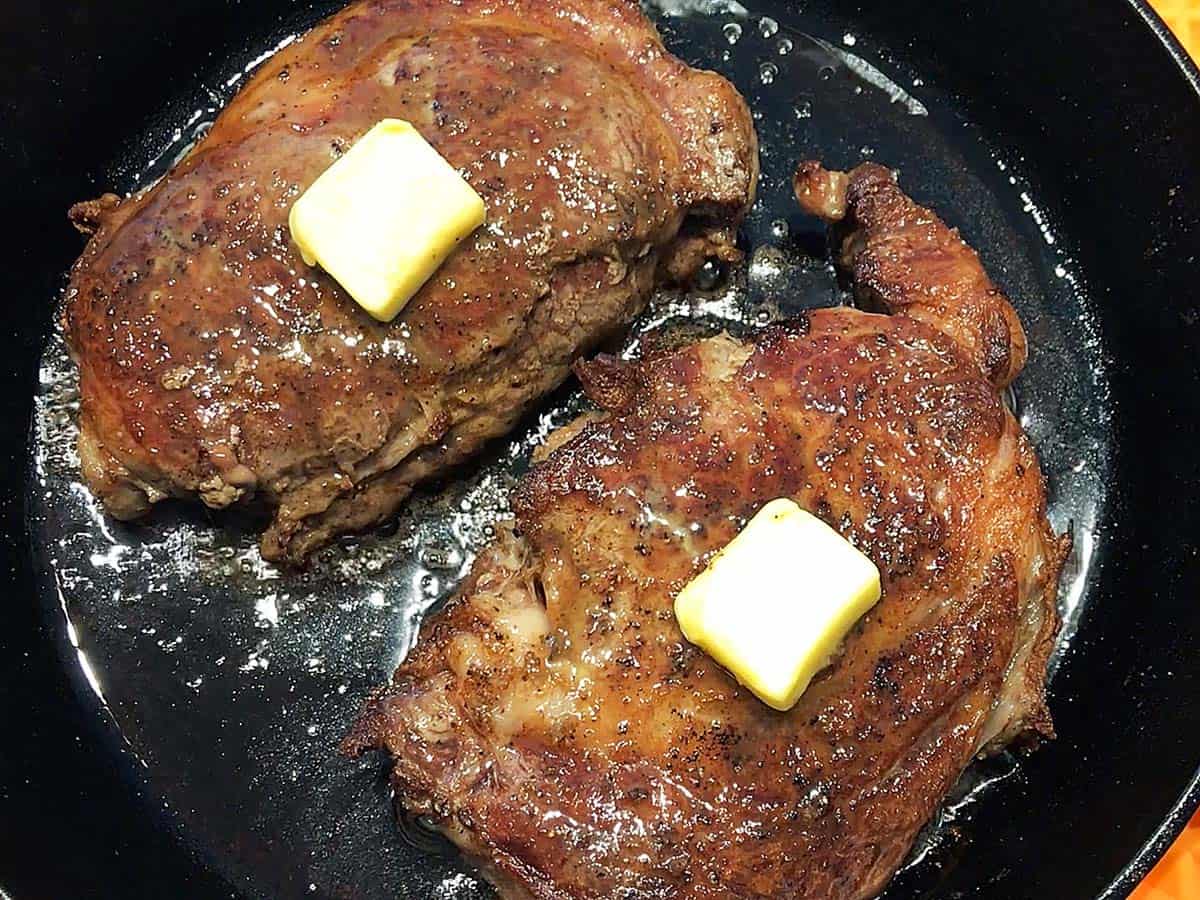
- Butter: For topping the cooked steaks. This isn't optional. It dramatically enhances the flavor of the steaks and is one reason steakhouse steaks are so good.
Instructions
The detailed instructions and step-by-step photos are included in the recipe card. Here's a quick overview.
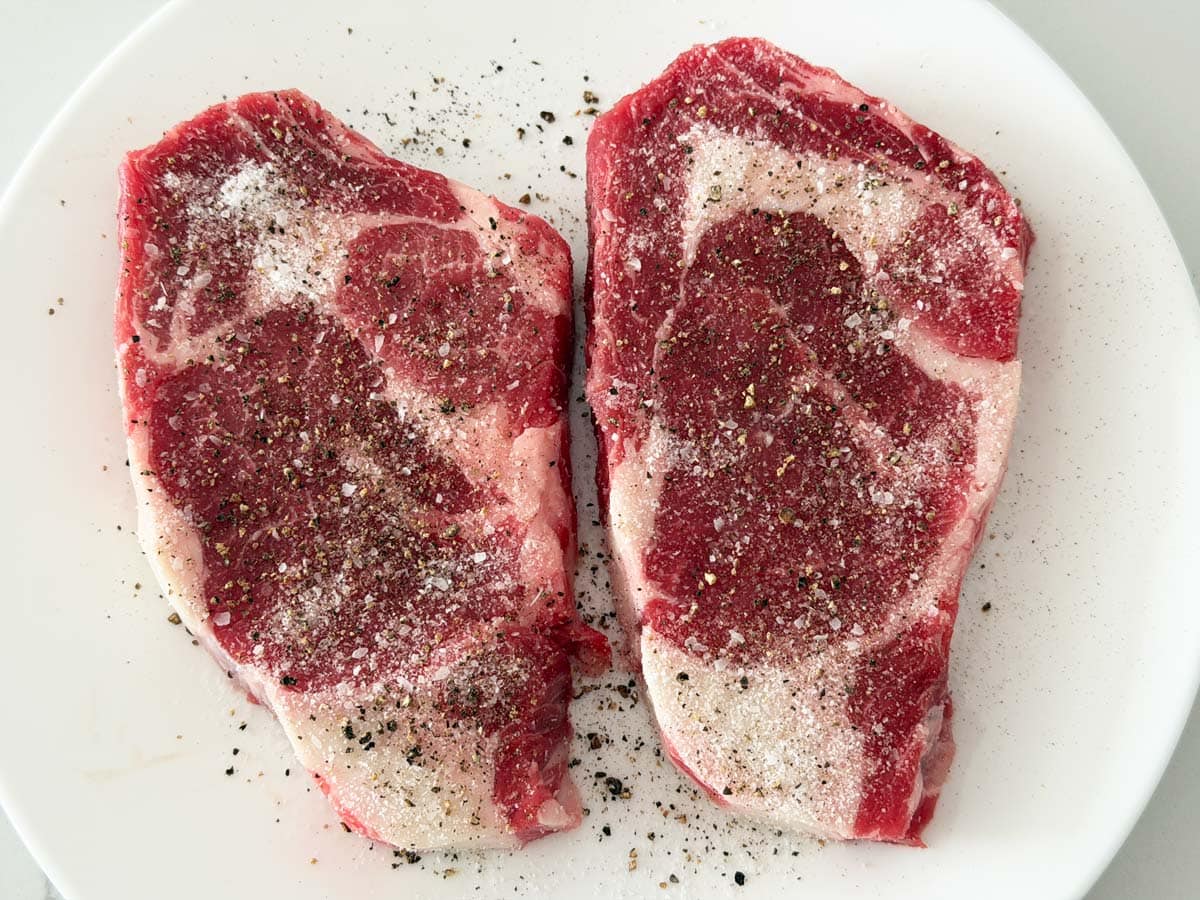
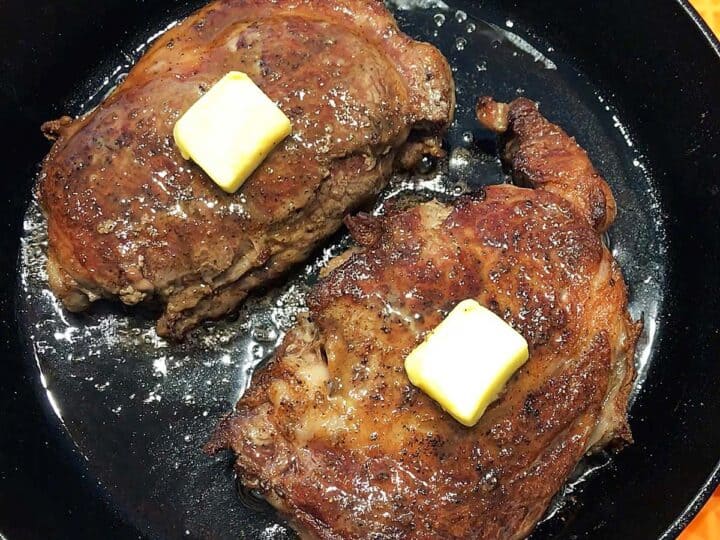
Season the steaks with salt and pepper. Cook them in a hot cast-iron skillet for two minutes per side plus 30 seconds on the edges.
Using oven mitts, transfer the hot skillet to the preheated oven. Leave it there for about 3 minutes for medium-rare steaks and about 5 minutes for medium-done steaks (the USDA-recommended level of doneness).
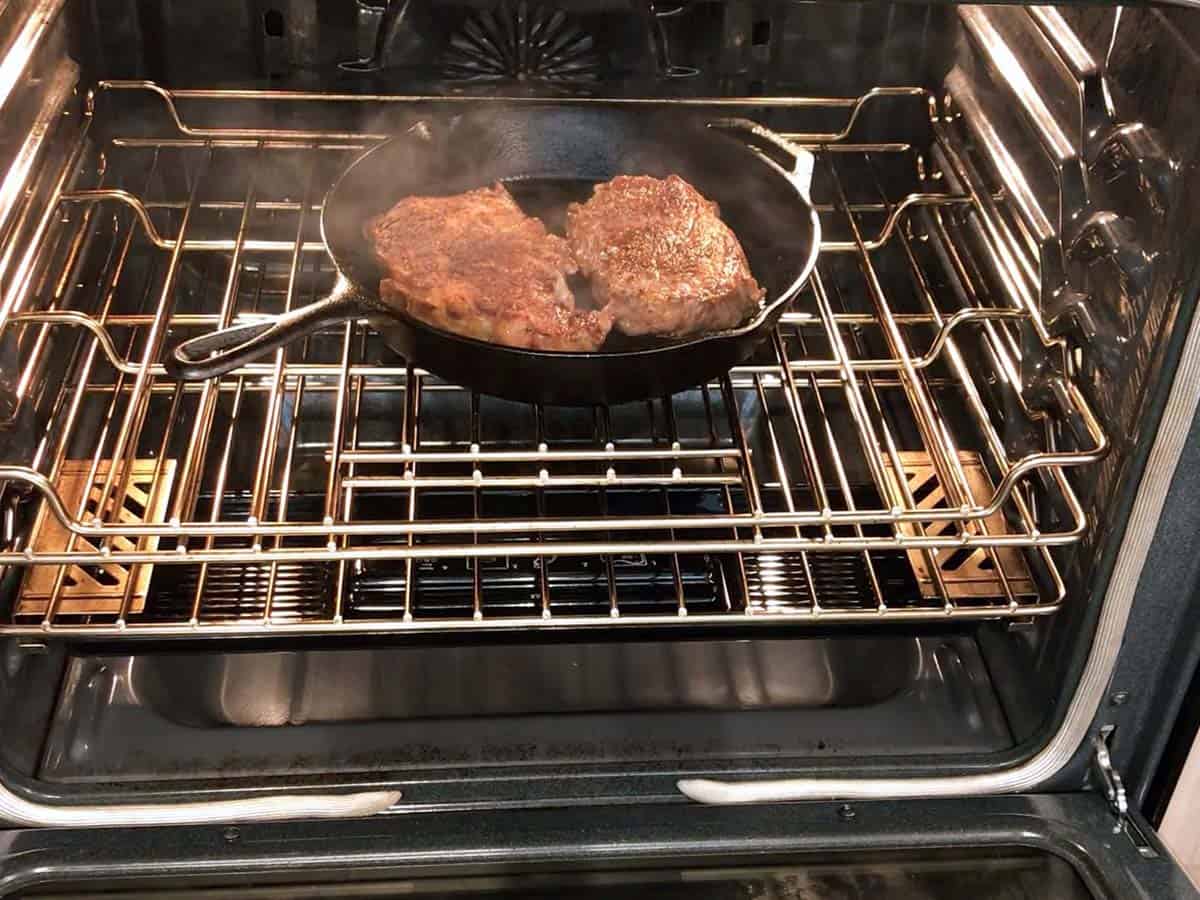
Rest the steaks for 5 minutes, top them with butter, and serve.
The ribeyes came out amazing! I was always intimidated by cooking steak, especially the expensive cuts, but no more. This technique was a real confidence booster. My daughter almost didn't believe I cooked it, it was that good. Thanks for sharing!
Mayr
Read more comments
 The ribeyes came out amazing! I was always intimidated by cooking steak, especially the expensive cuts, but no more. This technique was a real confidence booster. My daughter almost didn't believe I cooked it, it was that good. Thanks for sharing!
 Recipe Tips
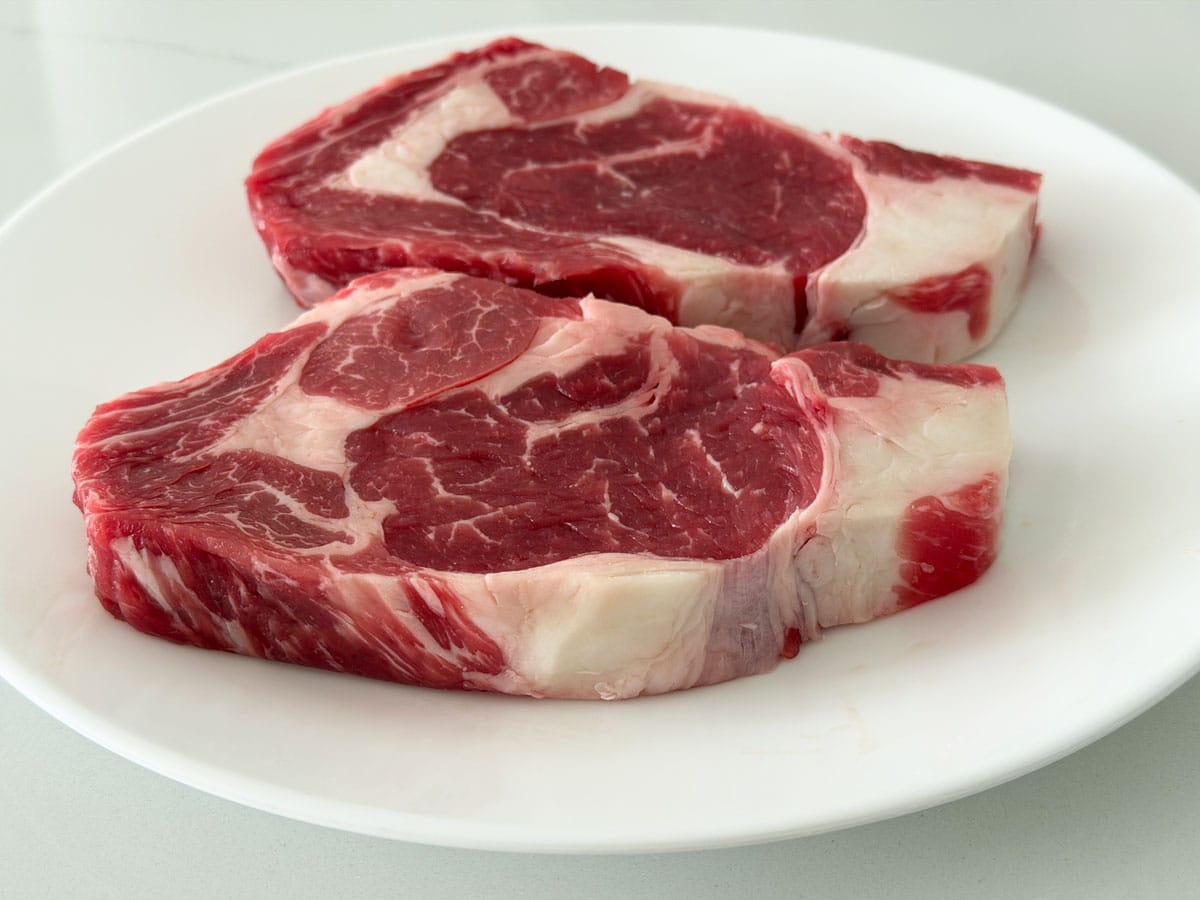
- If you prefer your steaks rare or if they are thinner, around 1 inch thick (like the ones shown in the image below), you can skip the oven and simply pan-fry them for 3 minutes per side, plus 30-60 seconds on the edges. Then check whether they are to your liking.
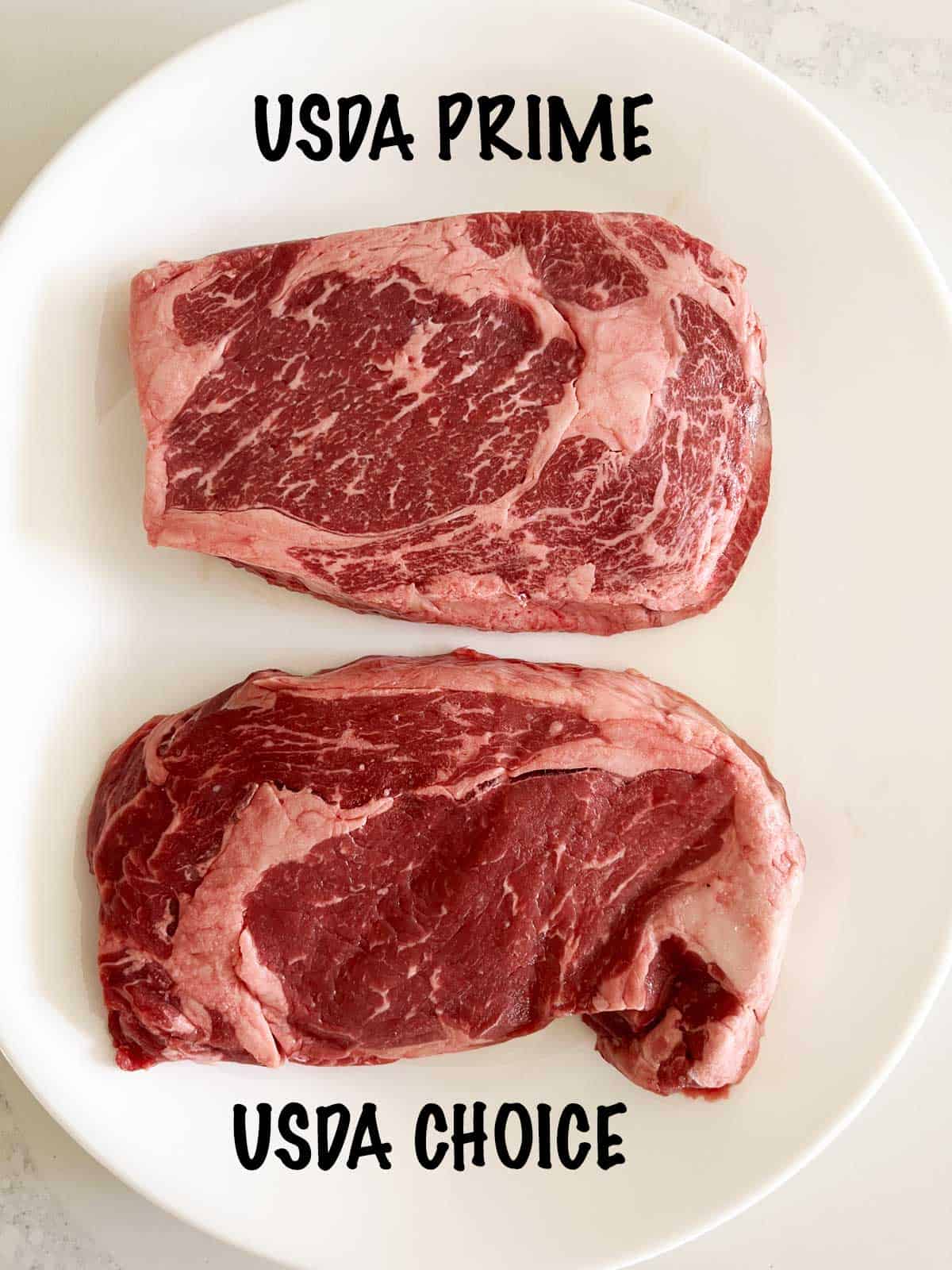
- Try to get USDA prime-grade ribeyes if possible. They are increasingly available in grocery stores. Look at the photo below of two steaks I bought recently - you can easily tell the difference. The Prime steak has beautiful marbling throughout, while the Choice steak is leaner. I cooked both, and my family and I taste-tested them. Both steaks were delicious, but the USDA Prime steak was more tender, juicy, and flavorful. It was the clear winner.
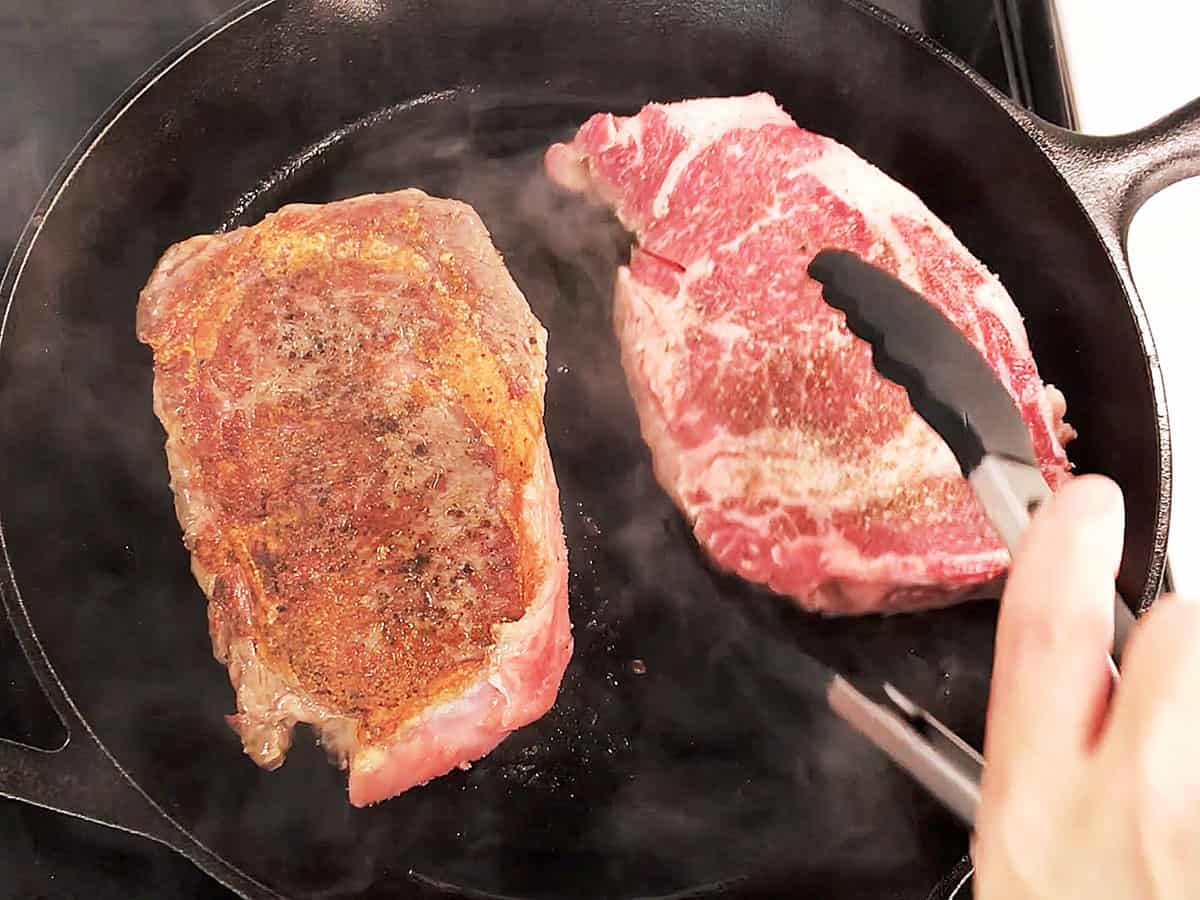
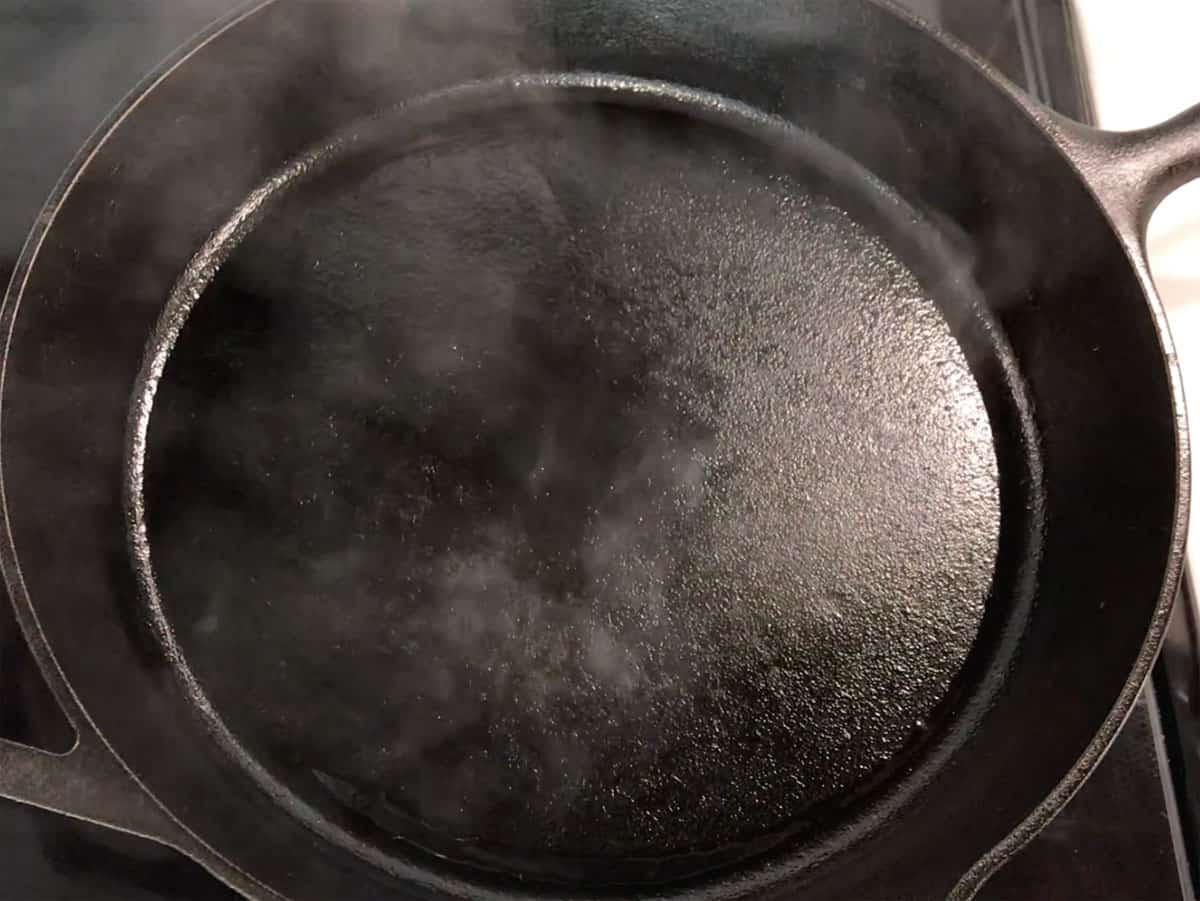
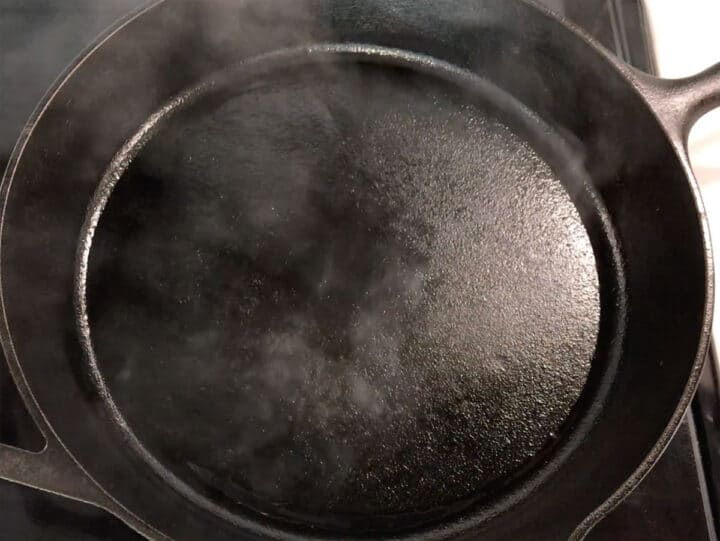
- Heating a cast-iron skillet until it smokes, as shown in the photo below, ensures the pan is hot enough to quickly sear the steak, creating a flavorful crust. Cast iron is ideal because it retains heat well and can handle very high temperatures.
A stainless steel skillet can be used if it's thoroughly preheated and paired with a high-smoke-point oil, but I would heat it over medium-high heat and accept some sticking, at least initially, until a crust forms. Nonstick skillets aren't suitable for this method, as high heat can damage their coating.
Recipe FAQs
There's no harm in marinating a ribeye steak for an hour or two in the fridge, but it's unnecessary. Ribeye is tender and flavorful. It doesn't require a marinade, which is typically used to tenderize and add flavor to leaner and tougher cuts such as London broil, skirt steak, and flank steak.
You can use bone-in or boneless steaks. While bone-in steaks are juicier and more flavorful, especially around the bone, I prefer boneless steaks because they are easier to eat, and I don't get frustrated with tasty bits of meat left stuck to the bone.
Since I like my steaks medium-rare, I cook them straight from the fridge. This enables me to give them a good sear while keeping their inside red and warm. There is less risk of overcooking them.
Grass-fed beef is usually leaner and has an earthy flavor, which some people love. Grain-fed steaks tend to be more marbled and tender with a rich taste. My personal choice is grain-fed.
See the photo below - it's a collage of two photos I recently took at the Whole Foods Market meat counter. On the left: lean, grass-fed ribeyes. On the right, well-marbled grain-fed ones. The difference is quite striking!
See the photo below. The ribeye has more fat running through the meat. You can see the marbling and a thicker fatty section along one side. This fat melts as it cooks, making the steak exceptionally juicy and tender.
The New York strip is leaner. It has a strip of fat along the edge, and less fat inside the meat. It still tastes great, but it's a bit firmer and not as rich. 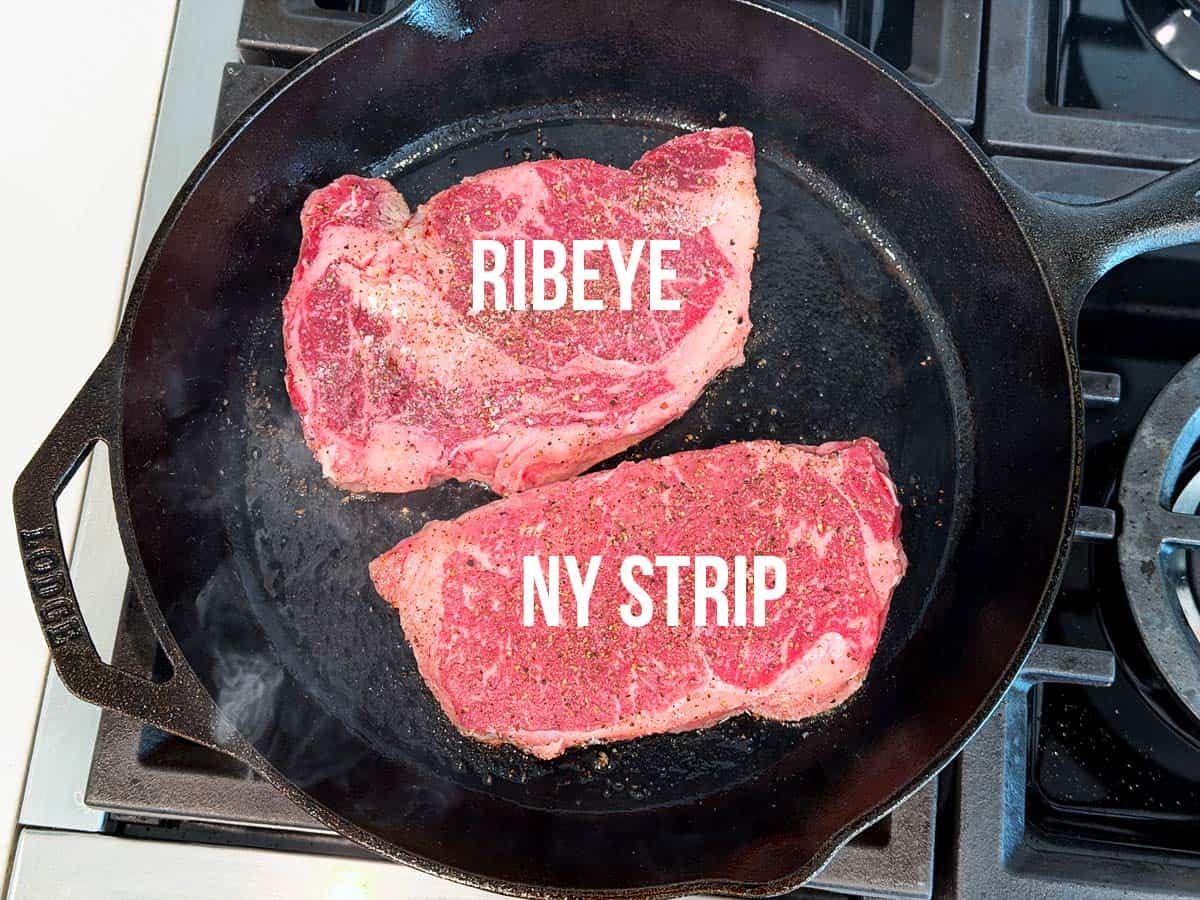
Serving Suggestions
Ribeye steak is big and fatty, so I like to serve it with fresh and simple side dishes like any of the following:
- Spinach salad
- Tomato salad
- Asparagus salad
- Steamed broccoli
- Steamed asparagus
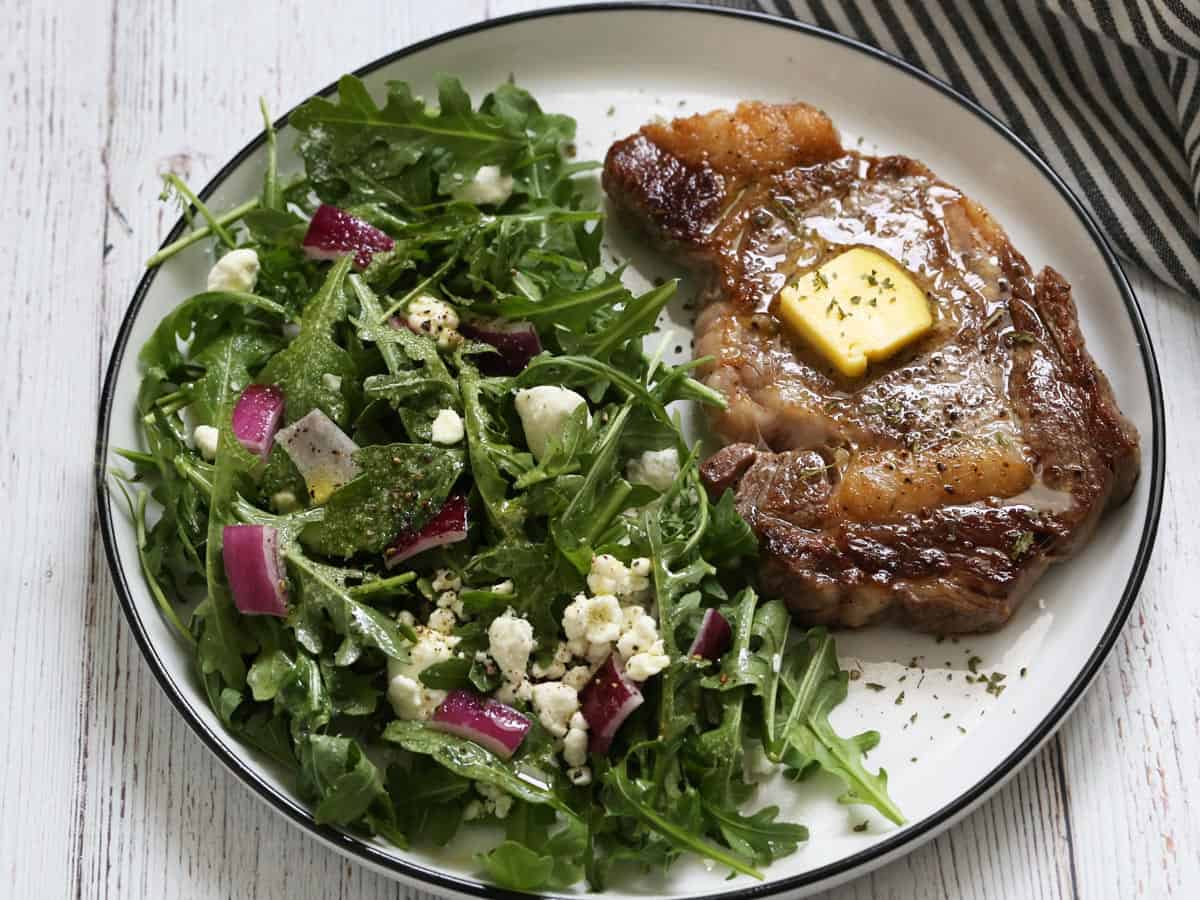
- Arugula salad, as shown in the image below.
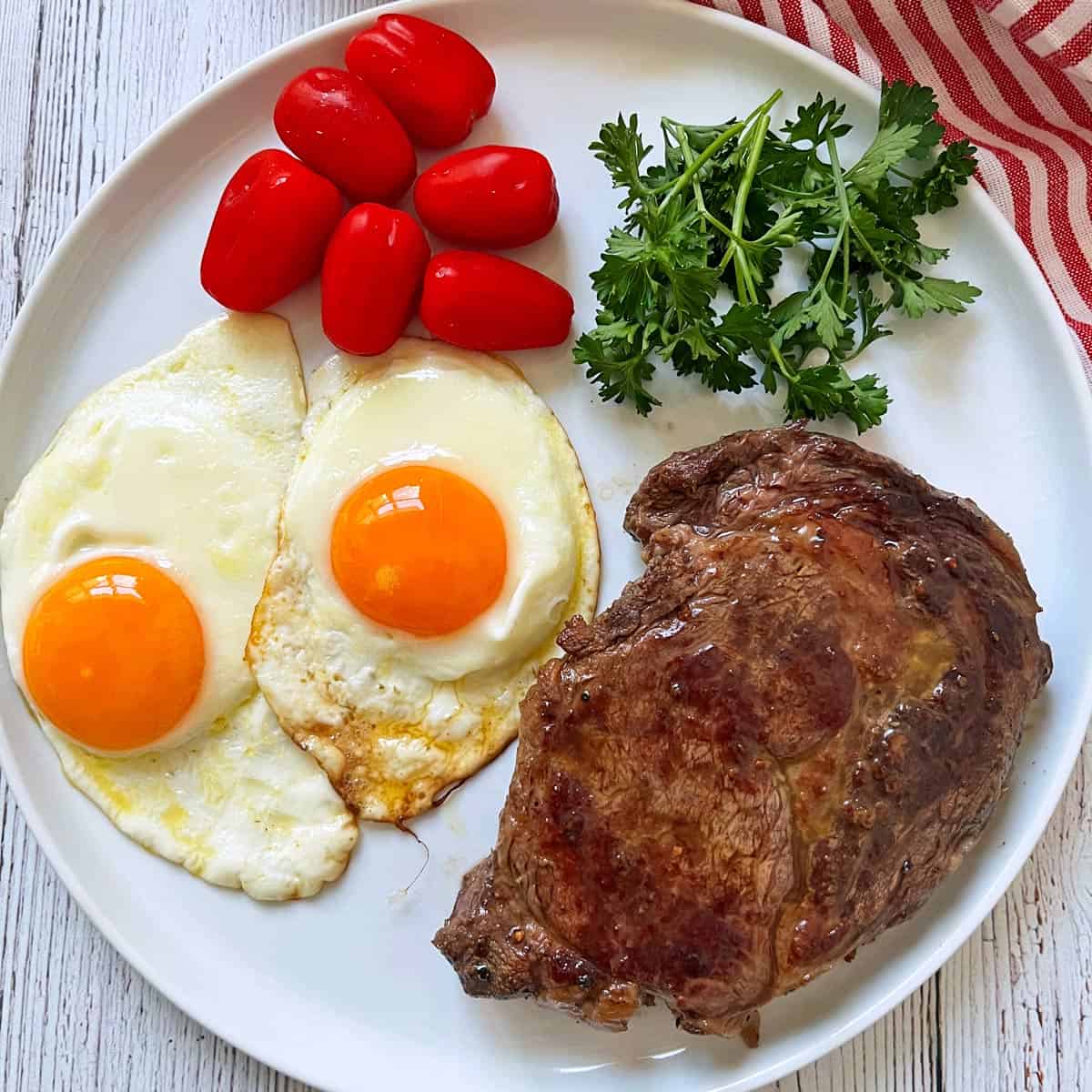
Ribeyes, especially thinner ones, can also be served for breakfast alongside fried eggs as part of a steak-and-eggs breakfast, as shown in the photo below.
Storing and Using the Leftovers
Reheated steak isn't very good. So, while the leftovers can be kept in the fridge in an airtight container for up to 4 days, it's best to cook only what you can finish immediately.
If you end up with leftovers, try them cold - they taste like thick, fatty slices of cold roast beef. If you must reheat them, do so gently in the microwave, covered, at 50% power.
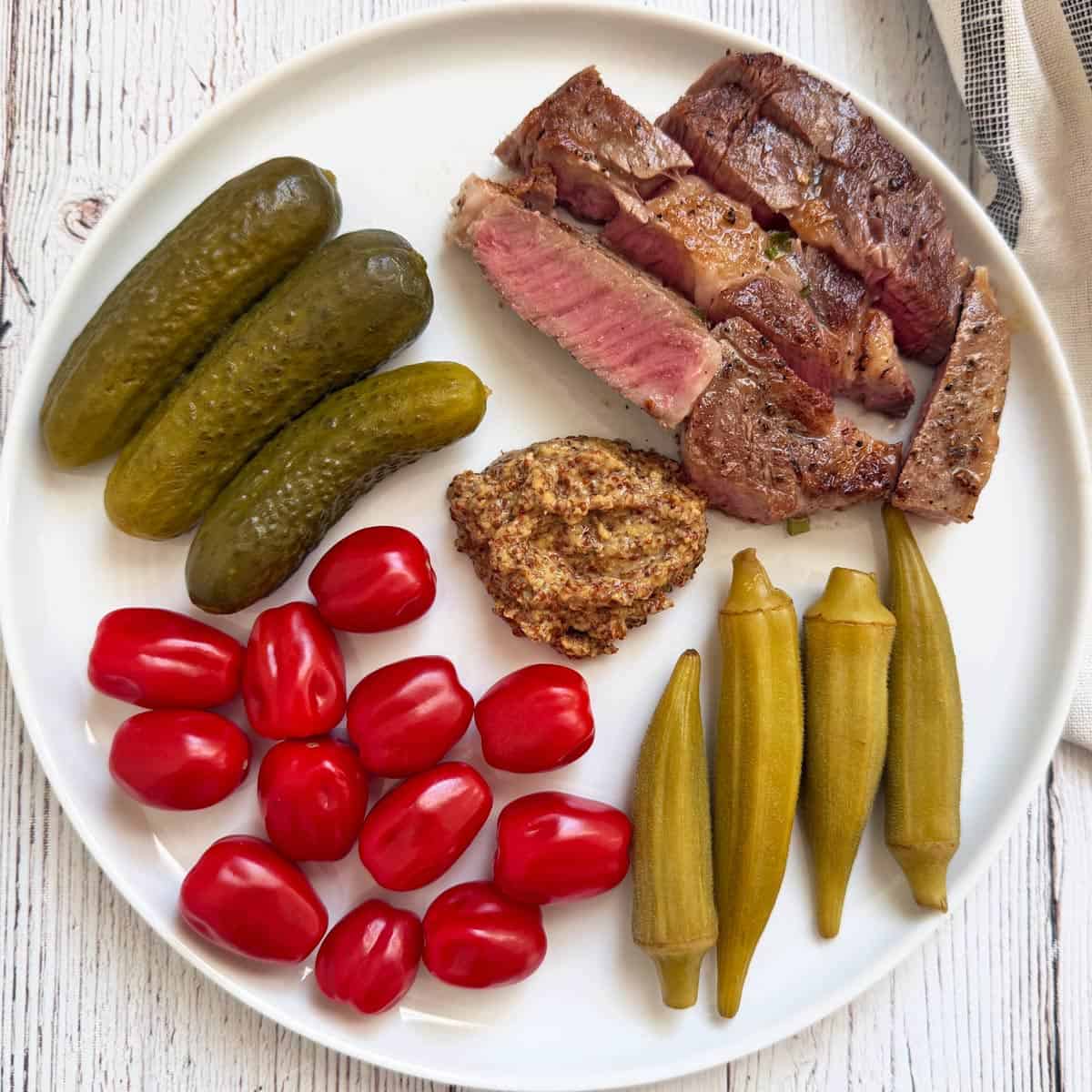
The image below shows a delicious lunch plate with sliced leftover steak (I served it cold, so it remained medium-rare), tomatoes, pickles, and mustard.
Recipe Card
Juicy Ribeye Steak Recipe
Video
Ingredients
- 2 ribeye steaks - 1 pound each, 1.5-inch thick, preferably USDA Prime
- 2 teaspoons Diamond Crystal kosher salt - or 1 teaspoon of any other salt, including Morton kosher salt
- ½ teaspoon black pepper - freshly ground
- 2 tablespoons butter
Instructions
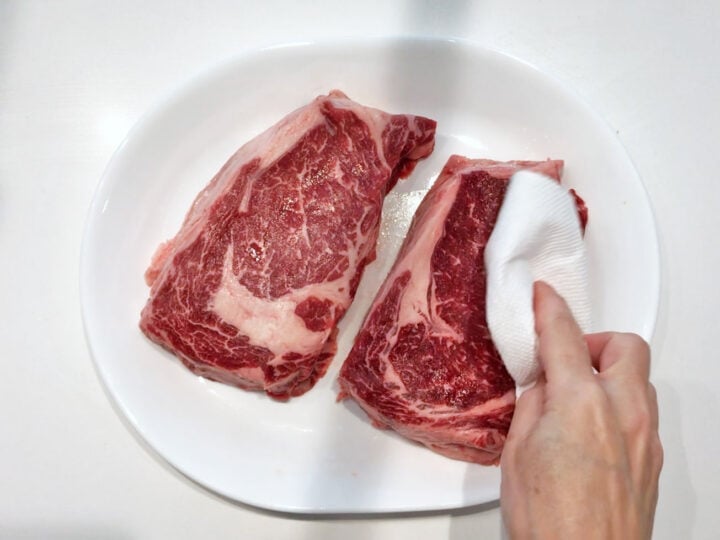
- Preheat the oven to 500°F. Blot the steaks dry with paper towels. Keeping their surface dry will help create a good crust.2 ribeye steaks

- Season the steaks on both sides and the fatty edge with kosher salt and black pepper.2 teaspoons Diamond Crystal kosher salt, ½ teaspoon black pepper
- Heat a well-seasoned cast-iron skillet over high heat until it's smoking. If the skillet is well-seasoned, there's no need to add oil.

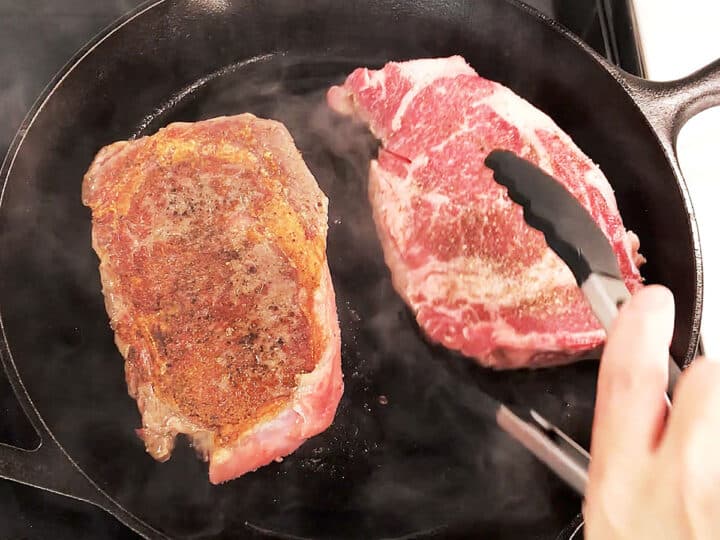
- Add the steaks and cook them for 2 minutes per side. If the skillet becomes overheated, lower the heat to medium-high. But generally speaking, you want it super-hot.
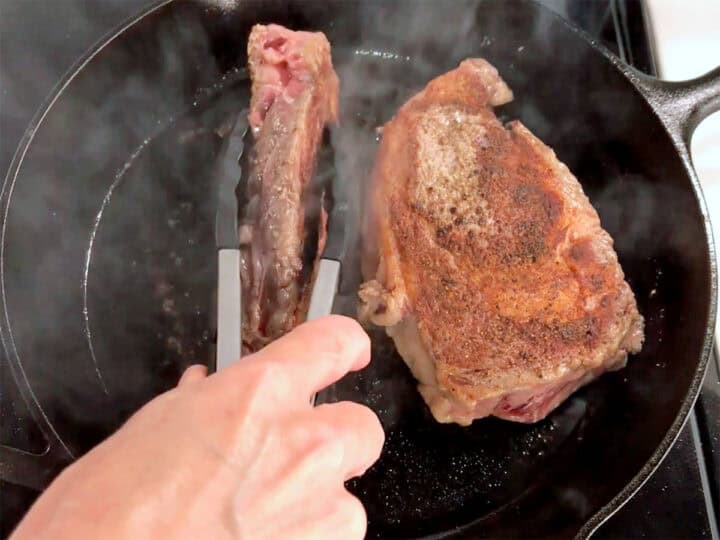
- Cook the edges of the steaks for about 30 seconds per edge.
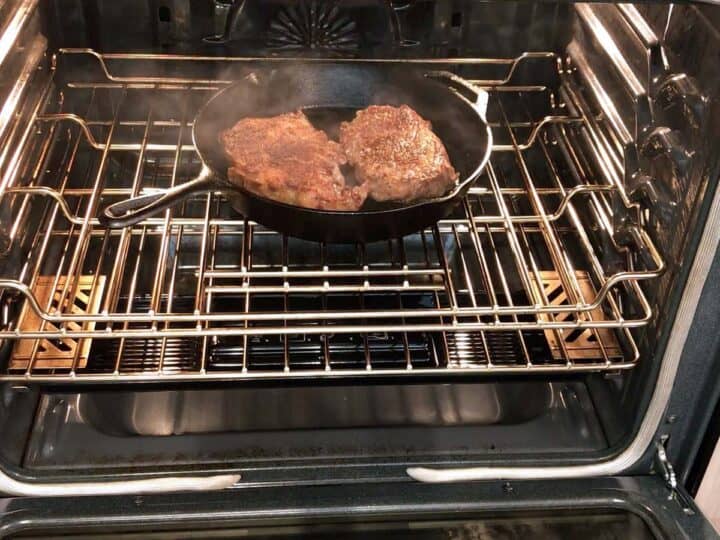
- Very carefully, using oven mitts, transfer the hot skillet to the preheated oven. Leave it there for about 3 minutes for medium-rare steaks or 5 minutes for medium-done steaks.
- Transfer the steaks to a warm plate and loosely cover them with foil to keep them warm. Let them rest for 5 minutes, then top them with butter and serve.2 tablespoons butter
Notes
- Seasonings, especially salt, are only guidelines. Adjust to taste.
- If you have a smoke alarm near your kitchen, open your kitchen windows and run your range hood fan.
- If you're using a well-seasoned cast-iron skillet, which I highly recommend for best results, there's no need to add oil. If using a stainless steel skillet, keep the heat at medium-high, add 1-2 tablespoons of a high-heat oil such as avocado oil or ghee, and accept that some sticking will occur. This method is not suitable for nonstick skillets.
- I like my steaks medium-rare, so I cook them refrigerator-cold. This enables me to give them a good sear while keeping their inside red and warm.
- If you like your steaks rare or if they are thinner - around 1 inch thick - you can skip the oven and simply pan-fry them for 3 minutes per side plus 30-60 seconds on the edges, or until done to your liking.
- The cook times suggested here are a guideline. Many variables can affect how long you'll need to cook the steak, including your stove (electric stoves get hotter than gas ones, for example), the skillet you use, your steak's initial temperature, and its thickness.
- The USDA recommends cooking steaks to medium.
- The nutrition information is approximate. To lower the sodium content to around 886 milligrams per serving, use just one teaspoon of Diamond Crystal Kosher Salt or ½ teaspoon of any other salt.
- Leftovers: Reheated steak isn't very good. So while the leftovers can be kept in the fridge in an airtight container for up to 4 days, it's best to cook only what you can finish immediately. If you end up with leftovers, try them cold - they're surprisingly good (like thick, fatty slices of cold roast beef). If you must reheat them, do so gently in the microwave, covered, at 50% power.
Nutrition per Serving
Save this Recipe!
We will also add you to our weekly newsletter. Unsubscribe anytime. See healthyrecipesblogs.com/privacy/ to learn how we use your email.
Disclaimers
Most recipes are low-carb and gluten-free, but some are not. Recommended products are not guaranteed to be gluten-free. Nutrition info is approximate - please verify it. The carb count excludes non-nutritive sweeteners. Please read these Terms of Use before using any of my recipes.

Kari says
I can’t fit both ribeyes in the same skillet??
Vered DeLeeuw says
Hi Kari,
If your skillet isn't large enough to fit both ribeyes without crowding them, it's best to cook them one at a time. Crowding the pan can prevent the steaks from developing a nice sear. Keep the first steak warm in a 150-170°F oven while you cook the second one. Alternatively, if you have two smaller cast-iron skillets, you can cook both steaks at the same time.
Mitzi Kirby says
One of the best steaks I’ve made indoors. Delicious!! Thank you.
Vered DeLeeuw says
You're very welcome, Mitzi! I appreciate the review.
Ken Johnson says
It was definitely quick and easy to prepare the steaks and cook them. I really appreciate new ways to cook!!
Vered DeLeeuw says
I'm glad you enjoyed the steaks, Ken! Many thanks for taking the time to leave a review.
173rd Airborne /1969 says
I suppose you would have said if you need to flip the ribeye in the oven. The reason I ask is I'm thinking it might stick to the pan quick, at 500 degrees. No?
Vered DeLeeuw says
Great question! No need to flip the ribeye once it goes into the oven. Since it's already been seared on both sides in the skillet, the oven step is just to finish cooking it through.Sticking shouldn't be an issue if you use a well-seasoned cast iron skillet, the pan was hot enough during searing, and the steak has released naturally before going into the oven.
Len says
Clear directions, simple and good ingredients, resulted in a steak that was mouth watering. The combination of seasoning, searing, baking and adding butter at the end was savory! Thanks so much.
Vered DeLeeuw says
Wonderful, Len! I'm so glad your steak was delicious. Thank you so much for the review.
Alisa says
Just perfect! Followed the recipe to a "T" Served with seasoned, roasted vegetable, yum!
Vered DeLeeuw says
I'm so happy this was a success, Alisa! Thank you very much for taking the time to leave a review. Your dinner sounds amazing!
Ren says
Great recipe!
Vered DeLeeuw says
Glad you enjoyed your steak! Thank you for the review.
Mary says
My ribeye turned out a perfect medium-rare with a crunchy crust. I did set the smoke alarm off, but so worth it!
I think it helped that I had a well-seasoned pan that I have used for decades.
Vered DeLeeuw says
Oh, Mary, I'm so happy to hear! Yes, that well-seasoned pan helped, for sure!