
This creamy cottage cheese chocolate mousse blends in minutes. It's an easy-to-make, high-protein indulgence you can feel good about eating.

Better-for-you chocolate mousses are a lifesaver. I make several of them, including chocolate yogurt, avocado chocolate mousse, and keto chocolate mousse. This cottage cheese version is higher in protein than the others. It's delicious, creamy, and just the thing when I want a sweet, chocolaty dessert but prefer to keep it high-protein and low-carb.
Ingredients and Substitutions
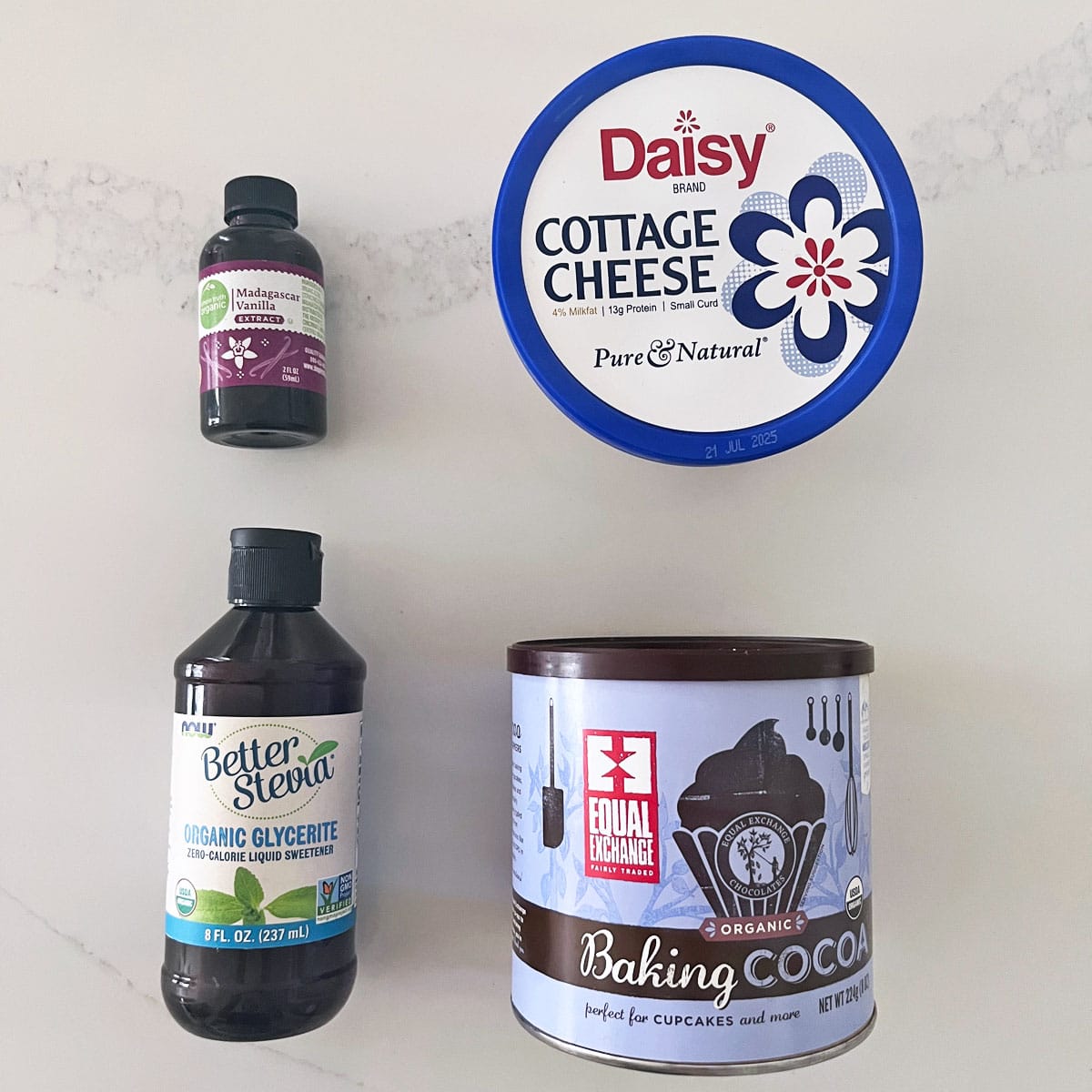
See the recipe card for exact measurements. Here are my comments on the ingredients.
- Cottage cheese: Please use full-fat, small curd cheese.
- Unsweetened cocoa powder: Processed with alkali for a smoother chocolate taste.
- Vanilla extract: Other good options include almond, coconut, and orange extracts.
- Sweetener: I use stevia. You can substitute a powdered sweetener.
Instructions
The detailed instructions and step-by-step photos are included in the recipe card. Here's a quick overview.
Add the ingredients to a food processor or blender bowl.
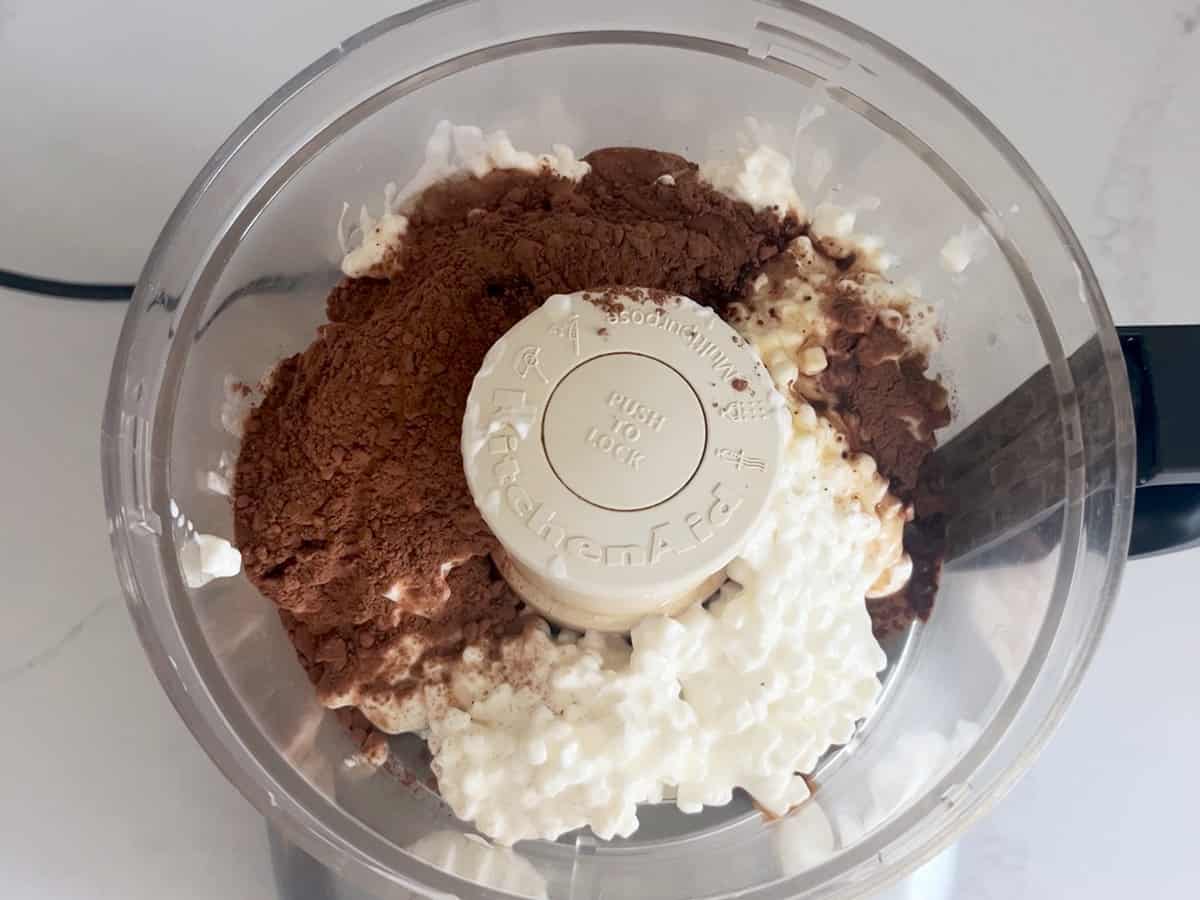
Blend for about 2 minutes, until the mixture is very smooth and fluffy, stopping once to scrape the sides with a spatula.

Chill for 30 minutes to thicken the mousse, then divide it between dessert cups and serve.
As soon as I saw your newsletter I knew I was going to make this recipe! I went to the store this morning to get cottage cheese (I had the other ingredients at home). Oh my, this is good. I ate it straight out of the food processor! Didn't even need chilling. I used 5 tablespoons of powdered allulose and it was perfect.
Ashleigh
Read more comments
 As soon as I saw your newsletter I knew I was going to make this recipe! I went to the store this morning to get cottage cheese (I had the other ingredients at home). Oh my, this is good. I ate it straight out of the food processor! Didn't even need chilling. I used 5 tablespoons of powdered allulose and it was perfect.
Recipe Tips
- Drain the cheese: If there's a small amount of liquid at the top of the cottage cheese when you open the container, carefully pour it out. The less water, the creamier the mousse.
- What blender to use: I use a food processor with a "high" speed setting. If using a blender, it needs to be a high-speed one, or the mixture will remain lumpy.
- Chilling the mousse for 30 minutes improves its texture and thickens it. You can eat it immediately - it will be light and fluffy - but it's better after a stay in the fridge.
- How long to blend: It's important to blend the mousse until it's very smooth and fluffy. How long you need to blend will depend on the appliance you use. In my food processor, on high speed, you can see that after 30 seconds, it's still lumpy:
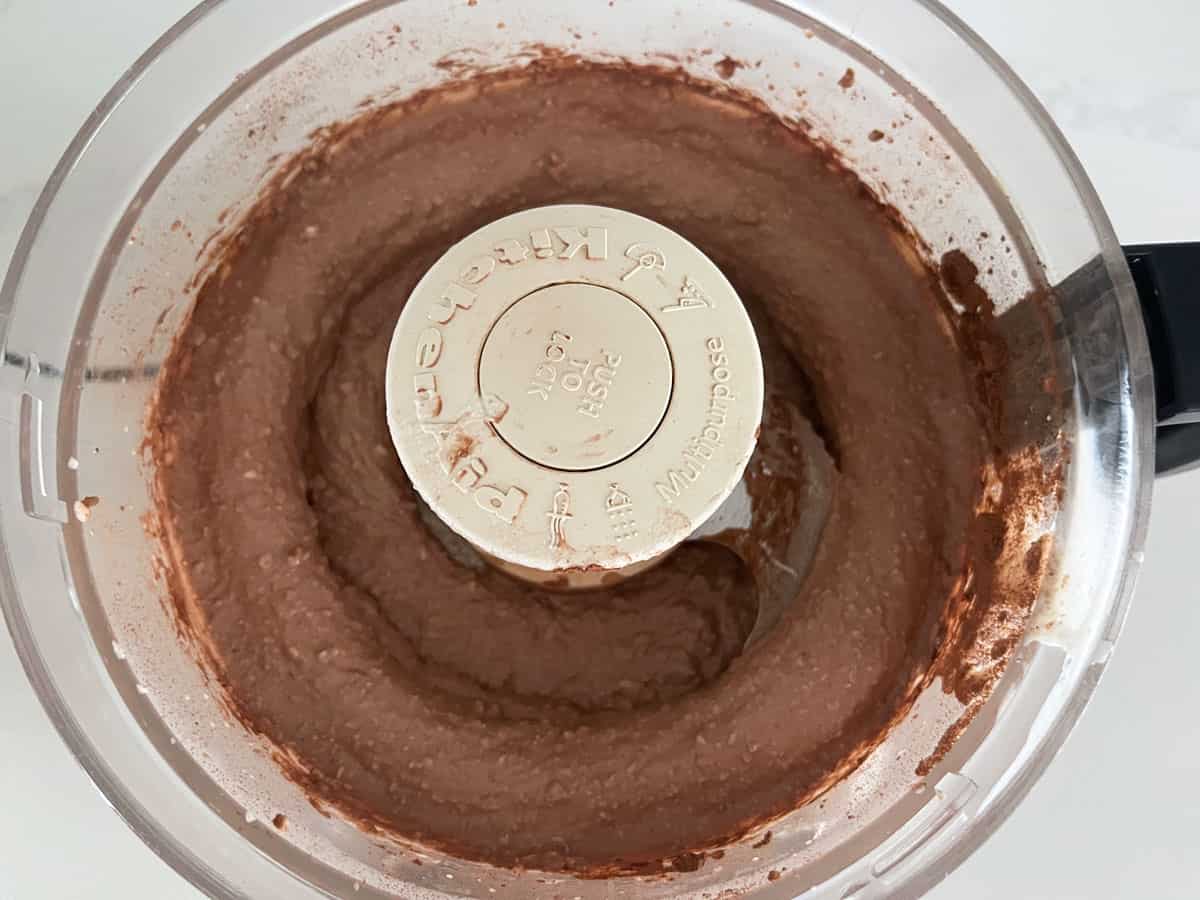
After one minute, it's smoother but still not as smooth and fluffy as I'm going for:

And after two minutes, it's super smooth and fluffy - this is when it takes on a true mousse consistency:

Recipe FAQs
Nutritionally, they are similar. The main advantage of the cottage cheese mousse is that if you blend it long enough, it has a light and fluffy mousse texture. The disadvantage is that despite thorough blending, the occasional cottage cheese curd can stick around. Cottage cheese is also tangier and saltier than yogurt, so more sweetener is needed to counteract that. I initially wrote this recipe with 4 tablespoons of sweetener, but eventually decided that 6 tablespoons are needed (or the equivalent in stevia).
I use Daisy 4% small curd cottage cheese. It's delicious, thick, and creamy. If your cottage cheese is watery, it might affect the mousse's texture.
I don't recommend maple syrup. You can use a powdered sweetener or the equivalent in stevia. A granulated sweetener will have a grainy mouthfeel, so it is not recommended. Maple syrup will introduce too much liquid, but you can try honey, as it's thicker. I only tested this recipe with stevia and with a powdered sweetener, so those are the only sweeteners I can recommend.
You can store this mousse in an airtight container in the fridge for up to four days. Stir it again before serving. I don't recommend freezing it, as its texture will be negatively affected.
Serving Suggestions
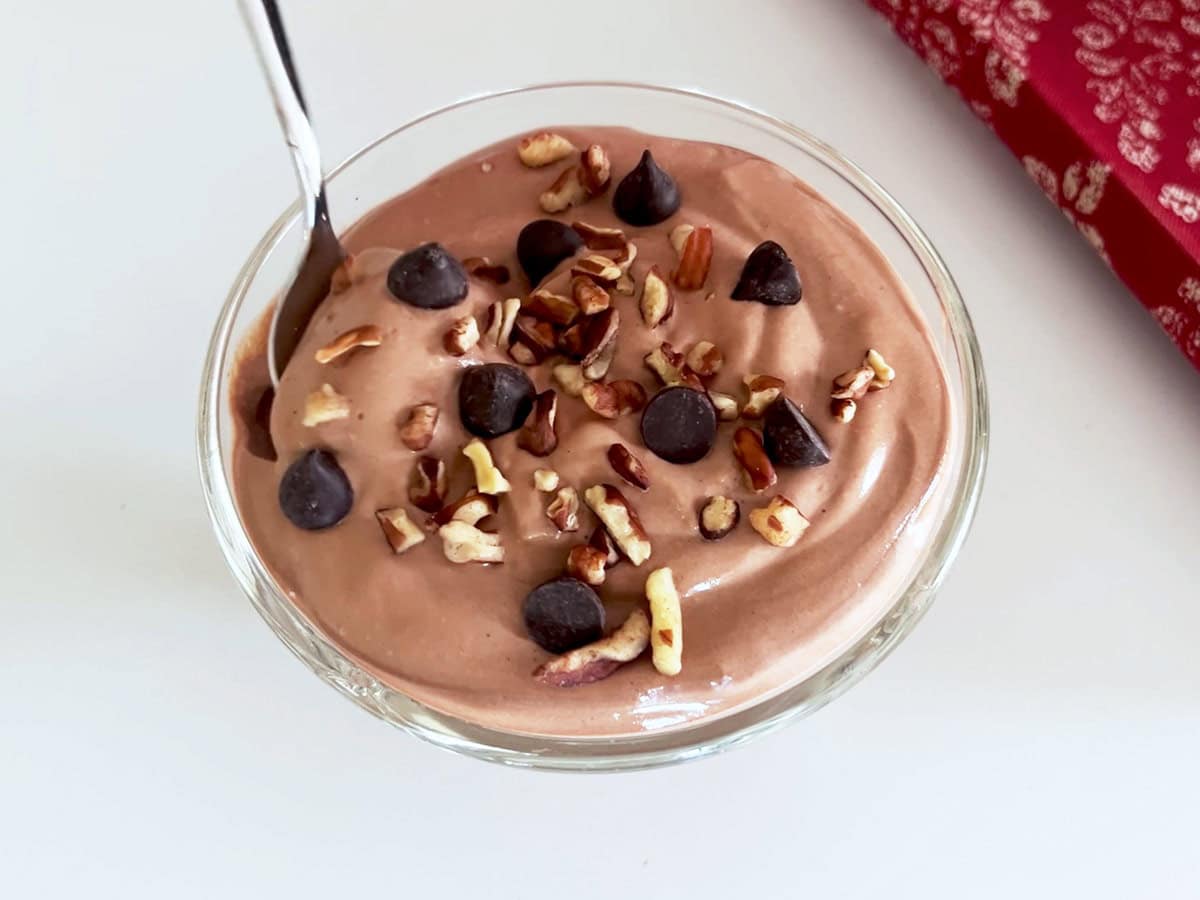
I usually eat this mousse just as it is. It's delicious! But if you'd like to top it with something, here are a few ideas:
- Whipped cream, as shown in the photo below
- Fresh berries
- Chocolate chips and/or chopped nuts, as shown in the photo below
- Coconut flakes
- A drizzle of warm peanut butter

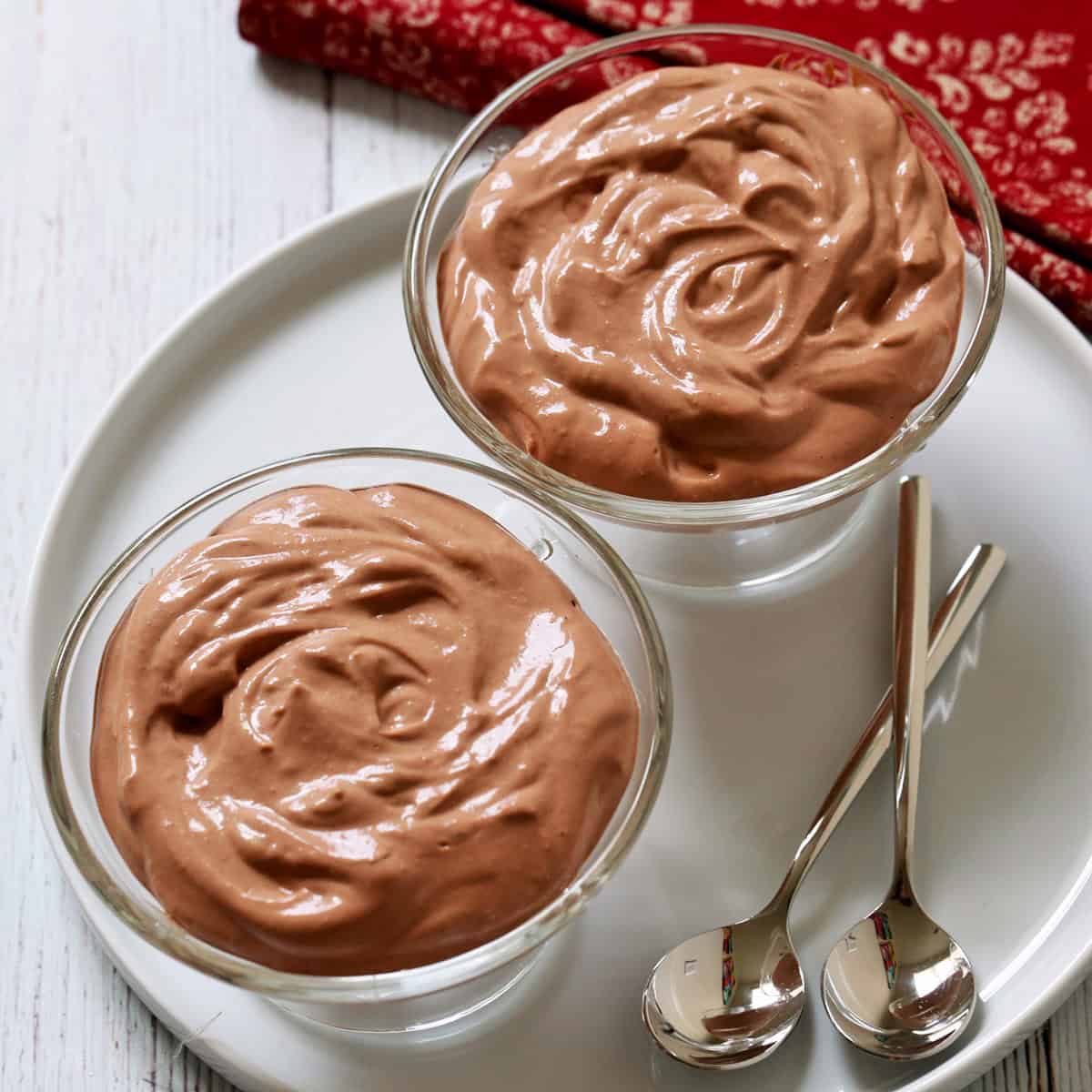
When I make this mousse for myself and don't try to make it fancy for the blog, I often divide the whole thing between two bowls, as shown below, and have one on the same day and one the next day.

Recipe Card

Cottage Cheese Chocolate Mousse
Video
Ingredients
- 2 cups cottage cheese - 4% fat, small curd
- 4 tablespoons unsweetened cocoa powder - processed with alkali for a smoother chocolate taste
- 1 teaspoon vanilla extract - can also use almond, coconut, or orange extract
- 1 teaspoon stevia glycerite - heaping; equals 6 tablespoons of sweetener - see notes below
Instructions
- Add the cottage cheese, cocoa powder, vanilla extract, and sweetener to a food processor or high-speed blender.2 cups cottage cheese, 4 tablespoons unsweetened cocoa powder, 1 teaspoon vanilla extract , 1 teaspoon stevia glycerite

- Blend for 2 minutes on high, stopping once to scrape the sides with a spatula, until smooth and fluffy.
- Refrigerate for 30 minutes to thicken the mousse, then serve.


Notes
- I use Daisy 4% small curd cottage cheese. It's delicious, thick, and creamy. If your cottage cheese is watery, it might affect the mousse's texture.
- See the recipe tips in the post above the recipe card for a visual demonstration of the three stages of blending the mousse, from grainy (after 30 seconds), to smoother (after 1 minute), to super smooth and fluffy (2 minutes).
- Sweetener: Sweetness is a personal preference, and these are just guidelines - adjust to taste. You can use 6 tablespoons of powdered sweetener or the equivalent in stevia. A granulated sweetener could have a grainy mouthfeel. Maple syrup will introduce too much liquid, but you can try honey as it's thicker. If using honey, start with 5 tablespoons, as it's very sweet. I only tested this recipe with stevia and with a powdered sweetener.
- If there's a small amount of liquid at the top of the cottage cheese once you open the container, carefully pour it out. The less water, the creamier the mousse.
- I use a food processor with a "high" speed setting. If using a blender, it needs to be a high-speed one, or the mixture will remain lumpy.
- Chilling the mousse for 30 minutes improves its texture and thickens it.
- Despite thorough blending, the occasional cottage cheese curd can stick around. This is the main disadvantage of this recipe compared to chocolate yogurt. Cottage cheese is also tangier and saltier than yogurt, so more sweetener is needed. I initially wrote this recipe with 4 tablespoons of sweetener, but eventually decided that 6 tablespoons are needed (or the equivalent in stevia). The advantage of this recipe is that, thanks to using a food processor, it has a fluffy and airy mousse consistency that the yogurt does not have.
- Taste is subjective. Perhaps for you, 4 tablespoons of a sweetener (or the equivalent in stevia) are enough. You can start with 4, blend, taste, and see if you want to add more.
- You can store this mousse in an airtight container in the fridge for up to four days. Stir it again before serving. I don't recommend freezing it, as its texture will be negatively affected.
Nutrition per Serving
Save this Recipe!
We will also add you to our weekly newsletter. Unsubscribe anytime. See healthyrecipesblogs.com/privacy/ to learn how we use your email.
Disclaimers
Most recipes are low-carb and gluten-free, but some are not. Recommended products are not guaranteed to be gluten-free. Nutrition info is approximate - please verify it. The carb count excludes non-nutritive sweeteners. Please read these Terms of Use before using any of my recipes.

Brenda says
Love this
Vered DeLeeuw says
I'm so glad to hear, Brenda! Thanks for the review.
Nancy says
this was soooooo tasty! i just saw your recipe this afternoon and made this evening....very, very good mousse! I used cacao (have been trying to use instead of cocoa in recipes)and used honey and coconut sugar. Can't wait to try when it is cold...Thank you for sharing your recipe!! Fabulous and easy. Going to try several more of your recipes.
Vered DeLeeuw says
I'm so glad you enjoyed the mousse, Nancy! Thank you for the review and for sharing your delicious tweaks.
Nina says
Love this recipe. This is my second time making it.
Vered DeLeeuw says
I'm so glad to hear, Nina! I appreciate the review.
Becky Anderson says
I love all these blended cottage cheese recipes that are out there, but it's like y'all have never had actual chocolate mousse. Mousse is light and fluffy, from whipping air into it. Or egg whites. This is pudding. It's delicious, but still pudding.
Vered DeLeeuw says
Hi Becky,
Thanks for trying the recipe. I'm glad you liked the flavor!
Cottage cheese chocolate mousse typically lands somewhere between a thick pudding and a light mousse, depending on blending time and fat content. When blended until perfectly smooth and then chilled, it has a light, creamy mousse-like texture, though it's denser than traditional egg-white mousse.
Blending for at least 2 minutes should create an airy, fluffy mousse, while less time results in a denser, pudding-like consistency. Refrigerating for 30 minutes firms it up, making it feel more like a mousse than immediately after blending. Full-fat cottage cheese produces a richer, fluffier texture, while low-fat creates a more pudding-like result.
Bottom line: It's not exactly like traditional mousse, but it is much thicker and creamier than standard pudding, which is why I call it "mousse." 😀