
If you're short on time, microwave spaghetti squash instead of baking it. It turns out tender and delicious in less than 20 minutes - about half the time it takes in the oven.
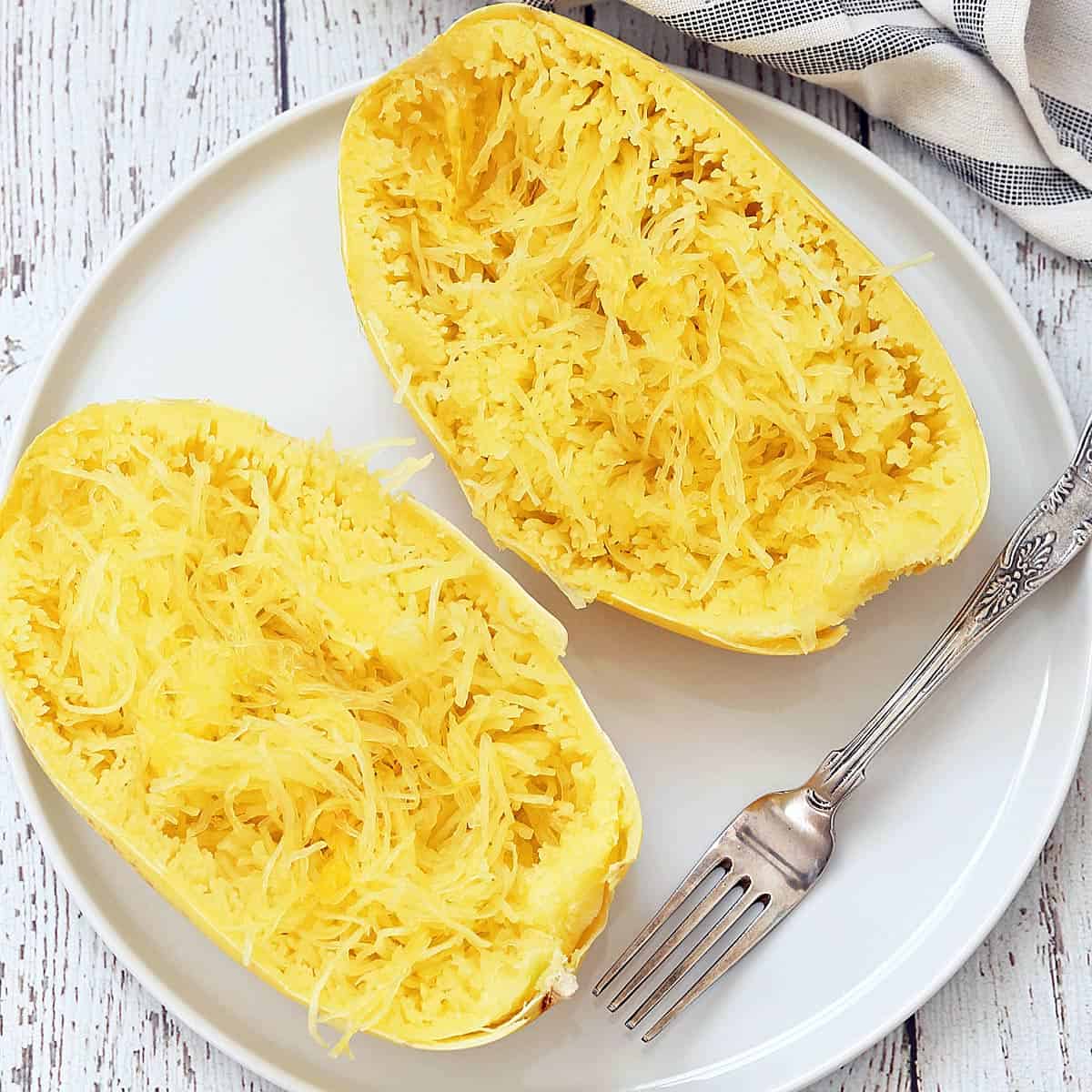
I love spaghetti squash! The magic of raking a fork back and forth, turning its tasty flesh into strands, always amazes me. It's easy enough to bake spaghetti squash in the oven. It's ridiculously easy to cook it in the microwave. Since this method is so quick and easy, and the results are comparable to baking, I often choose the microwave.
Ingredients
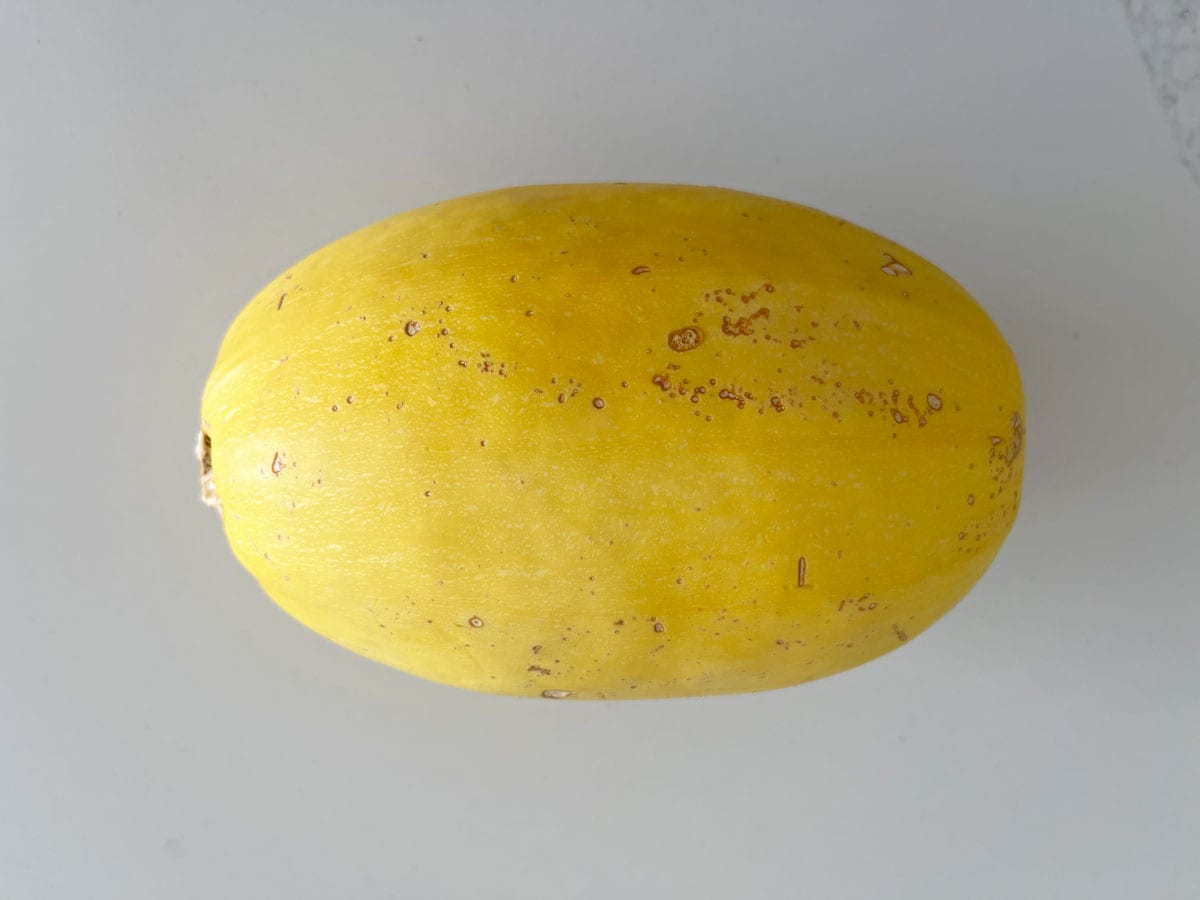
You'll only need one ingredient to make this recipe! A two-pound spaghetti squash.
Once it's cooked, you can toss the strands with salt, pepper, garlic powder, and butter or olive oil.
It's also good to sprinkle the cooked strands with ¼ cup of grated Parmesan cheese, and sometimes, I add ¼ teaspoon of dried thyme or oregano. But those are all optional ingredients.
Instructions
The detailed instructions and step-by-step photos are included in the recipe card. Here's a quick overview.
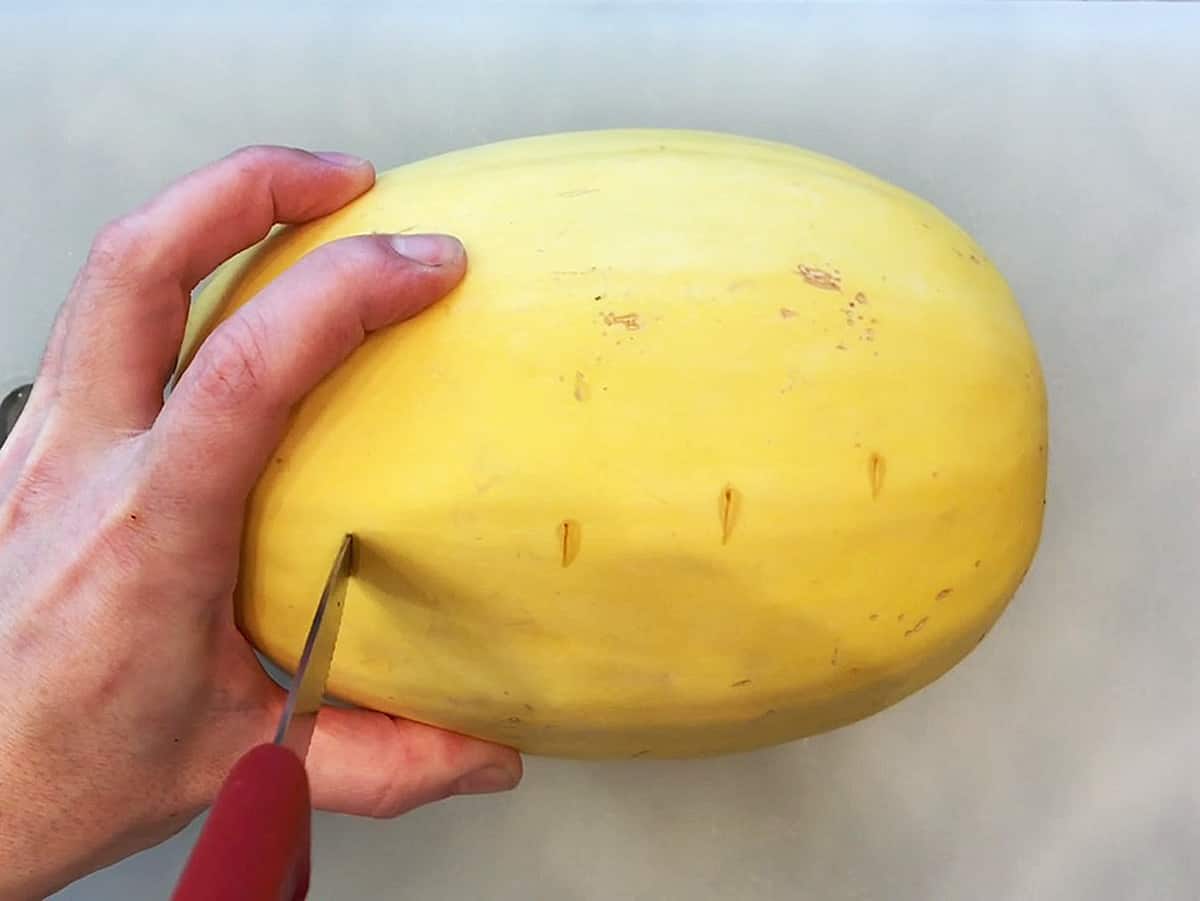
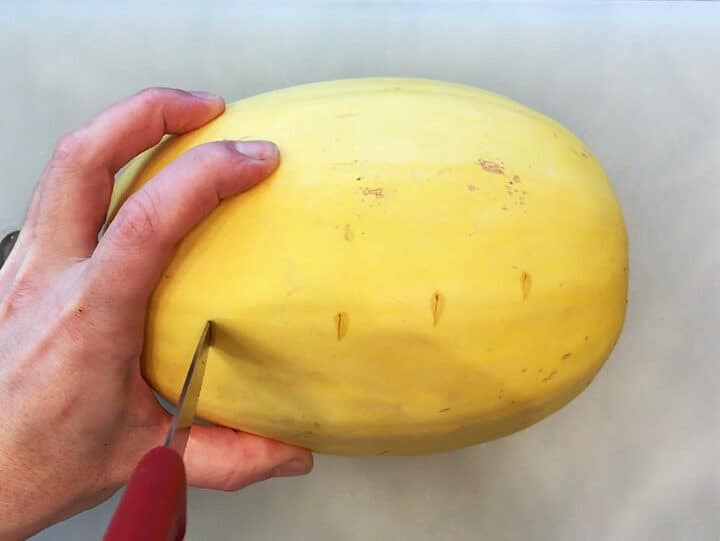
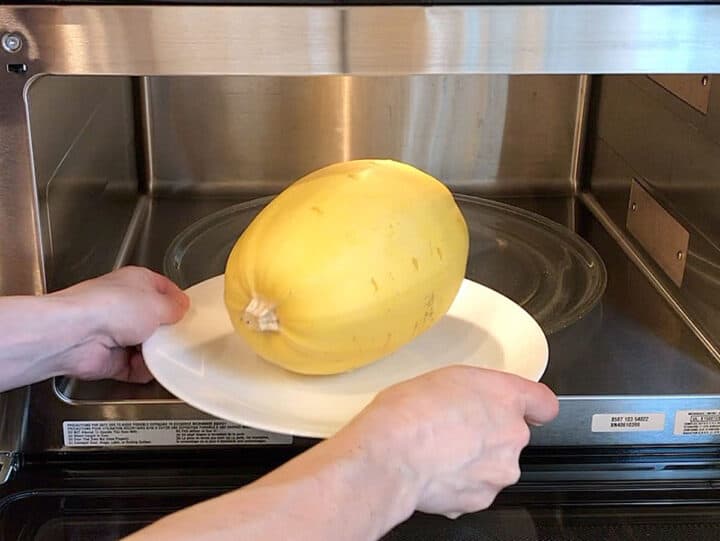
Pierce the squash with a knife or a fork. You should leave it whole, and that's the best part of this cooking method - you don't need to tackle the task of cutting a hard, raw squash. Place the squash on a microwave-safe plate and microwave until tender, about 5-6 minutes per side, depending on its size.
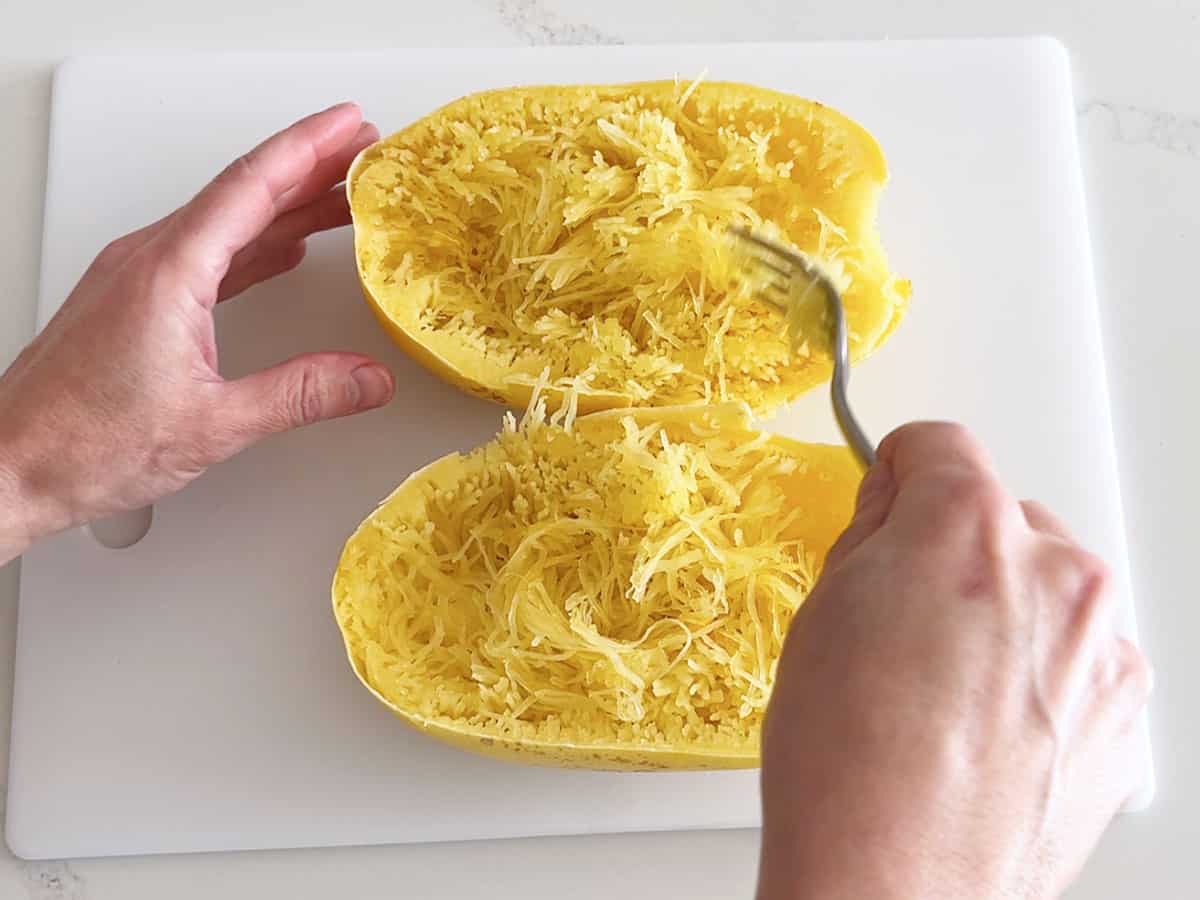
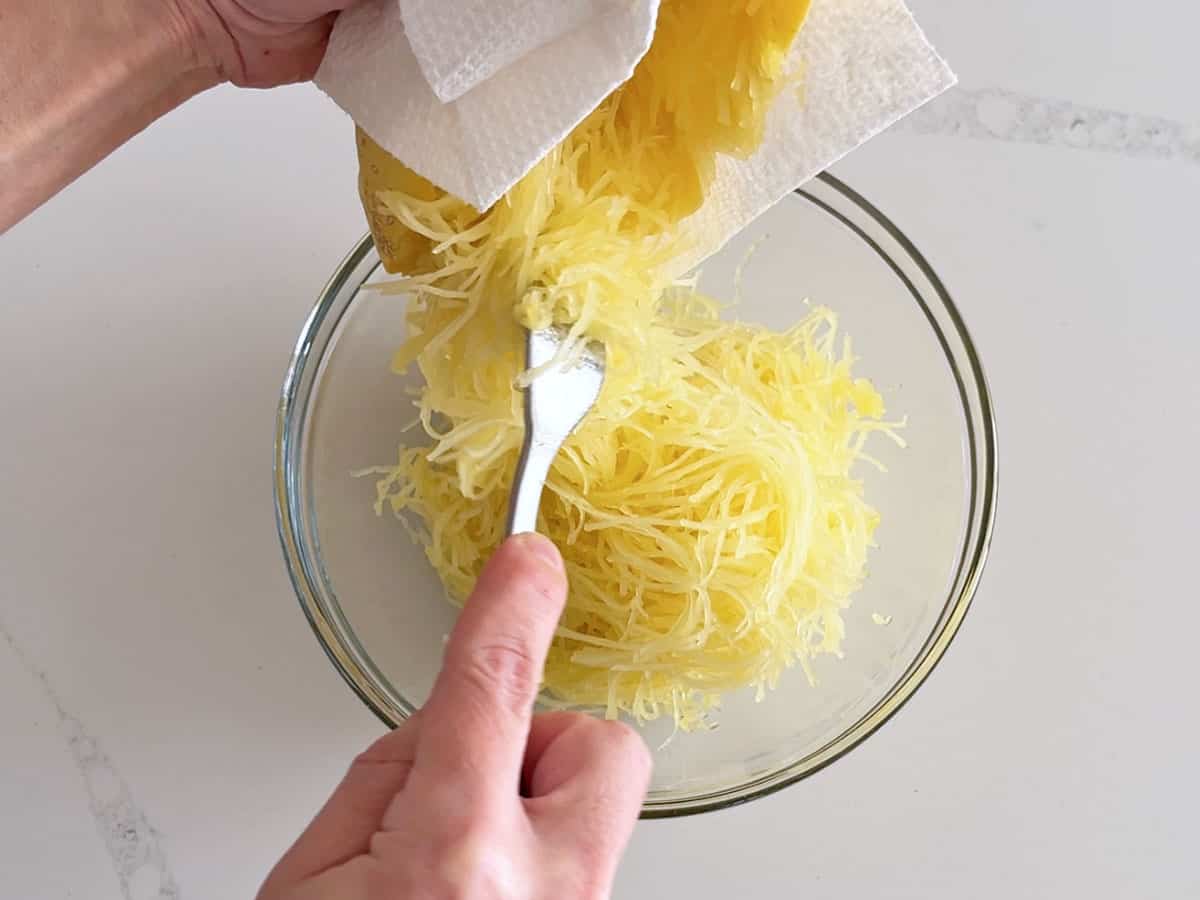
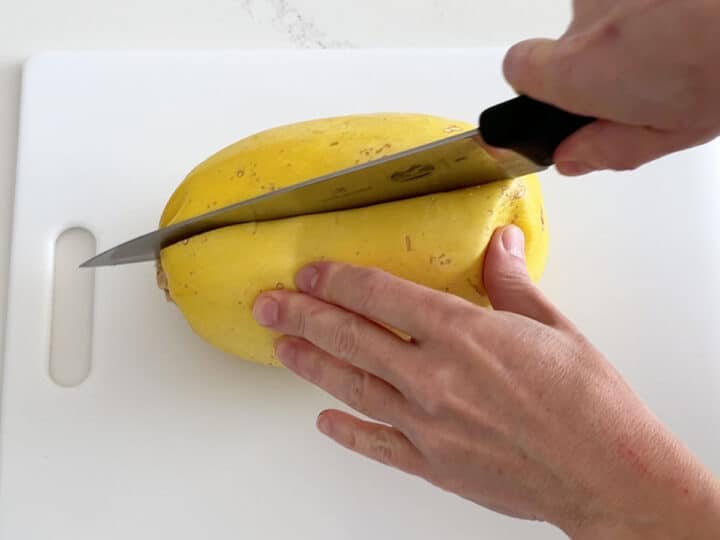
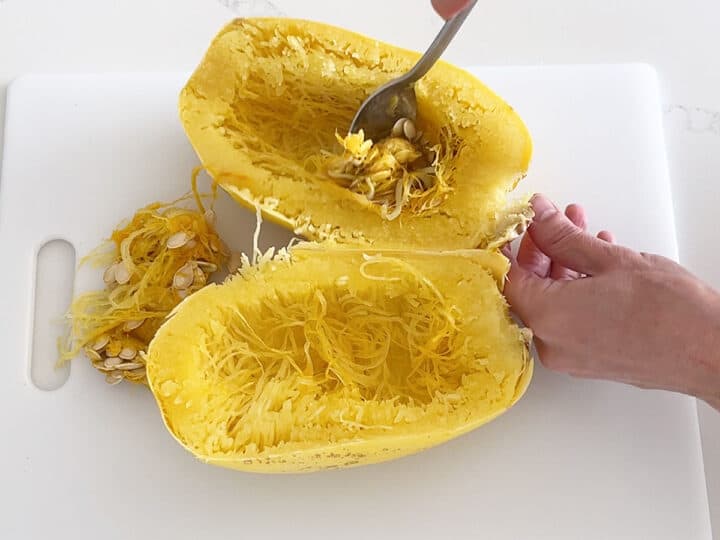
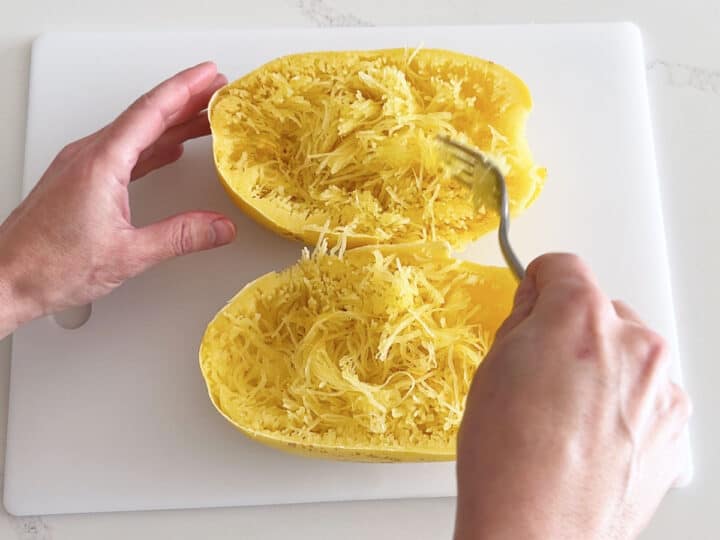
Once the squash is cooked, let it cool so it's not too hot to handle. Then, cut it open with a sharp knife and remove the seeds and pulp. Rake a fork back and forth across the squash's flesh to create strands.
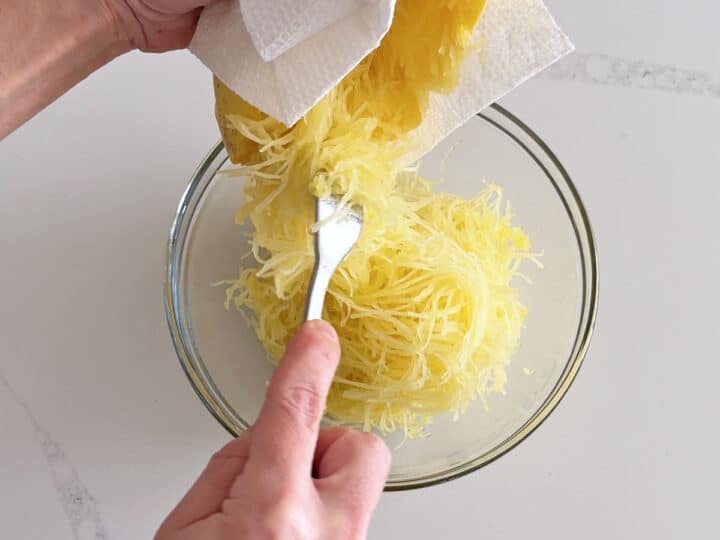
Remove the strands to a bowl. As shown in the photo below, I use a paper towel to protect my hands because the squash is still quite hot. Add your desired seasonings and serve.
Thank you! I followed this recipe exactly and I'll never go back to cooking spaghetti squash in the oven! Served each half squash in a bowl with large spoonfuls of meatballs, sauce, & cheese on top.
Jean
 Thank you! I followed this recipe exactly and I'll never go back to cooking spaghetti squash in the oven! Served each half squash in a bowl with large spoonfuls of meatballs, sauce, & cheese on top.
Tip: How Long to Microwave the Squash
The suggested cooking time of 5 minutes per side is ideal for a small 2-pound squash. If yours is larger, you'll need to microwave it for longer. Your goal is a soft squash that can be easily pierced with a fork. I recommend starting with six minutes per side for larger squashes. You can always add more time in the microwave.
On the other hand, if your squash is smaller than 2 pounds, start with 3 minutes per side and add more if needed. If you overcook it, it can explode - it happened to me once when I cooked a 1.5-pound squash for 4 minutes per side (see the photo below). I managed to salvage half of it, and it was delicious, but the ten minutes of cleanup were definitely annoying.

Recipe FAQs
The seeds are edible, so I usually roast them with olive oil and spices. You can use this recipe for roasted pumpkin seeds as a guide.
Microwaving is faster and easier, but microwave-cooked strands tend to be a bit mushier than baked ones. It's up to you if the slight mushiness is worth the easier and faster preparation. I think it's worth it.
It happens! Microwave cooking is a bit of a gamble because microwave ovens vary. If you decide that your squash is ready, but upon slicing it, you realize it's still too hard, don't despair! This happened to me a few times.
Here's what to do: Scoop out the pulp and seeds. Place each squash half in a large, microwave-safe bowl. Add two tablespoons of water, cover, and microwave until fork-tender. This should take about two more minutes for each half.
Sometimes, the squash can end up overcooked and mushy, like the squash shown in the image below that I cooked a few weeks ago - you can see it's soggy.
If this happens to you, place the squash halves, cut side down, on a clean towel for a few minutes. This will help absorb some of the excess liquid. The strands will still be a bit mushy. However, take comfort in the fact that they will still taste great!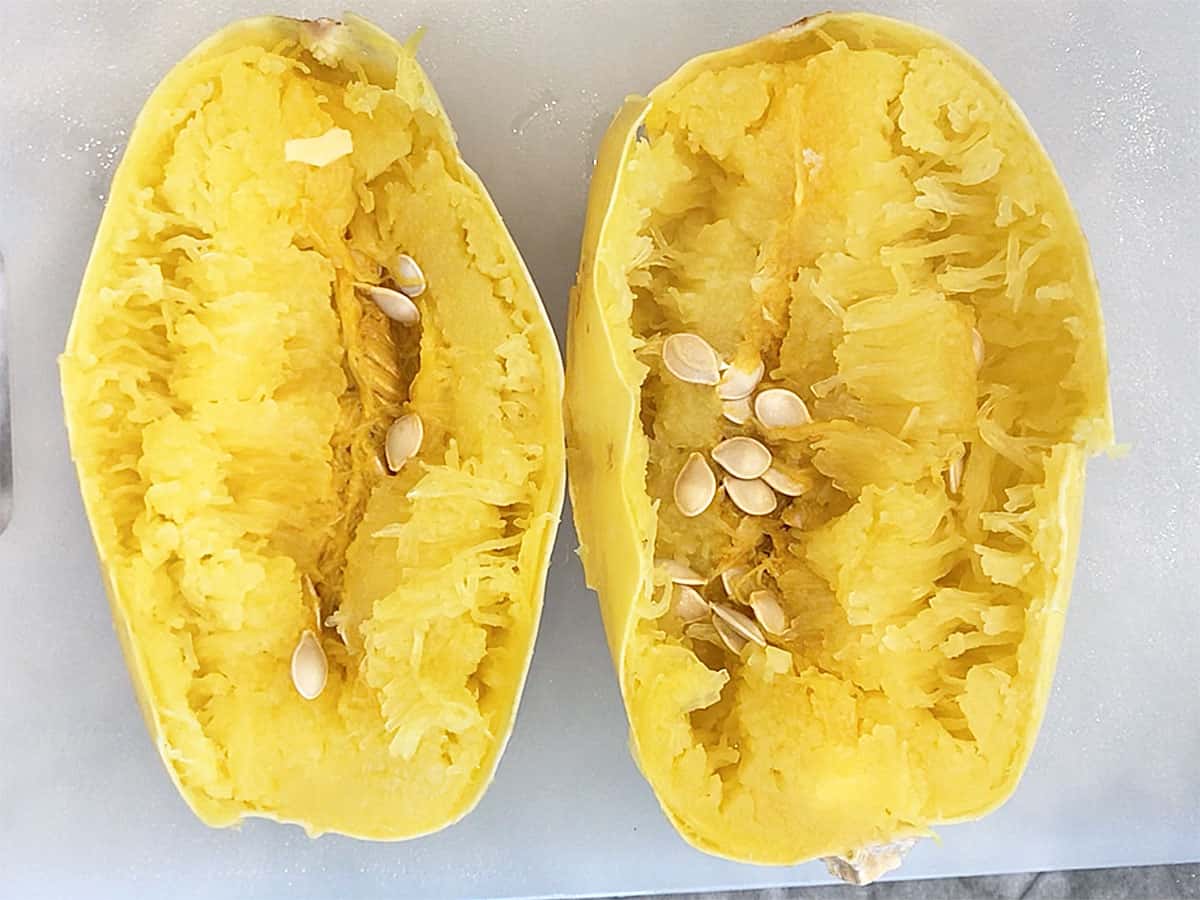
Serving Suggestions
Using microwave spaghetti squash can be as simple as adding melted butter (or good olive oil), salt, garlic powder, and grated Parmesan. Then you have a truly delicious, easy-to-make side dish.
In the photo below, you can see the hot strands topped with a drizzle of olive oil, grated Parmesan, salt, pepper, and garlic powder. I simply mixed the whole thing with a fork right there on the plate, then dug in! So easy and good.

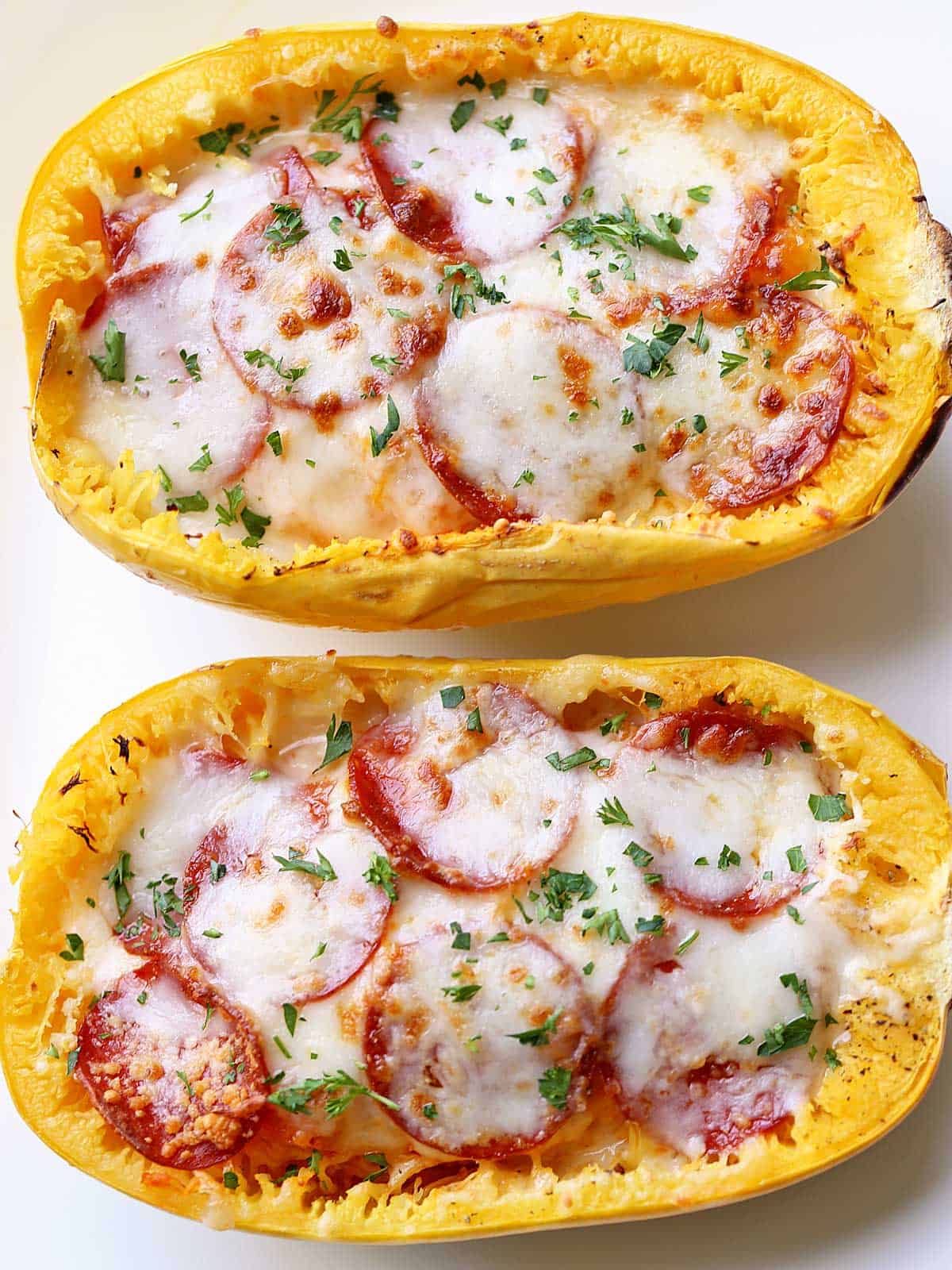
Another option, and one of my favorite lunches, is the "pizza" shown in the image below. After cooking the squash and creating the strands, I mix them with pizza sauce and shredded mozzarella, divide the mixture between the empty squash shells, top with mozzarella and pepperoni, and microwave (or bake) briefly to melt the cheese.
You can also use the squash strands as the basis for recipes such as spaghetti squash casserole and spaghetti squash fritters.
Storing and Using the Leftovers
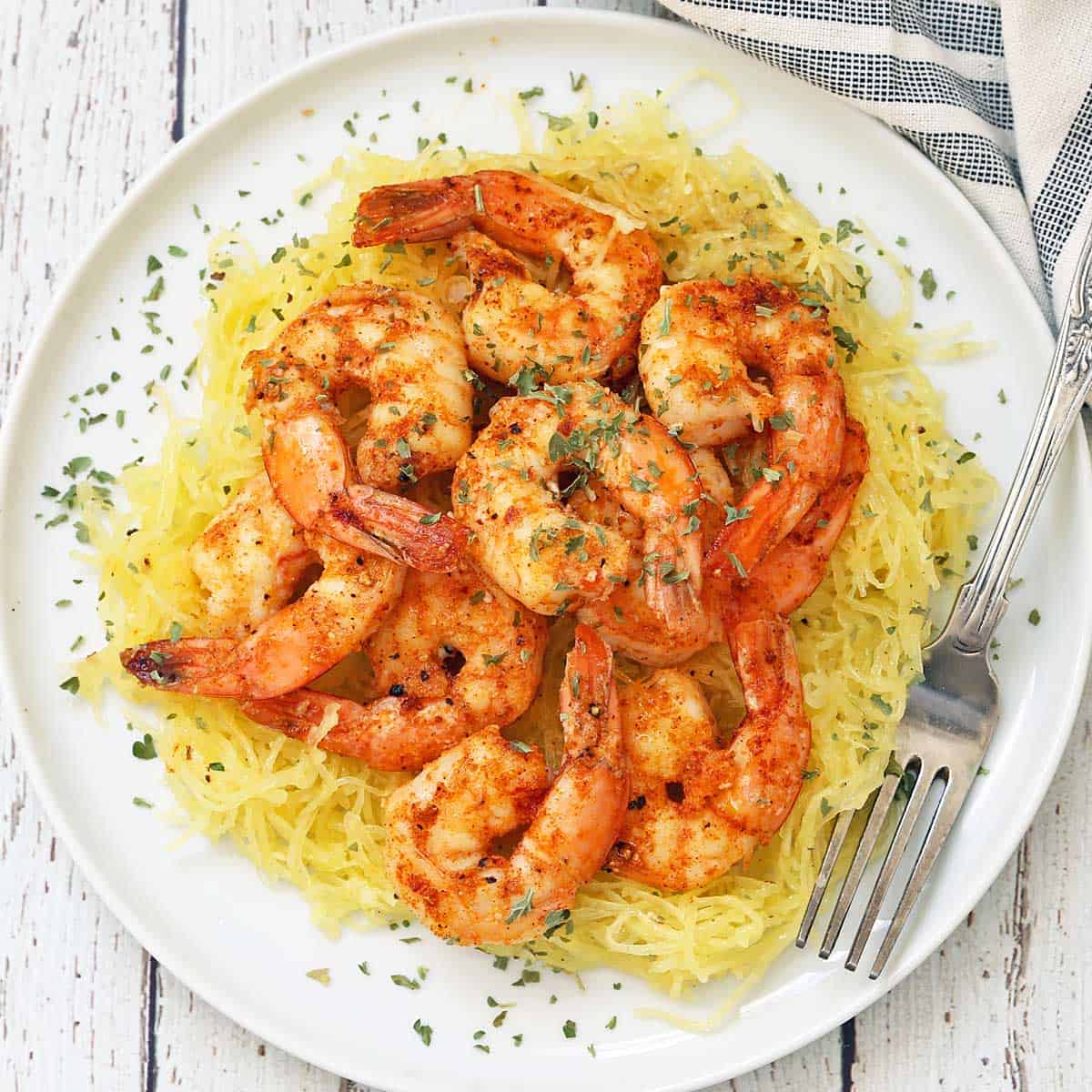
You can keep the leftovers in an airtight container in the fridge for up to four days. They taste great even on the fourth day - almost as good as when freshly prepared. Reheat them in the microwave, covered, at 50% power. In the photo below, I made a quick meal of reheated spaghetti squash strands topped with sautéed shrimp:
Recipe Card

Microwave Spaghetti Squash
Video
Ingredients
- 1 spaghetti squash - 2 pounds
Optional:
- 2 tablespoons butter - melted
- ½ teaspoon salt
- ¼ teaspoon black pepper
- ½ teaspoon garlic powder
Instructions
- Pierce the spaghetti squash all over with a sharp knife.1 spaghetti squash

- Place the squash on a large microwave-safe plate. Microwave it for 5 minutes. Turn it to the other side (carefully; it will be hot) and microwave it for 5 more minutes until it's soft to the touch.
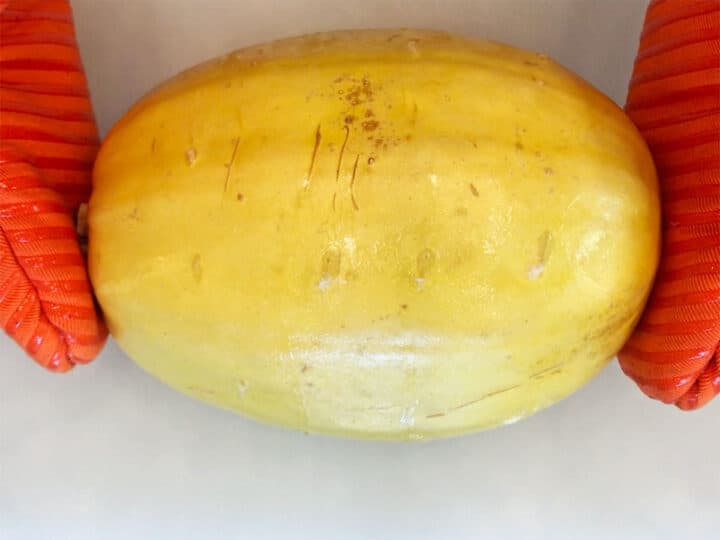
- Using oven mitts, remove the squash from the microwave (the squash and the plate will be very hot - use a trivet). Let the squash stand for 5 minutes to finish cooking.

- Using a sharp knife, carefully cut the squash in half lengthwise. Allow it to cool for 2-3 minutes until it's easier to handle.
- Scoop out the pulp and seeds from the squash's center.
- Rake a fork back and forth to create strands.
- Transfer the strands to a bowl.
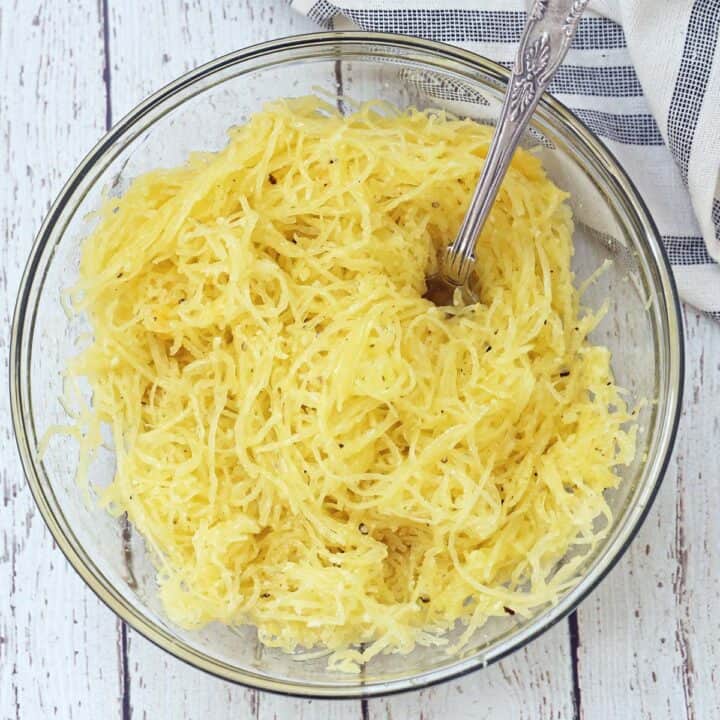
- If desired, toss the strands with butter, salt, pepper, and garlic powder, or use your favorite pasta sauce. Serve immediately.2 tablespoons butter, ½ teaspoon salt, ¼ teaspoon black pepper, ½ teaspoon garlic powder

Notes
- Seasonings, especially salt, are just guidelines. Please adjust to taste.
- If your squash is significantly larger than 2 pounds, start with 6 minutes per side and check whether it's soft. If it's smaller than 2 pounds, start with 3 minutes per side.
- Microwave cooking is a bit of a gamble because microwave ovens vary. If you decide that your squash is ready, but upon slicing it, you realize it's still too hard, simply scoop out the pulp and seeds. Place each half in a large, microwave-safe bowl. Add a little water, cover, and microwave until fork-tender. This will probably take 2-3 more minutes for each half.
- If the squash ends up overcooked and mushy, place the squash halves, cut side down, on a clean towel for a few minutes. This will help absorb some of the liquid. Take comfort in the fact that it will still taste great!
- The leftovers keep well in an airtight container in the fridge for up to 4 days. In fact, they taste great even on the fourth day - almost as good as when freshly prepared. Reheat them in the microwave, covered, at 50% power.
- The nutrition info is for the squash only.
Nutrition per Serving
Save this Recipe!
We will also add you to our weekly newsletter. Unsubscribe anytime. See healthyrecipesblogs.com/privacy/ to learn how we use your email.
Disclaimers
Most recipes are low-carb and gluten-free, but some are not. Recommended products are not guaranteed to be gluten-free. Nutrition info is approximate - please verify it. The carb count excludes non-nutritive sweeteners. Please read these Terms of Use before using any of my recipes.


Jean says
Thank you! I followed this recipe exactly & I’ll never go back to cooking spaghetti squash in the oven (esp. in these extremely hot temperatures)! Served each squash 1/2 in a bowl with large spoonfuls of meatballs, sauce, & cheese on top.
Vered DeLeeuw says
You're very welcome, Jean! Thanks for sharing how you used the squash - sounds delicious!