
Easy Cream of Broccoli Soup
This easy cream of broccoli soup features heavy cream and Parmesan for a rich, savory finish. A simple one-pot recipe ready in about 30 minutes.
Servings 4 servings
Calories 147kcal
Ingredients
- 3 cups reduced-sodium chicken broth
- ½ teaspoon sea salt See the notes section below
- ½ teaspoon black pepper
- 1 teaspoon onion powder
- 1 teaspoon garlic powder
- ½ teaspoon dried thyme
- 1 pound fresh broccoli florets
- ¼ cup heavy cream
- ¼ cup Parmesan cheese grated; not shredded
Instructions
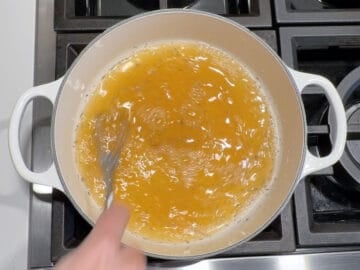
- In a large saucepan, add the chicken broth, kosher salt, black pepper, onion powder, garlic powder, and thyme. Whisk to combine.3 cups reduced-sodium chicken broth, ½ teaspoon sea salt, ½ teaspoon black pepper, 1 teaspoon onion powder, 1 teaspoon garlic powder, ½ teaspoon dried thyme
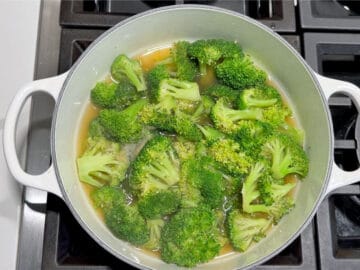
- Add the broccoli. It does not have to be fully submerged. Bring to a boil over high heat. This should take about 5 minutes with fresh broccoli and 10 minutes with frozen. Reduce the heat to medium, cover, and cook until the broccoli is very tender, for about 10 minutes.1 pound fresh broccoli florets
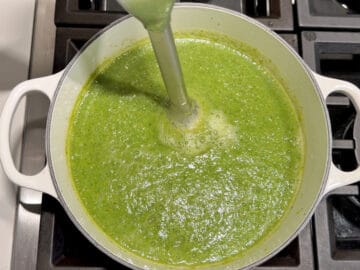
- Turn the heat off. Using an immersion blender, blend the soup until smooth.
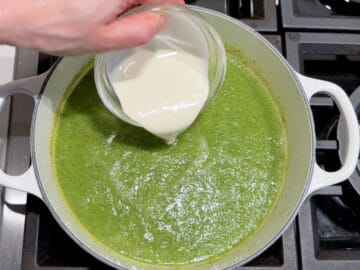
- Turn the heat up to medium-low. Stir in the heavy cream and cook just until heated through, about 2 minutes. Don't let it boil.¼ cup heavy cream, ¼ cup Parmesan cheese
- Turn the heat off and stir in the Parmesan until melted and smooth.
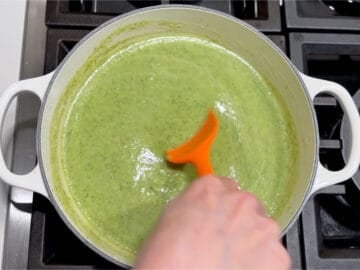
- Taste and decide if you'd like to add salt and/or freshly ground black pepper, then serve.
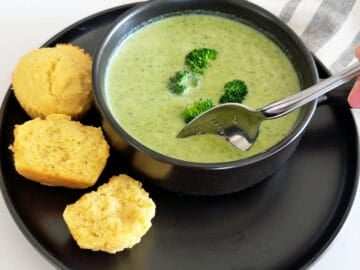
Video
Notes
Salting the Soup
How much salt to add depends on your personal taste and the saltiness of your chicken broth. Please adjust to taste.Using Frozen Broccoli
You can use frozen broccoli, but fresh is better. It retains more of its bright green color, making the soup more visually appealing. In addition, frozen broccoli releases more water. But you can't beat the convenience of frozen, and it does produce delicious soup. If you opt for frozen broccoli, use it frozen - don't thaw it first - and reduce the broth by ½ cup.Thickening the Soup
Many recipes add flour, but I don't think it's necessary. Any pureed soup is inherently thick, and when you add heavy cream and Parmesan, there's truly no need for flour. If you feel the soup isn't thick enough, you can stir in an extra ¼ cup of Parmesan.Counteracting Bitterness
If your soup tastes slightly bitter, it usually comes from the broccoli, which contains sulfur compounds that can taste bitter, especially if the florets are very mature (thicker stems, darker green tops) or if it's cooked a bit too long or boiled hard. Try to use young broccoli, simmer it rather than boil it, and turn the heat off as soon as it's tender. If you've already made the soup and it has a bitter note, try adding any of the following:- A generous pinch of salt would be my first choice
- 2 extra tablespoons of heavy cream
- 1 teaspoon of sherry or white wine vinegar - add off heat; don't cook it
- 1 teaspoon of a sweetener (such as sugar or maple syrup) - last resort
Blending the Soup
If you like pureed soups and make them often, I highly recommend purchasing an immersion blender. A stand blender is more powerful and will produce a smoother soup, but an immersion blender is easier because it lets you blend the soup directly in the pot, eliminating the need to transfer hot liquid, work in batches, or deal with extra cleanup. If you don't own an immersion blender, working in at least two batches, carefully transfer the hot soup to your stand blender. Blend each batch until completely smooth and transfer it to a bowl. When all batches are done, return the pureed soup to the pot and proceed with the recipe. When using a stand blender, never fill your blender past the maximum fill line. It's best to fill it no more than half full. If the lid of your blender wasn't designed to allow steam to escape, remove the centerpiece and drape a clean towel over the lid. You can hold down the lid when blending to prevent it from being pushed off, but do so without placing your hand or face over the hot steam.Storing Leftovers
You can keep the leftovers in an airtight container in the fridge for 3-4 days. Gently reheat them on the stovetop over low heat or in the microwave, covered, at 50% power. Don't allow the soup to boil when you reheat it. You can also freeze this soup. I like to freeze individual portions in covered mugs or mason jars. To prevent the frozen soup from curdling when reheated, I reheat it, covered, at 50% power in a microwave in 30-second sessions, stirring often.Nutrition
Serving: 1cup | Calories: 147kcal | Carbohydrates: 11g | Protein: 10g | Fat: 8g | Saturated Fat: 5g | Sodium: 486mg | Fiber: 3g | Sugar: 3g
