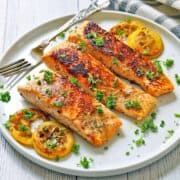
Crispy Pan Fried Salmon
Pan fried salmon is delicious when cooked in butter and olive oil. The skin becomes wonderfully crispy, and the flesh is juicy and flavorful.
Servings 4 servings
Calories 245kcal
Ingredients
- 4 salmon fillets 6 ounces each, 1-inch thick, skin on, pin bones removed
- ½ teaspoon Diamond Crystal kosher salt or ¼ teaspoon of any other salt, including Morton kosher salt
- ¼ teaspoon black pepper
- ½ teaspoon garlic powder
- ¼ teaspoon dried thyme
- 1 tablespoon olive oil
- 1 tablespoon butter
Optional Ingredients:
- 4 lemon slices ¼-inch thick
- 2 tablespoons parsley chopped
Instructions
- Blot the salmon fillets dry with paper towels. Season them with salt, pepper, garlic powder, and dried thyme.4 salmon fillets, ½ teaspoon Diamond Crystal kosher salt, ¼ teaspoon black pepper, ½ teaspoon garlic powder, ¼ teaspoon dried thyme

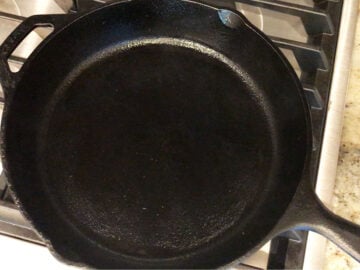
- Heat a large (12-inch) cast-iron skillet over medium-high heat. Add the olive oil and butter and swirl to coat. You can also use a nonstick skillet.1 tablespoon olive oil, 1 tablespoon butter
- When the butter starts foaming, add the salmon fillets, skin-side-down. If using, add the lemon slices.4 lemon slices

- Cook the salmon, undisturbed, until the skin is crispy and browned, for about 4 minutes. Flip the salmon and lemon slices, lower the heat to medium, and continue cooking for 3 more minutes.

- If your fillets are 1 inch thick, cook the edges for about 2 minutes per side. This helps ensure the salmon reaches an internal temperature of 145ºF.

- Transfer the salmon fillets to a serving plate and drizzle them with the pan juices. Garnish the plate with lemon slices and chopped parsley, and serve.2 tablespoons parsley

Video
Notes
- Seasonings, especially salt, are guidelines. Adjust to taste.
- If your salmon is frozen, thaw it thoroughly before using it in this recipe. You can thaw it overnight in the fridge.
- You can skip the olive oil and use 2 tablespoons of butter. The butter's milk solids have a blackening effect, making the salmon extra-crispy.
- The best skillets for this recipe are nonstick or well-seasoned cast-iron skillets. I don't recommend using a stainless steel skillet - the salmon skin tends to stick to it.
- Don't forget to drizzle the salmon with the pan juices after you've arranged it on the plates. The pan sauce is delicious.
- You can keep the leftovers in an airtight container in the fridge for up to three days. I prefer to avoid reheating them because reheating can dry them out and make them taste fishy. Instead, I crumble them cold over a salad.
Nutrition
Serving: 1fillet | Calories: 245kcal | Carbohydrates: 1g | Protein: 32g | Fat: 12g | Saturated Fat: 3g | Sodium: 164mg
